
Pocong Didn’t Jump: The Original Movement Method
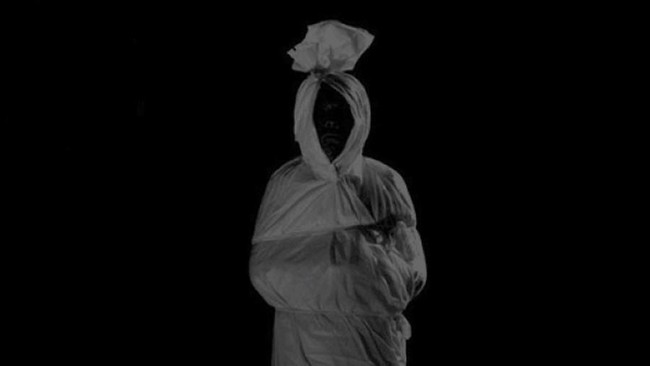
The pocong legend is deeply embedded in Indonesian society, typically depicted as a ghost in a shroud moving by jumping. However, few are aware that pocong was originally portrayed not jumping, but rolling and walking—a shift influenced by Indonesia’s film industry. The pocong ghost has long existed in Indonesia, though its origins remain difficult to trace. According to Justito Adiprasetio and Annissa Winda in The Conversation, pocong and other ghosts emerged within Indonesia’s syncretic belief system, intertwined with beliefs in wandering spirits, sacred sites, and eerie moments. This suggests pocong and other spectral figures arose alongside these beliefs, consistent with Suwardi Endraswara’s analysis in The World of Javanese Ghosts (2004), albeit within a Javanese context. He argues that ghosts have existed since the Javanese people themselves, rooted in the belief in unseen entities inhabiting other realms. Regardless of when pocong first appeared, its depiction has always evolved, shaped by societal imagination in response to historical contexts. For instance, in 1906, British colonial officer Richard James Wilkinson published Malay Beliefs, describing a shroud-bound ghost called ‘kochonk’—known in Indonesia as pocong. With legs bound, kochonk could not jump or walk, instead rolling along the ground. Suwardi Endraswara also described pocong as a white-clad female ghost resembling a corpse capable of walking. These depictions are accurate, yet the question remains: why did pocong’s movement shift to jumping? The answer lies in the film industry. Research by Justito and Annissa shows that the 1975 horror film Setan Kuburan—the most explicit horror movie featuring pocong before the 1990s—popularised the jumping motion. In Benyamin Sueb’s film, pocong was first shown jumping around. Historia also notes the movie reinforced the notion that graveyards, trees, and natural sites like ponds or lakes are favoured hauntings. As films shape public imagination, the jumping pocong narrative became ingrained across generations. Justito and Annissa’s records show pocong featured as the main ghost in 37 Indonesian films between 2000 and 2020, cementing this portrayal through widespread media exposure in newspapers, magazines, and comics. Yet recent films now present varied movements: pocong flying, as in Mumun (2022), or shuffling, reflecting evolving interpretations of folklore.