
PO Borneo Trans' Tentrem-Built Electric Bus: Luxurious and Quiet
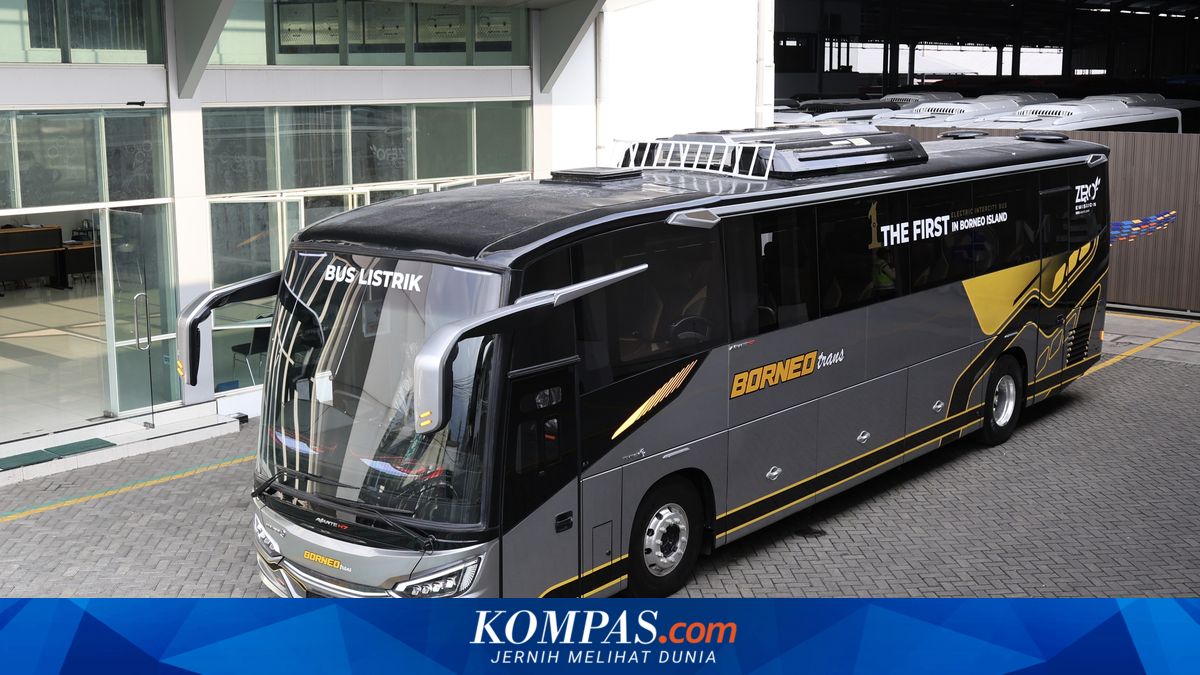
JAKARTA — The electrification of Indonesia’s mass transport sector is expanding into more distant segments. No longer limited to city buses or short-distance tourism fleets, electric buses are now entering intercity routes (AKAP), offering high efficiency and enhanced luxury for passengers. This bold move is led by Bus Company (PO) Borneo Trans, which has officially unveiled its latest pure electric bus fleet.
To build this future fleet, PO Borneo Trans entrusted Karoseri Tentrem, using the Avante H7 Single Glass body.
Externally, the bus appears calm and elegant, closely resembling a standard diesel bus without excessive futuristic styling.
Karoseri Tentrem’s Managing Director Yohan Wahyudi stated that Borneo Trans’ decision to deploy electric buses on intercity routes was based on a thorough evaluation of long-term efficiency.
“Borneo observed operational savings from trials of AKAP electric buses conducted in Java. In terms of comfort, electric buses offer high comfort levels, minimal vibration, and very low noise levels,” Yohan told Kompas.com on Monday, 25 May 2026.
For this project launch, PO Borneo Trans partnered with INVI as the end-to-end Electric Vehicle (EV) ecosystem provider.
This comprehensive collaboration includes operational pattern studies, route surveys, charging station placement, charger procurement, and selecting the optimal chassis and body combination.
The INVI-supplied chassis features a large-capacity 350 kW battery. On paper, the electric bus can cover up to 300 kilometres, with safe usage calculated from a 100% to 20% battery indicator.
Inside the cabin, passengers are greeted with an extremely exclusive premium atmosphere. The Avante H7 body is designed with a luxurious interior configuration accommodating only 17 passengers.
The front row consists of two sleeper seats, while the remaining 15 seats are equipped with leg rests, foot rests, and Audio Video On Demand (AVOD) entertainment systems.
This underfloor placement offers mechanical advantages by lowering the vehicle’s centre of gravity. As a result, bus stability improves, reducing swaying, directly enhancing passenger safety and comfort.
However, due to the central underfloor area being fully occupied by batteries, the bus lacks the conventional underbody luggage space.
Similarly, the engine compartment at the rear cannot be used for storage as it is filled with EV system electrical and electronic components.
To address this, Karoseri Tentrem utilised the rear cabin area, specifically above the rear electronic compartment behind the partition.
The space typically used as a spare driver’s bed or “kandang macan” has been repurposed into a toilet and luggage compartment.
“We’ve prepared a luggage compartment at the back. Since passenger numbers are low, the rear cabin space is sufficient for luggage,” Yohan said.