
PNM's Efforts to Secure Children's Future Through Marine Conservation
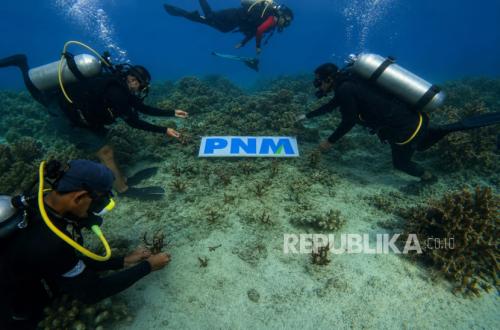
For many people, planting mangroves, releasing turtle hatchlings, or cleaning beaches is often viewed as a symbolic activity to protect the environment. In fact, the greatest benefits of these efforts are frequently not immediately visible. Behind every seedling planted and every piece of rubbish removed from the shore lies a long-term investment in the sustainability of community life, particularly for future generations. As part of its commitment to sustainable development, PT Permodalan Nasional Madani (PNM) has carried out various actions to preserve marine and coastal ecosystems through greening initiatives. Over the past year, PNM has planted 70,000 mangrove trees and 2,000 coral reef seedlings, released 1,000 hatchlings into their natural habitat, and conducted beach clean-up activities involving various elements of society. This step is not merely a form of environmental concern. More than that, PNM wants to ensure that the natural resources which underpin the lives of coastal communities remain preserved. A healthy sea is not only a home for various marine life, but also a source of food, livelihood, and a natural fortress protecting coastal areas from various threats. One of the less recognised benefits of mangroves is their ability to serve as a nursery for various species of fish, shrimp, and crabs that provide a source of income for fishermen. The same applies to coral reefs, often referred to as the rainforests of the sea. When coral reefs are protected, the marine life chain continues to function, fish stocks remain available, and the welfare of coastal communities can be sustained. The release of 1,000 hatchlings holds equally important significance. Turtles are an indicator of marine ecosystem health. Their presence helps maintain the balance of the food chain, as well as seagrass and coral reef ecosystems. Meanwhile, beach clean-up actions have an impact far beyond the cleanliness of tourist areas. Plastic waste left on the coast can break down into microplastics and enter the marine food chain, potentially returning to the human dining table through fish and seafood consumed. PNM President Director Kindaris stressed that environmental conservation efforts are part of PNM’s endeavour to deliver a better future for the next generation. A better life for children is built not only through education, health, and economic empowerment, but also through a sustainable environment. ‘When we protect the sea today, we are in fact safeguarding the source of life, learning spaces, and the future of Indonesia’s children,’ Kindaris stated. Through these various initiatives, PNM aims to affirm that empowerment is not solely about enhancing human capacity, but also about preserving the ecosystems that support their lives. The economic sustainability of communities and environmental preservation are inseparable. When the sea is healthy, communities have a greater opportunity to thrive, and children have the chance for a brighter future.