
PNM Mekaar Client Transforms Market Waste into High-Revenue Handicrafts
The Covid-19 pandemic in 2020 upended the life of Zulhaida Sitanglag. A teacher who experienced significant wage cuts due to the instability of her school at the time, the pressure led her to the difficult decision to quit teaching and find ways to survive from home.
The journey was not immediately smooth. Her initial venture selling plants online withered before it could flourish. The turning point came from an unexpected source: an alumni community that collected used goods to be distributed as pandemic relief.
Seeing an opportunity in piles of cracked glasses and plates that were no longer saleable, Zulhaida decorated them with scraps of fabric and sold them online, donating a portion of the proceeds to charity. Her first two decorated glasses sold for one hundred thousand rupiah, a small start that ignited her curiosity about other materials. This led her to corn husk flower arrangements, which she discovered while visiting relatives.
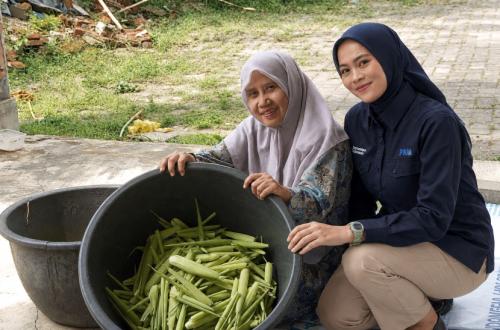
Zulhaida taught herself through video tutorials, processing used corn husks collected from traditional market bins. While her first attempts were far from perfect, a single social media post attracted buyers and paved the way for her business. The attention of a senior artisan became a crucial milestone, as they guided her in improving techniques to ensure the crafts were durable and mould-resistant.
Her business, named Aida Craft, gained recognition through wedding and birthday invitations where she used her floral arrangements as both gifts and promotion, eventually attracting local media coverage. Despite facing scepticism at exhibitions due to her use of waste materials, her perseverance led her to join the Indonesian Handicraft Exporters Association, participate in a three-month MSME development programme, and earn a BNSP certification as a craft trainer.
Capital to expand the business was supported by PNM Mekaar financing, which she accessed in 2024. According to data from the assisted partner, Zulhaida’s handicraft business now employs two people, with monthly turnover reaching Rp 5,000,000, far exceeding her initial sales of Rp 100,000.
Zulhaida noted that the support from PNM extended beyond mere financing. The initial capital from PNM Mekaar was used for essential production needs like pots and glue. Since then, PNM’s empowerment programmes have shaped Aida Craft’s journey through mentorship, business clustering, and advanced entrepreneurship training via Mekaarpreneur.
PNM also regularly involves Zulhaida as a speaker in Business Capacity Development (PKU) activities for fellow clients, travelling from the Johor area to regions such as Berastagi and Binjai to share the skills she once learned alone from piles of waste.
Muhammad Wazir, the Medan Branch Leader, confirmed Zulhaida’s active role within the PNM environment, stating that she is frequently invited to lead training sessions for other clients. Kindaris, President Director of PT Permodalan Nasional Madani (Persero), remarked that Zulhaida’s story is a real example of how PNM financing serves as a gateway for Indonesian women to achieve economic independence and eventually become empowerers for others.
Zulhaida’s reach has even extended beyond the PNM network. A demand from a coastal empowerment programme led her to utilise plastic waste as a new raw material, earning her recognition from the Indonesian Scavengers Association and leading her to train 175 women across Medan. She was even invited by Bank Indonesia to study waste processing in Bali.