
PNM Jambi empowers customers through waste processing and mushroom cultivation
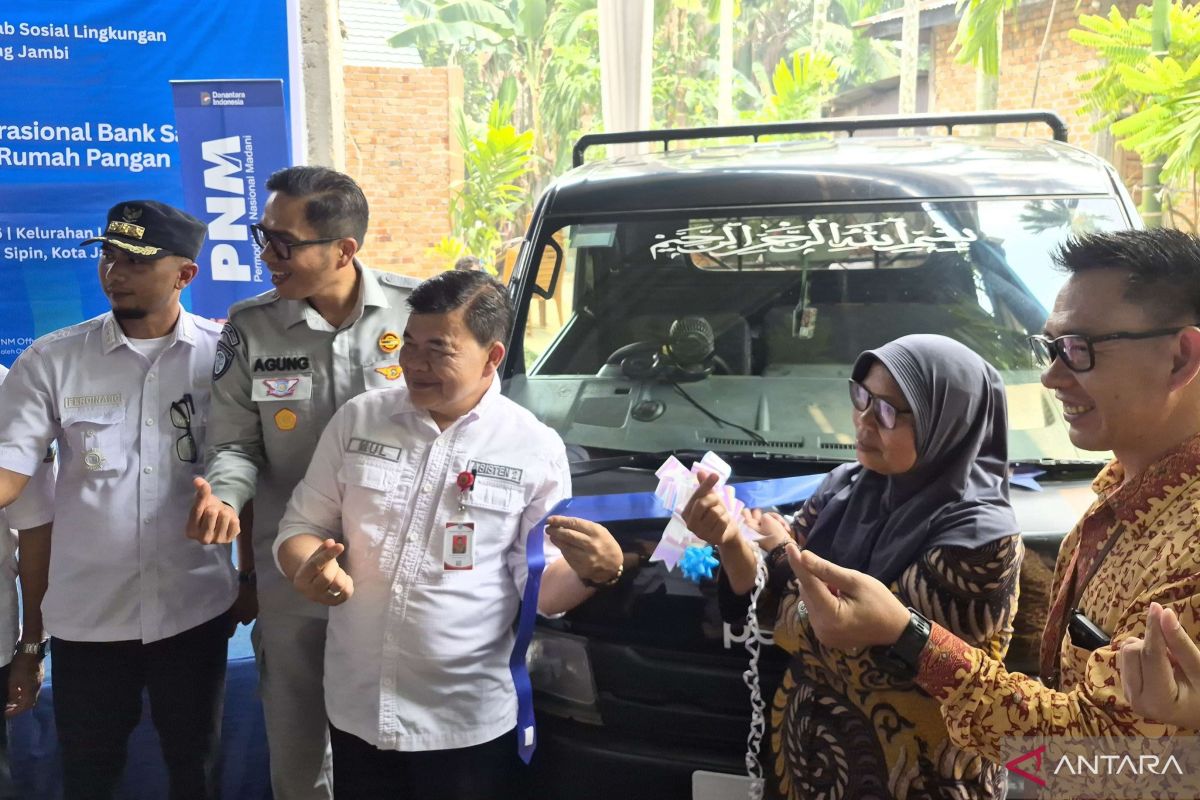
Jambi City (ANTARA) - PT Permodalan Nasional Madani (PNM) Jambi is empowering customers of the Dayung Habibah Waste Bank Mekaar Group in Legok Village, Danau Sipin District, Jambi City, through the provision of a waste processing vehicle and mushroom cultivation support.
PNM Jambi Branch Manager, Erwin Sapriadi, stated on Wednesday that this empowerment programme, part of their social responsibility initiative, was established through collaboration with various parties, including the local government, academics, and the Financial Services Authority (OJK).
“We are very grateful for the support from the government, academics, and OJK. PNM’s presence is not only to provide financing but also empowerment. This is a tangible form of the commitment we have been implementing,” said Erwin.
Erwin explained that PNM’s empowerment programmes are always tailored to the specific potential of each region to ensure they are precisely targeted. One flagship programme currently running in Jambi City involves converting waste into economically valuable savings. To date, 1er 150 customers have joined this waste savings programme.
Through this synergy of financing and empowerment based on local potential, PNM Jambi Branch hopes that Mekaar customers can continue to grow, become economically independent, and sustainably improve their family welfare.
“Waste that previously had no value now possesses economic value; the proceeds from these waste savings can even be used by customers to pay their instalments, which greatly eases their burden. Additionally, we are also encouraging mushroom cultivation to increase the income of Mekaar customers,” he explained.
Leni Haini, Chairperson of the Dayung Habibah Group, recounted that when she joined PNM in 2018, the group had only about 25 members. Over time, membership has steadily increased to 150 people.
According to Leni, this financing programme is highly beneficial to lower-income communities who often face difficulties in accessing capital. Through waste management and healthy capital support, members can now support one another in meeting their loan repayment obligations.
Following the success of their waste processing venture, the group is now developing a mushroom cultivation business. The mushrooms produced will eventually be processed into various derivative products, such as eco-enzymes, soaps, and mushroom-based food products.
“Communities like ours can now work together and help each other with instalment payments; we are also currently developing mushroom cultivation,” she said.
Fathnur Sani K, Head of Community Service Activities at Jambi University (Unja), noted that this mushroom cultivation programme was initially funded by the Ministry of Agriculture. He explained that, in addition to focusing on upstream cultivation, this community service programme also encourages product downstreaming to increase the economic added value for local residents by providing skills to process harvests into high-value products.
Unja hopes that this collaboration with PNM will ensure the sustainability of the community service programme, so that its positive impact on community economic independence can be felt in the long term.
“We are also creating processed products in the form of meatballs, nuggets, and crispy mushrooms. The hope is that the community does not just produce raw mushrooms, but is also capable of producing derivative products that can be resold,” he added.
Assistant II for Economy and Development of the Jambi City Regional Secretariat, Mulyadi, assessed that the donation of a waste collection vehicle by PNM aligns with the regional vision and mission to create a clean environment and revitalise the community-based economy.
According to him, through integrated waste management, the community is not only encouraged to maintain environmental cleanliness but is also taught to transform waste into economically valuable products. Furthermore, the proceeds from waste bank management have proven capable of helping residents meet daily needs and pay their loan instalments.
“This is an innovation for maintaining cleanliness and creating regional food security; this programme is good and provides an economically valuable solution,” said Mulyadi.