
PNM Ignites Dreams of NTT Children through Inclusion and Literacy
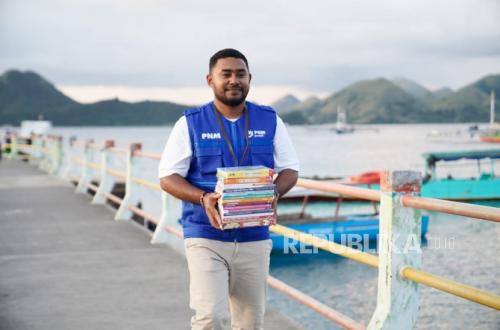
Behind the natural charm of the Rinca Islands, famous worldwide for its savannahs and Komodo dragon habitats, lies a story of children growing up with limited access to education and literacy. This region in eastern Indonesia faces not only geographical challenges, such as inter-island distances and limited transport, but also socio-economic issues that prevent learning facilities, particularly informal education, from developing evenly.
For most communities in the Rinca Islands, the sea is the primary source of livelihood, with fishing and daily labour forming the economic heartbeat of families. In these conditions, access to reading books, comfortable study spaces, and educational support facilities is often difficult to reach. Many children grow up without much choice in reading materials beyond their school textbooks.
Despite these limitations, the children’s passion for learning on Rinca Island continues to grow. This situation motivated PNM to help provide more adequate and enjoyable learning spaces for children in the region. PNM introduced the ‘Ruang Pintar Pojok Baca Rinca’, building facilities that provide not just books, but a warm learning experience connected to the daily lives of coastal children.
Notably, the development of this literacy space was carried out in collaboration with a local youth named Irka, who has been an active driver of literacy activities in the village. The presence of such local heroes is vital in creating a lively learning atmosphere, as they understand the character, needs, and best approaches for the children of Rinca.
Irka noted that PNM’s presence brings wider attention to the island’s community. He observed that while Rinca is often known only for its tourism potential, the educational needs of its children are frequently overlooked. “What I see is that PNM does not only come to provide financing to women or assist community businesses here; they also think about their children. That is what I find different, because education and literacy for children on islands like Rinca also need attention,” he said.
He shared that the children in the village were very enthusiastic when the PNM Smart Space began to be filled with new books and comfortable learning facilities. For some children, the experience of reading illustrated storybooks or studying together in a comfortable space was something they had rarely experienced before. “The children here have great curiosity. When a comfortable and fun learning space is provided, they are very happy to come, read, or simply gather to study together. This assistance from PNM gives them a new space to dream,” he added.
The Rinca Reading Corner Smart Space is designed not merely as a place to store books, but as a space for collective growth. Various children’s books, illustrated stories, general knowledge, and supporting learning facilities have been prepared to create an enjoyable reading experience. The space also serves as a hub for children to gather, discuss, engage in educational play, and discover new things beyond their immediate environment.
In many underdeveloped, frontier, and remote (3T) areas, educational challenges cannot be solved through physical school construction alone. The presence of such learning spaces is crucial because literacy is not just about the ability to read, but about opening windows of opportunity for children in remote regions. Through these simple books and study spaces, children begin to recognise their ambitions, professions, and a world much larger than the island where they grow up. Through empowering financing, ultra-micro entrepreneurs—the local mothers—are able to build dreams for their children to achieve more prosperous lives.