
PNM highlights sharia financing's contribution to women's empowerment
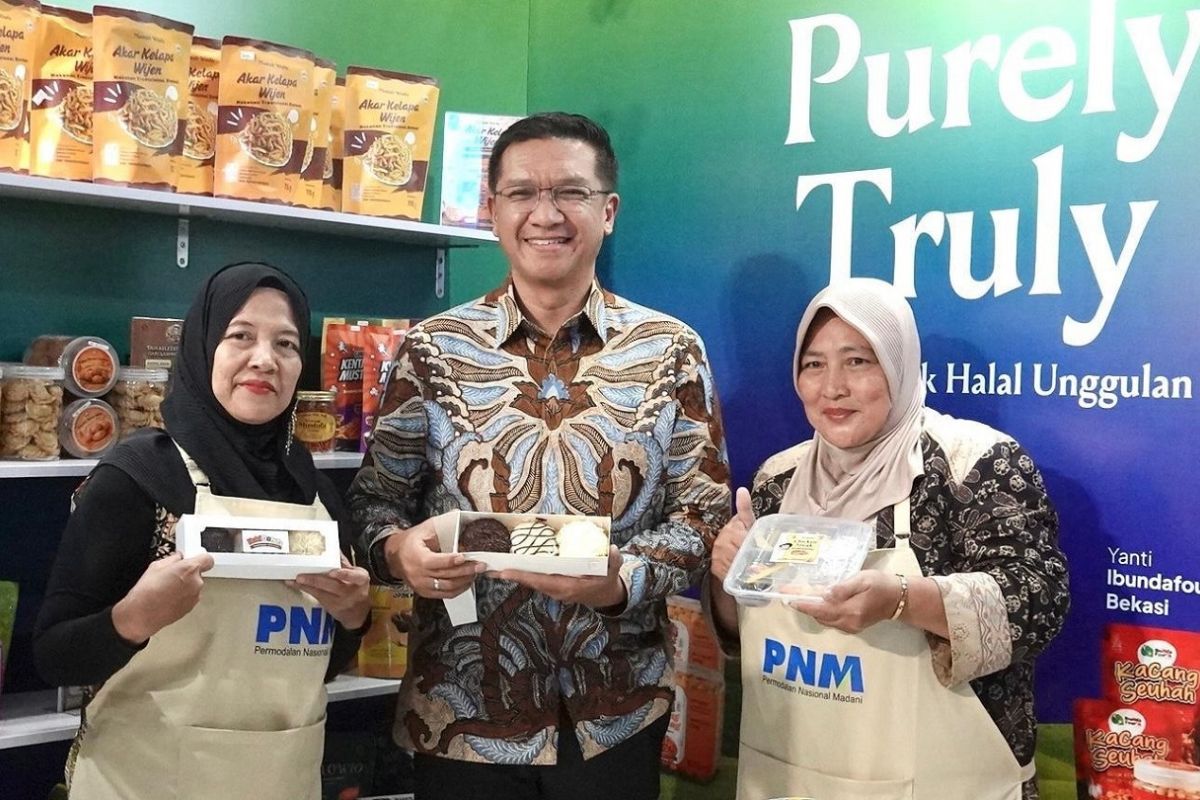
PT Permodalan Nasional Madani (PNM) has highlighted the contribution of Islamic finance to the economic empowerment of communities, particularly underprivileged women. PNM Director of Operations and Institutional Relations Lalu Dodot Patria Ary stated that sharia-compliant financing can be an effective instrument for reducing poverty if designed according to the needs of the community. “Sharia financing can be an effective instrument for eradicating poverty if designed according to the needs of the community,” he said in a statement in Jakarta on Friday. According to Dodot, PNM currently serves 16.1 million clients through its Mekaar programme via 58 branch offices spread across 36 provinces and more than 6,600 sub-districts. Based on company data, 74 per cent of clients experienced an increase in income after joining the programme. Furthermore, around 72 per cent of clients now have a greater role in household decision-making, whilst 90 per cent reported feeling an increase in financial independence. Since 2017, the Mekaar programme has also contributed to an increase in national household consumption amounting to Rp55.81 trillion and boosted exports by fostered entrepreneurs exceeding US$3 billion. In his presentation, Dodot assessed that the strength of PNM’s financing model lies in the application of social collateral, a joint liability system among women’s groups that guarantees one another without relying on physical assets, a model deemed aligned with sharia finance principles. He stated that 16 million women never asked to be rescued; they only wanted space to grow and to no longer be underestimated. “When trust is given, they are able to change the lives of their families and even their communities. That is the essence of sharia-based ultra-micro financing,” he said whilst introducing Indonesia’s sharia ultra-micro financing model at the Halal Expo Indonesia (HEI) 2026 in Jakarta. The forum was attended by delegations from nine Developing Eight (D-8) member countries, namely Bangladesh, Malaysia, Turkey, Egypt, Nigeria, Pakistan, Iran, Azerbaijan, and Indonesia. Dodot emphasised that PNM’s presence at the international forum was not merely to report figures, but to introduce an empowerment approach that positions underprivileged women as key actors in economic development, rather than as objects of aid. He noted that around 73 per cent of the Mekaar programme’s financing portfolio now uses sharia schemes. The company is also developing an empowerment model based on three types of capital—financial, intellectual, and social—to strengthen the capacity of ultra-micro business actors. PNM’s participation in Halal Expo Indonesia 2026 further underscores Indonesia’s efforts to promote inclusive sharia financial practices to D-8 member countries. Through this model, it is hoped that sharia financing can become a solution for strengthening the halal economy whilst expanding empowerment for ultra-micro business actors.