
PNM Boosts Coastal Women's Businesses in Gresik Through Downstreaming
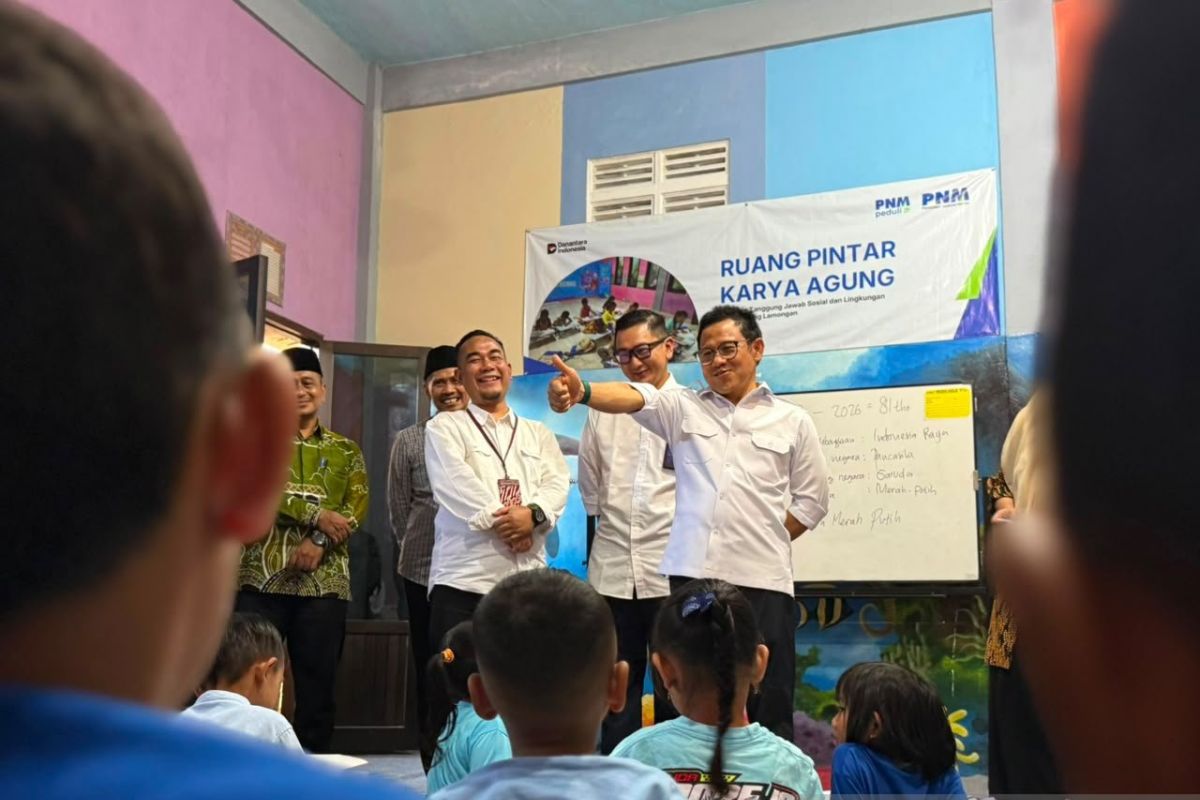
PT Permodalan Nasional Madani (PNM) is encouraging ultra-micro businesses run by coastal women in Gresik Regency, East Java, to increase the added value of marine products through a downstreaming programme. PNM President Director Kindaris stated that financing serves as an entry point to strengthen community enterprises, but capacity building is the crucial factor in ensuring that capital generates greater economic returns. “Change comes in simple yet tangible forms: growing businesses, stronger family incomes, open employment opportunities, and children gaining better access to education,” Kindaris said in a statement in Jakarta on Monday. PNM’s efforts combine access to financing with business mentoring, product quality improvement, legalisation, certification, and market expansion to prevent entrepreneurs from remaining stuck in subsistence-level economic activities. This empowerment model is being implemented in Watuagung Village, Bungah District, an area on Mengare Island whose economy relies on fisheries, aquaculture, trade in marine products, and home-based processing industries. According to Kindaris, the measure of successful empowerment is not merely the volume of financing disbursed, but the ability of businesses to increase production, strengthen household incomes, expand markets, and create jobs. This approach is vital because most of Mengare Island’s economic potential stems from the primary sector. Fishery and aquaculture products have the opportunity to generate greater economic value if they are not only sold as raw commodities but processed into products with higher selling prices. “For this reason, PNM is promoting business clustering with mentoring that covers production process improvements, halal certification, business legalisation, brand strengthening, and packaging upgrades,” Kindaris said. The approach is expected to lengthen the economic value chain at the local level. The added value from marine products will not entirely leave the village with the sale of raw commodities but can be retained locally through processing, trading, and the creation of new jobs. The potential is considerable, given that Watuagung Village has around 3,000 residents. According to 2025 data from the Central Statistics Agency (BPS), 1,492 residents are women, and approximately 60 percent of the village community are registered as PNM Mekaar customers. The high level of community participation in ultra-micro financing also highlights the position of women as key drivers of household economic activity in coastal areas. One example is the business of Lisminah, a woman who has preserved the traditional production of shrimp paste for generations. After receiving financing and mentoring from PNM Mekaar, her business has grown in terms of production capacity, product quality, and marketing. What was once part of the family’s economic activity has developed into the main source of income and created job opportunities for the surrounding community. The growth of Lisminah’s business demonstrates that an ultra-micro entrepreneur moving up a level is not solely marked by an increased financing ceiling. Change must also be reflected in productivity, product quality, market reach, legal standing, brand strength, and the ability to create an economic impact on the surrounding environment. Coordinating Minister for Community Empowerment Muhaimin Iskandar, during a visit to Watuagung Village, assessed that the approach combining financing with empowerment is effective in strengthening family economies. “It is very effective in helping the family economy, and I received encouraging news that the account officer is also a very active backbone of the family here,” Muhaimin said. According to Muhaimin, strengthening communities cannot be achieved merely by opening access to financing. Mentoring is necessary so that business activities become more productive and capable of generating higher economic value. For coastal communities, this increase in productivity is important because local economic strength is determined not only by the abundance of available resources but also by the community’s ability to process those resources into value-added products. PNM is also expanding its empowerment approach to strengthening family human resources through the Ruang Pintar programme. This programme provides free tutoring and learning facilities for the children of PNM Mekaar customers who have limited access to supplementary education. Ultimately, increasing women’s capacity has a longer-term economic impact, as strengthening family income can expand children’s opportunities to obtain a better education. The development of women’s enterprises on Mengare Island shows that strengthening the coastal economy can begin from the smallest economic unit. “On a broader scale, this pattern can strengthen the coastal economic structure through the creation of added value in the area of origin of production, increased household income, and the opening of new economic activities driven by the local community,” Muhaimin concluded.