
PM Takaichi Calls for UN to Remove 'Enemy State' Label for Japan
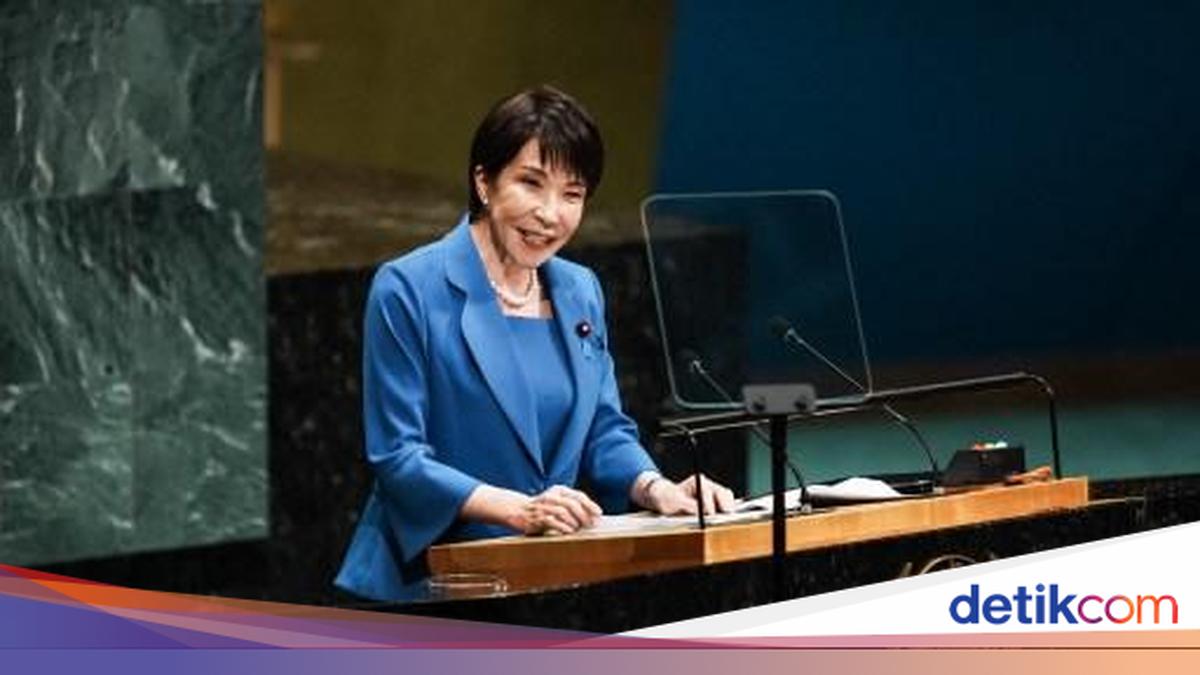
Japanese Prime Minister Sanae Takaichi utilised her first speech at the UN General Assembly to call for a fundamental overhaul of the world body. This includes, she argued, the removal of provisions from the 1940s era that are frequently cited by China in disputes with Tokyo, which label Japan as an ‘enemy state’.
According to The Japan Times, TASS, and the Japanese PM’s official website, Takaith noted on Wednesday (23/9/2026) that this year marks 70 years since Japan was admitted as a UN member in 1956. Takaichi reaffirmed Tokyo’s commitment to multilateralism, stating that the organisation is ‘more important than ever’.
She went on to say that the UN ‘must be reborn as a more resilient and effective United Nations and regain the trust of the international community’. Takaichi subsequently called for a review of the UN Charter and the deletion of clauses referred to as the ‘enemy state’ clauses.
“The UN Charter, now 81 years old, also needs to be reviewed. Regarding the provisions concerning what are called ‘enemy states’, the UN General Assembly adopted a resolution in 2005 to remove the mention of ‘enemy states’ from the UN Charter, reflecting the determination of Heads of State and Government from all member states. In accordance with that resolution, these provisions must be removed. I wish to strongly reaffirm this position, given that Japan feels proud and honoured by its significant contributions to various United Nations efforts over the last 70 years,” Takaichi stated.
For context, these provisions label countries that fought against the signatories of the UN Charter during World War II—including Japan, Germany, and Italy—as ‘enemy states’, while maintaining language that governs territorial arrangements resulting from the war. The UN General Assembly itself recognised these clauses as obsolete through a 1995 resolution and expressed its intention to remove them.
At the 2005 World Summit, heads of state and government reaffirmed their commitment to removing these references. However, the effort has never been completed, largely due to the complex amendment procedures required for the UN Charter.
This issue has recently regained political significance amidst deteriorating relations between Japan and China. Beijing insists that the clauses remain legally binding and serve as a guardian of the post-WWII international order, while accusing the Takaichi administration of accelerating Japan’s ‘remilitarisation’.
Tokyo has rejected this interpretation, stating that the clauses are obsolete and that its security policy remains aligned with the post-war Constitution, which adheres to the principle of pacifism and a defensive military posture. In her speech, Takaichi stated that the reform of the UN Security Council is ‘extremely urgent’ and called for an increase in both permanent and non-permanent seats to enhance the council’s legitimacy and representation.
The Council consists of 15 members. China, France, Russia, the United Kingdom, and the United States hold permanent seats and possess veto power over non-procedural resolutions, while 10 other members are elected for two-year terms without veto rights. Japan has long sought a permanent seat.
Takaichi highlighted the use of the veto by Russia regarding resolutions related to its invasion of Ukraine as evidence of the body’s failure to fulfil its responsibility in maintaining international peace. She also cited the progress of North Korea’s nuclear and missile programmes, as well as dangerous cyber activities, as clear violations of Security Council resolutions that pose serious threats to international peace and security.
Takaichi also reaffirmed Japan’s ‘consistent support’ for the International Criminal Court (ICC), which has recently faced repeated attacks from US President Donald Trump. Takaichi identified several priorities, including strengthening the supply chains for energy and critical materials, expanding cooperation for peace and stability, and maintaining a free and open international order based on the rule of law.
“These challenges cannot be solved by a single nation acting alone,” she said. Now, more than ever, the flag of the United Nations must be upheld.