
Plugging State Budget Leaks Starts with Improving Indonesia's Wealth Governance
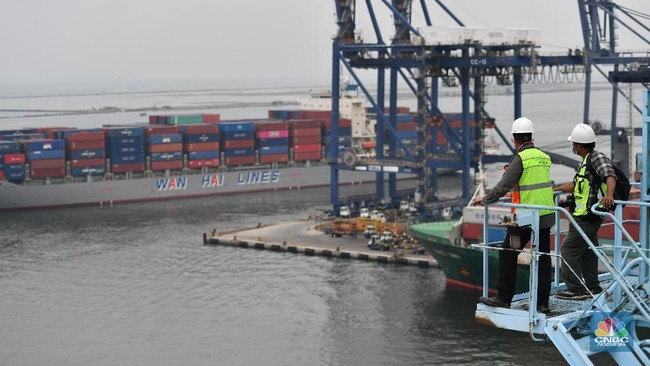
The administration of President Prabowo Subianto is continuing its efforts to plug leaks in state wealth, including those related to budget losses from illegal practices. On various occasions, the head of state has often mentioned that state wealth and fiscal leakage could reach thousands of trillions of rupiah each year.
Piter Abdullah, Programme Policy Director at the Prasasti Center for Policy Studies, believes that preventing such leakage is not enough if it only involves optimising tax revenue and strengthening the law. He considers that the government must also ensure that natural resource management provides maximum benefits to the public, in accordance with the mandate of Article 33 of the 1945 Constitution.
So far, attention has mostly been focused on revenue leakage, such as taxes, customs, and exports, whereas the potential for leakage from natural resource management is far greater. “There are two types of fiscal leakage: from the revenue side and from the expenditure side. We often only see the revenue leakage, even though the potential leakage from state wealth management is actually much larger,” he said in a written statement on Thursday (23/7/2026).
Piter acknowledged that Indonesia has abundant natural wealth, but the economic benefits have not fully returned to the state and society. He therefore urged the creation of regulations that comprehensively translate the mandate of Article 33 of the 1945 Constitution, so that natural resource management is fairer and favours public welfare. “The land, water, and natural resources contained within them must be managed for the greatest prosperity of the people. The mandate of Article 33 needs to be translated into clear regulations,” he asserted.
According to him, the economic benefits of natural resource exploitation that are not felt by local communities can be seen in the inequality in several mining-producing regions, which record high economic growth but see little change in poverty rates. “Many regions grow above the national average because of mining, but their poverty levels do not change. This means the results of natural wealth are not truly enjoyed by the people,” said Piter Abdullah.
Meanwhile, Harris Turino Kurniawan, a member of House Commission XI from the PDI-P faction, stressed that fiscal and state wealth leakage tends to be caused by weak law enforcement and supervisory systems. He said the problem of leakage, such as in the State Budget (APBN), is not due to a lack of legal instruments, but rather the weak enforcement of laws and oversight systems, which allows potential state losses to continue occurring. “Indonesia’s regulations to prevent budget leakage are actually very comprehensive.”
Therefore, government attention should be focused on strengthening the implementation of rules through consistent law enforcement and more effective supervision. “Our legal instruments are already very complete and capable of preventing budget leakage. The problem lies in law enforcement and supervision, which still need to be strengthened.”
Based on findings from the Financial and Development Supervisory Agency (BPKP), he noted there are more than 1,100 audit results related to alleged corruption. He believes these findings demonstrate the need to strengthen BPKP’s role as the government’s internal supervisory apparatus. BPKP’s function should not be limited to conducting audits after an activity has taken place, but must also be strengthened through review and monitoring mechanisms from the outset so that potential irregularities can be detected earlier. “The monitoring role must be emphasised so that leakage can be prevented from the start, not after state losses have occurred,” said Harris.
Beyond supervision issues, Harris also highlighted the large scale of underground economic activity, which remains a challenge for state revenue. One example is the circulation of illegal cigarettes, which is estimated to reach around 11% to 14% of the total national cigarette circulation. He assessed that eradicating illegal cigarettes could not only potentially increase state revenue but also create wider employment opportunities for the legal cigarette industry.