
PLN's Efforts to Boost Power Plant Reliability and Prevent Blackouts
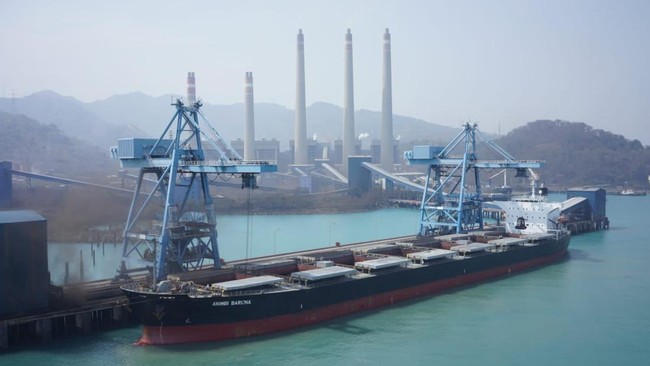
PT PLN (Persero) has disclosed several short-term to long-term strategies to improve the reliability of the national electricity system, particularly to prevent power outages in the Java and Sumatra systems that occurred recently.
The President Director of PT PLN (Persero), Darmawan Prasodjo, stated that in the short term, the reliability of the electricity supply in Java will be strengthened through additional coal supplies with a calorific value above 4,500 kcal/kg. This additional supply is capable of increasing the power supply capacity of power plants by approximately 5 Gigawatts (GW).
The company will receive an additional coal supply of 1.8 million tonnes in July 2026. Subsequently, from August to December 2026, it will receive an additional 3 million tonnes of coal per month, beyond existing contracts.
“For Java, in the short term, the addition of coal supplies with a calorific value of 4,500 and above increases the power supply capacity by 5 Gigawatts on top of what already exists. We will certainly continue to maintain and improve this as a short-term solution,” said Darmawan during a Hearing with Commission XII of the Indonesian House of Representatives (DPR RI) on Thursday (2/7/2026).
Nevertheless, the company is also preparing medium and long-term strategies, given that the production of high-calorific coal is expected to continue declining. One such strategy is performing retrofits on power plants so they can utilise lower-calorific coal.
According to him, a pilot retrofit project has been successfully implemented at the Suralaya Power Plant. Through this modification, the plant, which previously used coal with a calorific value of around 4,600 kcal/kg, is now able to operate using coal with a calorific value of 4,100-4,200 kcal/kg.
“And we are scaling this up across all PLN-owned power plants, specifically within Indonesia Power and Nusantara Power,” said Darmashaw.
PLN is also beginning to encourage Independent Power Producers (IPPs), or private electricity developers, to undertake similar measures. This is because most private plants still rely on medium to high-calorific coal in accordance with their electricity purchase agreements.
On the other hand, PLN is also accelerating the strengthening of the electricity system on Java Island through the construction of New and Renewable Energy (ERE) plants, in line with President Prabowo Subianto’s directive to develop 100 GW of renewable energy capacity, particularly Solar Power Plants (PLTS).
Darmawan believes that the utilisation of land prepared by the government and reservoirs will strengthen the electricity system while simultaneously reducing fuel oil (BBM) consumption and the basic cost of electricity provision.
“The potential of the lands provided by the government as well as reservoirs can be used to strengthen the Java electricity system. Furthermore, we are accelerating the programmes already established in the 2025-2034 Electricity Supply Business Plan (RUPTL),” he said.
As for the Sumatra system, he acknowledged that challenges remain regarding the transmission network, particularly along the west coast. Currently, the transmission network on the east coast is considered stronger than that of the western region.
He noted that the electricity supply in southern Sumatra is relatively surplus, necessitating evacuation towards northern Sumatra. Therefore, PLN will strengthen the transmission network along the west coast of Sumatra.
“First is the strengthening of transmission on the west coast. This spans from North Sumatra to Nagan Raya, Tapaktuan, to Banda Aceh. Additionally, from South Sumatra through Bengkulu, West Sumatra on the west coast, to North Sumatra, Padang Sidempuan, and Aceh. Through this, we can certainly achieve strengthening,” he said.
Meanwhile, in Kalimantan, the strengthening of the electricity system will be carried out through the development of renewable energy-based plants, including solar (PLTS), hydropower (PLTA), micro-hydro, wind, biomass, gas-based plants, and plans for nuclear power plant (PLTN) development.
“Similarly, in Kalimantan, this is part of the 100-gigawatt solar programme that we are implementing there. There will also be gas-based plants, as well as renewable energy-based plants including hydro, micro-hydro, wind, solar, and biomass, and in Kalimantan, there is also a nuclear-based component,” he concluded.