
PLN: Welding Training under CSR Programme Supports Community Economic Self-Reliance
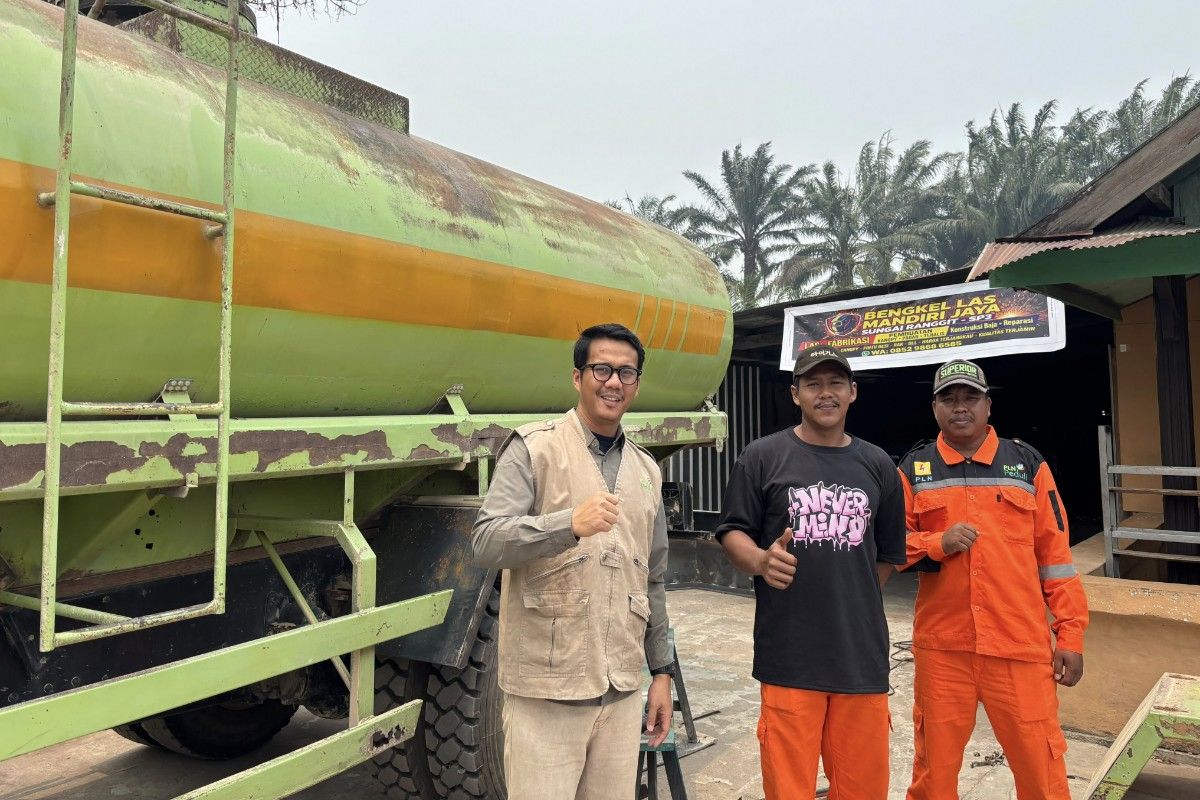
Palangka Raya (ANTARA) – PLN has run a Corporate Social and Environmental Responsibility (TJSL) welding certification training programme in Purbasari village, Pangkalan Lada sub-district, West Kotawaringin regency, Central Kalimantan, which it says has successfully supported the community’s economic self-reliance.
“The TJSL programme not only provides welding skills training and competency certification, but also includes support with equipment and business materials, the construction and development of a welding workshop, electricity provision and assistance with business licensing,” said Asep Asikin, manager of PLN’s West Kalimantan Project Implementation Unit 3 (UPP KLB 3), speaking to ANTARA from Palangka Raya on Monday.
He said the programme recorded a Social Return on Investment (SROI) score of 1.96 and a Community Satisfaction Index (IKM) score of 89.50, rated Very Good (A).
The results came from monitoring and evaluation of a programme involving 10 participants. It aims to improve residents’ welding skills while opening up employment opportunities and encouraging self-employment.
An SROI score of 1.96 means that every Rp1 invested in the programme is estimated to generate Rp1.96 in social benefits, based on the measurement. The IKM score of 89.50 reflects beneficiaries’ satisfaction with the programme’s delivery.
One business supported through the programme is UD Subur Makmur. Development of its workshop is intended to make use of welding skills and expand economic opportunities for the local community.
The programme’s benefits are also becoming evident in participants’ activities after completing the training. Some have developed independent welding businesses, while others have found work at companies related to the skills they acquired.
“We want to ensure that PLN’s TJSL programmes deliver tangible and sustainable benefits to the community,” he said.
He said participants’ ability to start businesses or find jobs after the training was one indication that the programme’s benefits would endure.
He added that mentoring and business-development support were important to sustaining the programme’s impact, enabling participants to continue generating economic value from the skills they had acquired.
Purbasari village head Edi Mudianto welcomed PLN’s TJSL programme, saying it gave residents an opportunity to improve their skills and develop their economic potential.
“We appreciate PLN’s programme, which has provided welding training and certification to the community,” he said.
“These skills can serve as a foundation for employment or for starting a business independently. We hope programmes like this will continue to benefit residents and create opportunities for the people of Purbasari village.”
Based on the evaluation, PLN UIP KLB will continue working to improve the effectiveness of its TJSL programmes so they focus not only on skills development, but also on creating employment opportunities, supporting independent businesses and strengthening the community’s economy sustainably.