
PLN Watch Urges Thorough Probe into Coal Supply Corruption, Targeting Masterminds
The alleged corruption in the procurement and supply of coal for power plants must be investigated thoroughly, as it not only has the potential to cause state losses but could also affect the reliability of the national electricity system. The uncovering of this case is expected to be a momentum to improve the governance of the primary energy supply chain to prevent similar disruptions from recurring.
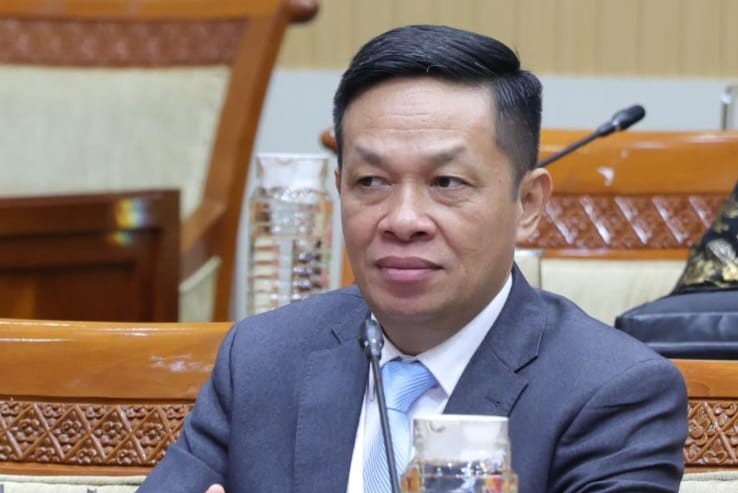
PLN Watch Chairman Tohom Purba urged law enforcement to trace all parties suspected of being involved in irregularities in coal procurement, from suppliers, surveyors, testing laboratories, and transport companies, to procurement officials and those receiving the goods at the power plants. The statement was made by Tohom after attending a Hearing Meeting of the Indonesian Advocates Congress with Commission III of the House of Representatives regarding the Draft Asset Forfeiture Bill at the Parliament Complex, Senayan, Thursday (9/7).
According to him, the investigation must not stop at field perpetrators but must uncover the entire supply chain suspected of profiting from the manipulation of quality, quantity, documents, and the contract value of coal procurement. “PLN must not be sacrificed and made the sole party to blame, when in fact there is a long procurement chain involving supplier companies, surveyors, testing laboratories, transporters, procurement officials, supervisors, and receiving parties,” Tohom said.
He believes the public needs a complete picture of the causes of electricity disruptions so that assessments of PLN’s performance are not built on incomplete information. According to him, as the electricity system operator, PLN is highly dependent on the quality and continuity of primary energy supplies. Therefore, coal that does not meet contract specifications has the potential to affect power plant performance.
“PLN is an electricity service operator that is highly dependent on the certainty of quality and continuity of primary energy, so coal that does not comply with the contract can affect the plant’s ability to generate electricity optimally,” he stated. Tohom views that the alleged irregularities not only impact state losses but also have the potential to disrupt industrial activities, public services, transportation, and the community’s economy if the reliability of the electricity system is compromised.
He also encouraged investigators to apply a ‘follow the money’ approach to trace the flow of funds and link the alleged procurement irregularities to their impact on plant operations. “The flow of funds must be uncovered to identify the parties enjoying the proceeds of crime, while the trail of disruptions must be traced to find out how supply manipulation can develop into a threat to national energy infrastructure,” he said.
Furthermore, he requested that investigators utilise instruments of money laundering and asset forfeiture if indications of concealment of corruption proceeds are found. According to him, the legal process must also be accompanied by improvements to the procurement system so that it does not only end with punishing the perpetrators but can also close loopholes for similar irregularities in the future.
He proposed an independent forensic audit of coal quality, shipment volumes, laboratory test results, shipping documents, weighing processes, and contract payments to ensure conformity between contract specifications and actual field conditions. “Every discrepancy between contract documents and actual supply conditions must be disclosed so that the public knows whether PLN received coal according to specifications or was instead a victim of manipulative practices,” he said.
Tohom added that uncovering this case could be a momentum to strengthen primary energy governance through digital supervision, contract transparency, real-time distribution monitoring, and strict evaluation of supplier companies. He also proposed that companies proven to have committed manipulation be placed on a national blacklist so they cannot participate in procurement at PLN or other state-owned enterprises again.
This demand aligns with the ongoing investigation by the Corruption Eradication Corps of the Indonesian National Police regarding alleged corruption and money laundering in the coal supply to several coal-fired power plants for the 2018-2026 period. The investigation commenced on 4 July 2026 after investigators found indications of irregularities in the procurement process. In the case development, investigators have examined at least 16 witnesses and are investigating alleged document manipulation, discrepancies in coal quantities, and contract payments that do not reflect actual supply conditions. Preliminary estimates of state losses in this case reach approximately Rp5 trillion.