
PLN transforms waste into community income through Jolali Waste Bank
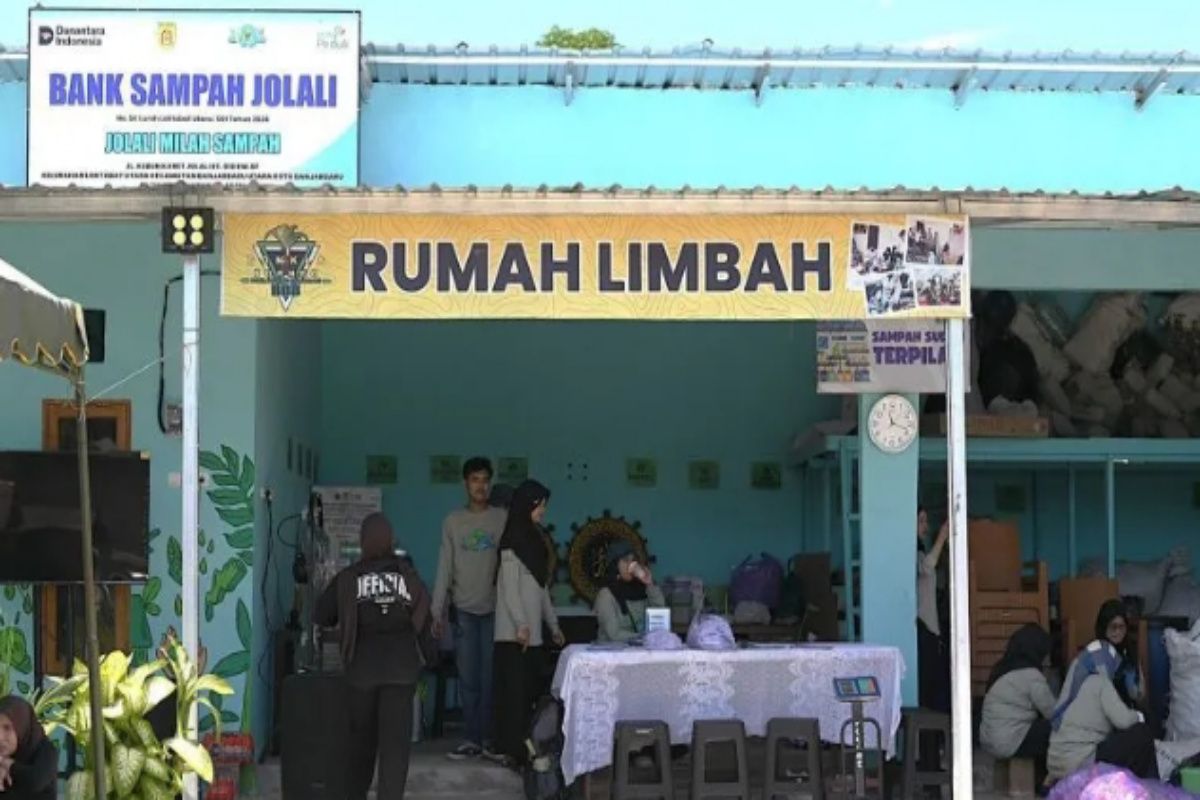
Banjarbaru, South Kalimantan - PT PLN (Persero) UID South and Central Kalimantan is strengthening community empowerment through the PLN Peduli Desa Berdaya Jolali programme by developing the Jolali Waste Bank in Banjarbaru. The initiative aims to transform waste into a source of income while increasing environmental awareness. The programme serves as an example of how waste management can not only contribute to reducing waste volume but also foster new community habits of sorting waste at home, thereby providing added value to family economies.
General Manager of PT PLN (Persero) UID Kalselteng, Iwan Soelistijano, stated in Banjarbaru on Saturday that community empowerment is a vital part of PLN’s commitment to delivering sustainable benefits beyond providing reliable electricity. “The Jolali Waste Bank serves as an example of environmental care that can create economic benefits, strengthen togetherness, and build a more sustainable way of life,” said Iwan.
According to him, the success of the programme stems from the community acting as the primary players in waste management, ensuring that the benefits are felt directly by residents. Continuous mentoring has also encouraged changes in community behaviour regarding household waste management. Through this programme, plastic bottles, cardboard, used paper, and various types of inorganic waste that were previously discarded are now collected and managed as savings or additional income for the customers of the Jolali Waste Bank.
Iwan noted that the resulting impact demonstrates how collaboration between PLN and the community can bring real change in environmental, social, and economic aspects. This success also led the PLN Peduli Desa Berdaya Jolali programme to win the Gold Indonesian SDGs Awards (ISDA) 2025, in recognition of its contribution to supporting the Sustainable Development Goals (SDGs).
Margiono, one of the managers of the Jolali Waste Bank, acknowledged that building a culture of waste sorting is a long process, but consistent mentoring has enabled the community to begin feeling the benefits. “Initially, it was not easy to invite residents to sort waste from home. However, over time, they have begun to feel the benefits. The environment has become tidier, waste volume has decreased, and the proceeds from waste sales can be used for family needs or community activities,” he said.
This shift in community behaviour is considered a significant achievement, as waste management is no longer viewed merely as a cleanliness activity, but as part of an effort to strengthen the environment-based family economy. Elma, a resident of Banjarbaru and a customer of the Jolali Waste Bank, said that sorting waste has now become a family routine. “Now we collect and sort it first. The results are not always large, but they are sufficient to help with daily needs, and most noticeably, the environment is cleaner, and children are also learning that waste can have value if managed well,” she said.
PLN hopes that the success of the Jolali Waste Bank can inspire more communities to develop community-based waste management so that economic, social, and environmental benefits can continue to be felt sustainably by future generations.