
PLN Supports National Transformation of Waste Management into Electricity
Jakarta (ANTARA) - PT PLN (Persero) has given its full backing to the Government’s initiative to drive the national transformation of Waste Processing into Electricity (PSEL), a significant step towards delivering sustainable environmental solutions while creating added value for society.
“PSEL represents a transformation in waste management,” said PLN President Director Darmawan Prasodjo in a statement in Jakarta on Saturday.
He said that transforming waste into energy is an important step in providing a sustainable solution for the environment while creating added value for communities.
“Through strong collaboration, waste is no longer seen as a burden but can be processed into a beneficial source of energy. PLN is ready to support this programme by ensuring the energy produced can be reliably absorbed into the electricity system so its benefits can be felt widely by the public,” Darmawan said.
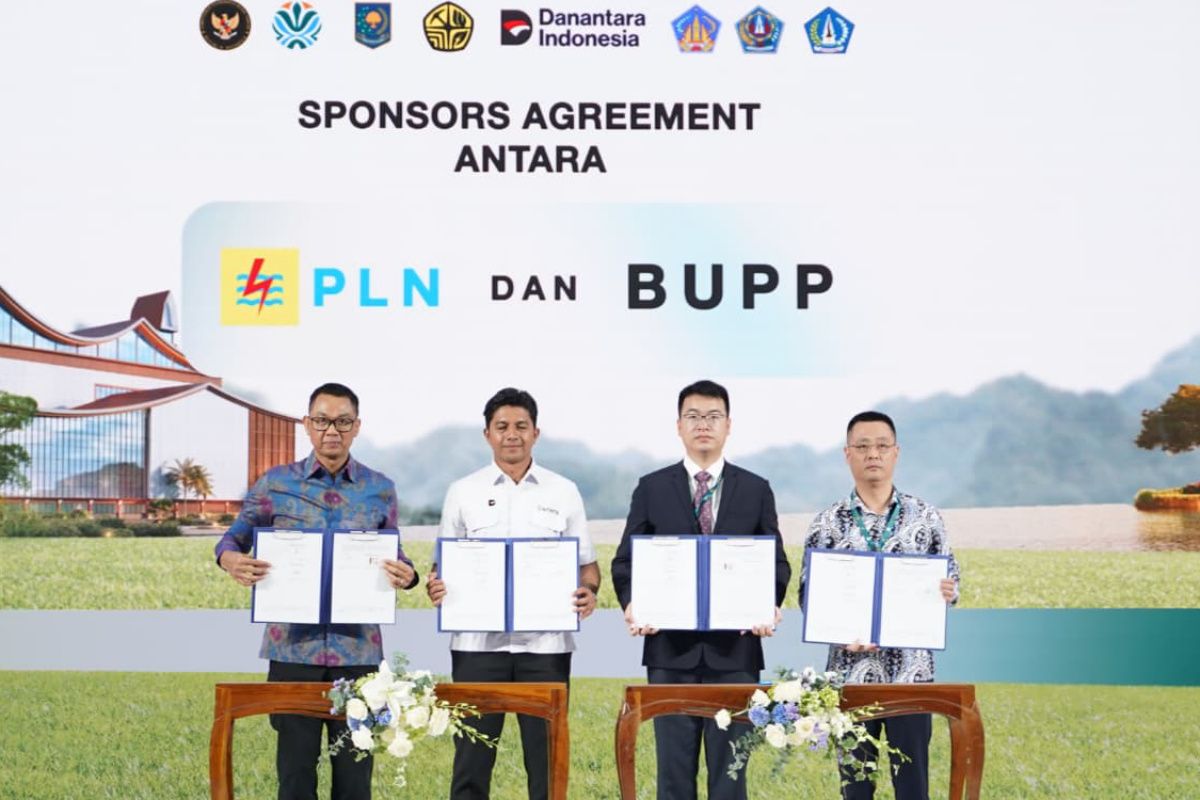
PLN expressed its full support for the transformation programme through the signing of a Sponsor Agreement and a Power Purchase Agreement (PPA) at the ceremony marking the commencement of construction of the Bali PSEL facility in South Denpasar on Wednesday (8 July).
The commitment was signed by PLN as the offtaker, PT Daya Energi Bersih Nusantara (Denera) as the parent company overseeing all project implementing entities for PSEL in Indonesia, and PT Weiming Nusantara Bali New Energy as the Development and Management Business Entity (BUPP) for the Bali PSEL.
The Bali PSEL facility is designed to have a waste processing capacity of 1,200–1,650 tonnes per day with the potential to generate up to 30 megawatts (MW) of electricity. The project forms part of PSEL development across 11 locations targeted to process up to 14,928 tonnes of waste per day, with a potential generating capacity of 310.3 MW.
The development of PSEL facilities in various regions is expected to be a concrete step in strengthening national waste management whilst providing energy that benefits communities.
PLN is supporting these efforts by ensuring the energy generated from PSEL facilities can be integrated into the national electricity system so that the benefits can be felt more widely.
Meanwhile, Coordinating Minister for Food Affairs Zulkifli Hasan said the construction of PSEL facilities is an important step in strengthening national waste management.
The Government’s commitment has been reinforced through the issuance of Presidential Regulation Number 109 of 2025 on Waste Handling through the Processing of Waste into Environmentally Friendly Technology-Based Renewable Energy.
“I extend my thanks to Danantara Indonesia, regional governments, PLN, and all parties working together to realise the start of construction of the Bali PSEL,” he said.
He said the programme could proceed because regulatory obstacles that had for years delayed the resolution of waste problems were being simplified through deregulation.
“With clearer rules, strong cooperation, and good governance, I am confident we can accelerate waste management to deliver real benefits for communities and the environment,” Zulkifli said.
On the same occasion, Chief Executive Officer of Danantara Indonesia, Rosan Perkasa Roeslani, said the construction of PSEL facilities follows President Prabowo Subianto’s directive to accelerate the resolution of the national waste problem.
“In line with President Prabowo Subianto’s direction, the waste problem is a shared challenge that must be resolved as quickly as possible, so it does not become a burden for future generations. PSEL exists to address the impact of waste on the environment, health, and safety using proven technology. Danantara Indonesia’s implementation of PSEL is not only fast, but also carried out with great care and the highest governance standards,” Rosan said.
For the Province of Bali, the construction of the PSEL is a strategic step to strengthen environmental quality whilst supporting the sustainability of the tourism sector, one of the main drivers of the regional economy. In the same vein, Bali Governor I Wayan Koster said the construction of the Bali PSEL is an important step in strengthening waste management on the Island of the Gods.
“Once this is completed, not only will the environmental ecosystem be good and healthy for people’s lives, but Bali’s tourism image will also improve,” Koster said.