
PLN Sulselrabar Pledges to Continue Developing Electrifying Agriculture Programme
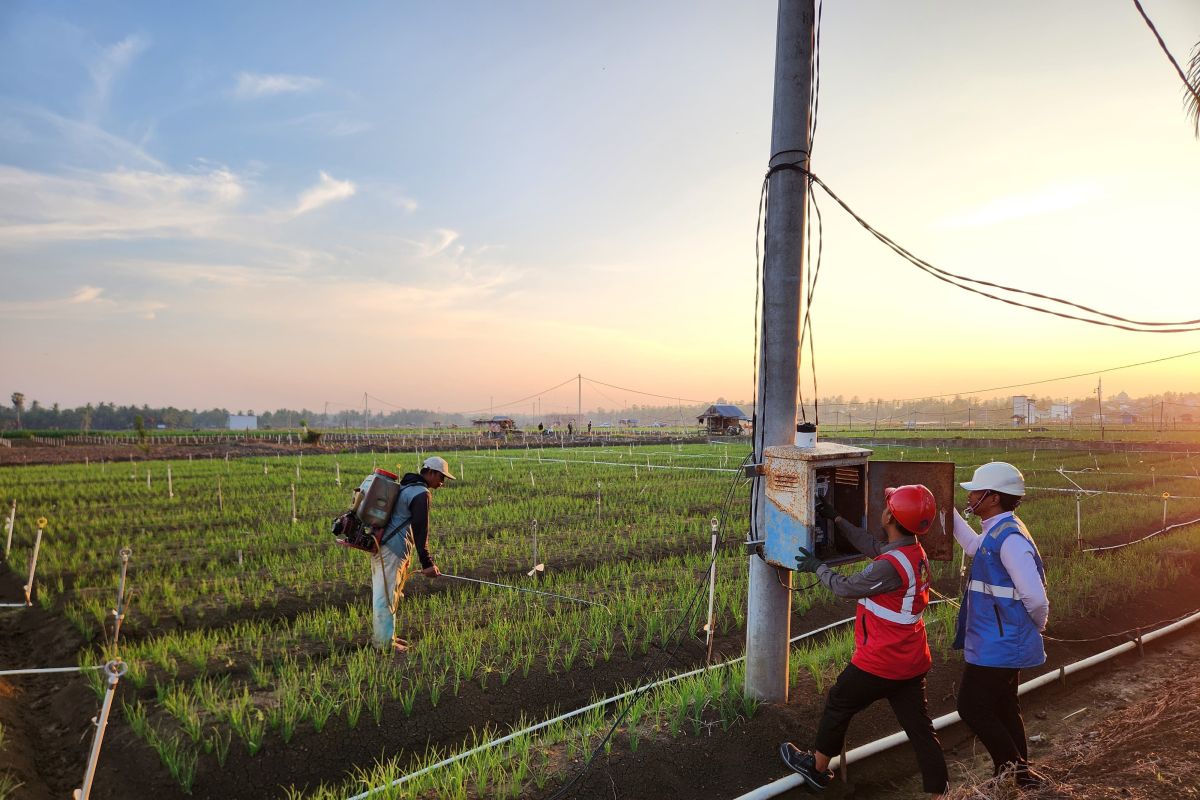
Every flow of electricity powering water pumps in rice fields, supporting agricultural equipment and running livestock systems creates opportunities for communities to thrive.
Makassar (ANTARA) – PLN’s South Sulawesi, Southeast Sulawesi and West Sulawesi Distribution Unit (UID Sulselrabar) has pledged to continue developing its Electrifying Agriculture programme to support the transformation of agriculture into a more modern and sustainable sector, while improving the efficiency, productivity and competitiveness of local businesses.
“Every flow of electricity powering water pumps in rice fields, supporting agricultural equipment and running livestock systems creates opportunities for communities to thrive,” PLN UID Sulselrabar General Manager Didik Wicaksono said in a statement in Makassar, South Sulawesi, on Monday.
He said the programme’s development was part of PLN’s commitment to expanding the benefits of electricity, particularly in productive sectors that underpin the regional economy.
As of September 2026, PLN UID Sulselrabar had recorded 4,438 customers in the Electrifying Agriculture programme, with total connected capacity reaching 208,553.3 kilovolt-amperes (kVA).
Launched in 2021, the programme is PLN’s effort to encourage the use of electricity to increase productivity and efficiency in agriculture, plantations and livestock farming across South Sulawesi, Southeast Sulawesi and West Sulawesi.
“Through Electrifying Agriculture, we are encouraging more productive and efficient use of electricity to help farmers reduce operating costs, increase agricultural output and strengthen food security,” Didik said.
He said the 81st National Electricity Day on 27 October 2026 served as a reminder for PLN to continue extending the benefits of electricity to the public—not only to meet basic needs, but also to support productive economic activity.
Didik said electricity use in agriculture was not focused solely on increasing the number of customers and connected capacity, but also on creating added value for farmers and businesses through more efficient production.
PLN is also promoting electricity use for a range of agricultural business needs, from irrigation pumps and water systems to lighting, ventilation and livestock equipment. The technology is expected to help businesses carry out production more conveniently and with modern methods.
He added that developing Electrifying Agriculture required cooperation between PLN, local governments, farmers’ groups, businesses and other stakeholders to ensure electricity use met needs on the ground, alongside adequate power infrastructure.