
PLN selects government land for solar power and energy storage projects
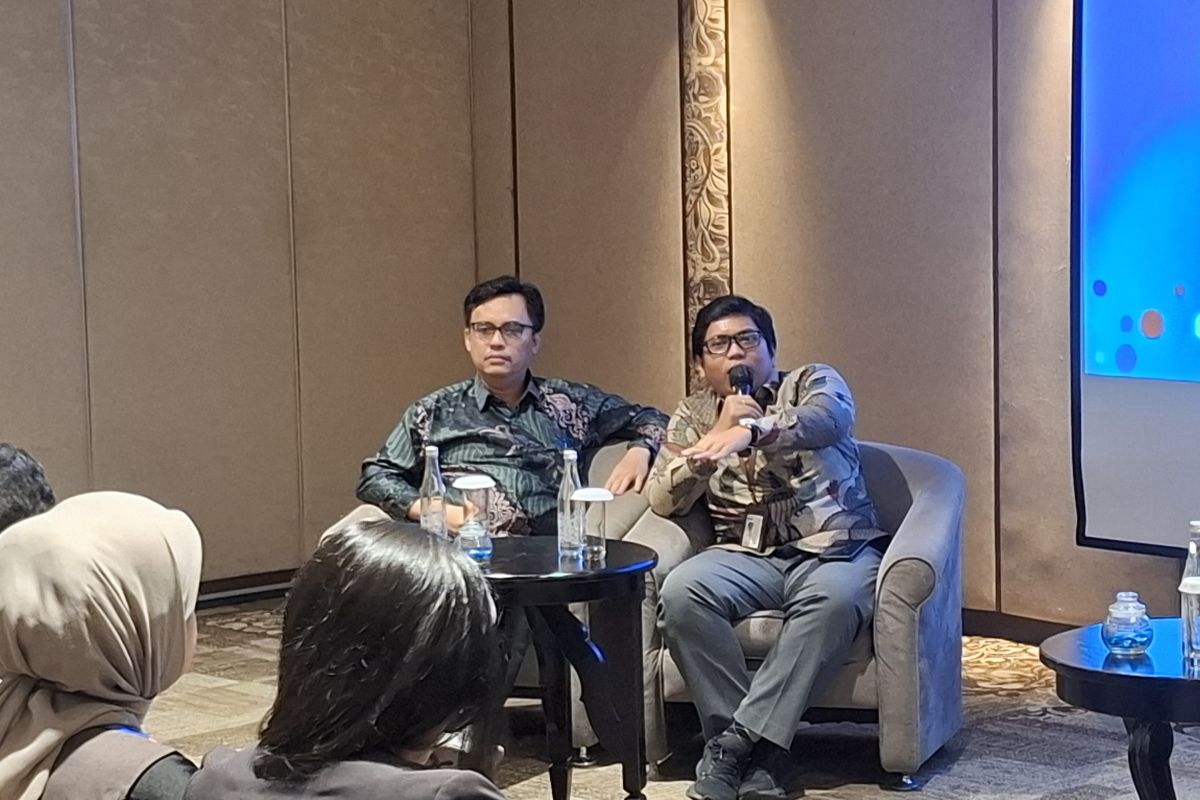
Jakarta (ANTARA) - PT PLN (Persero) is selecting land owned by ministries that can be used for the development of solar power plants (PLTS) combined with battery energy storage systems (BESS).
Manager of Various Renewable Energy at PT PLN (Persero) Head Office Fandi Gunawan Sianipar said PLN has coordinated with the Ministry of Agrarian Affairs and Spatial Planning/National Land Agency (ATR/BPN) and the Ministry of Forestry regarding the land requirements.
“The ATR/BPN Ministry has prepared ministry-owned land that can be utilised for PLTS plus BESS projects,” Fandi said at the Industrial Summit 2026 in Jakarta on Thursday.
According to Fandi, the selection process is necessary because utility-scale solar power development requires large tracts of land, while project locations also need to consider proximity to electricity load centres.
Some of the identified land is located in mountainous areas or far from load centres.
“It turns out that some of the land is in the mountains, and some is very far from the load. So we have to carry out screening and there is not much yet,” he said.
In addition to selecting land onshore, PLN is developing a number of alternatives to meet solar power development needs, including floating solar, virtual power plants (VPP), and distributed generation.
“We have already made some innovations using floating solar, and there is also what was mentioned earlier about VPP or virtual power plants on rooftops, then carrying out distributed generation,” Fandi said.
He noted that the development of the Mentari Nusantara I solar project also includes BESS co-located with the solar plant to help reduce the impact of solar intermittency, or changes in electricity production influenced by weather conditions.
In addition to energy storage, PLN is developing a smart grid to increase network flexibility, including enabling electricity flows to be diverted through other routes when disruptions occur.
Fandi said regulatory aspects remain a challenge, particularly for the use of BESS in load shifting functions.
“Because currently the regulations are still not set for BESS for shifting, for load shifting it is still not there. Perhaps that is a challenge for us,” he said.
The government is accelerating the 100 GW solar power programme to strengthen national energy security and the energy transition.
Minister of Energy and Mineral Resources (ESDM) Bahlil Lahadalia stated in early August that the programme has been included in the revision of PLN’s 2025-2034 Electricity Supply Business Plan (RUPTL), with the first phase planned for Bali.
Meanwhile, the PLN RUPTL 2025-2034, approved in May 2025, sets an additional capacity of 69.5 GW, consisting of 42.6 GW of renewable energy, 10.3 GW of energy storage systems, and 16.6 GW of fossil fuel power plants. Solar power receives the largest share within the renewable energy group at 17.1 GW.
The RUPTL opens up total investment opportunities of Rp2,967.4 trillion, comprising power generation investment of Rp2,133.7 trillion, transmission of Rp565.3 trillion, and other needs of Rp268.4 trillion.
Of the renewable energy generation investment of Rp1,682.4 trillion, Rp1,341.8 trillion is allocated through the independent power producer (IPP) scheme and Rp340.6 trillion through PLN.
Previously, the Ministry of Energy and Mineral Resources and the Ministry of ATR/BPN identified around 24,000 hectares of land on Java that could potentially support the 100 GW solar programme. The land is planned to be verified jointly by the Ministry of ESDM, the Ministry of ATR/BPN, and PLN.
Deputy Minister of ESDM Yuliot previously said the government will also adjust infrastructure support, including transmission networks and the availability of PLN substations, to the locations of power plants developed on the land.