
PLN Secures US$2.9 Billion in Funding for Energy Transition Agenda
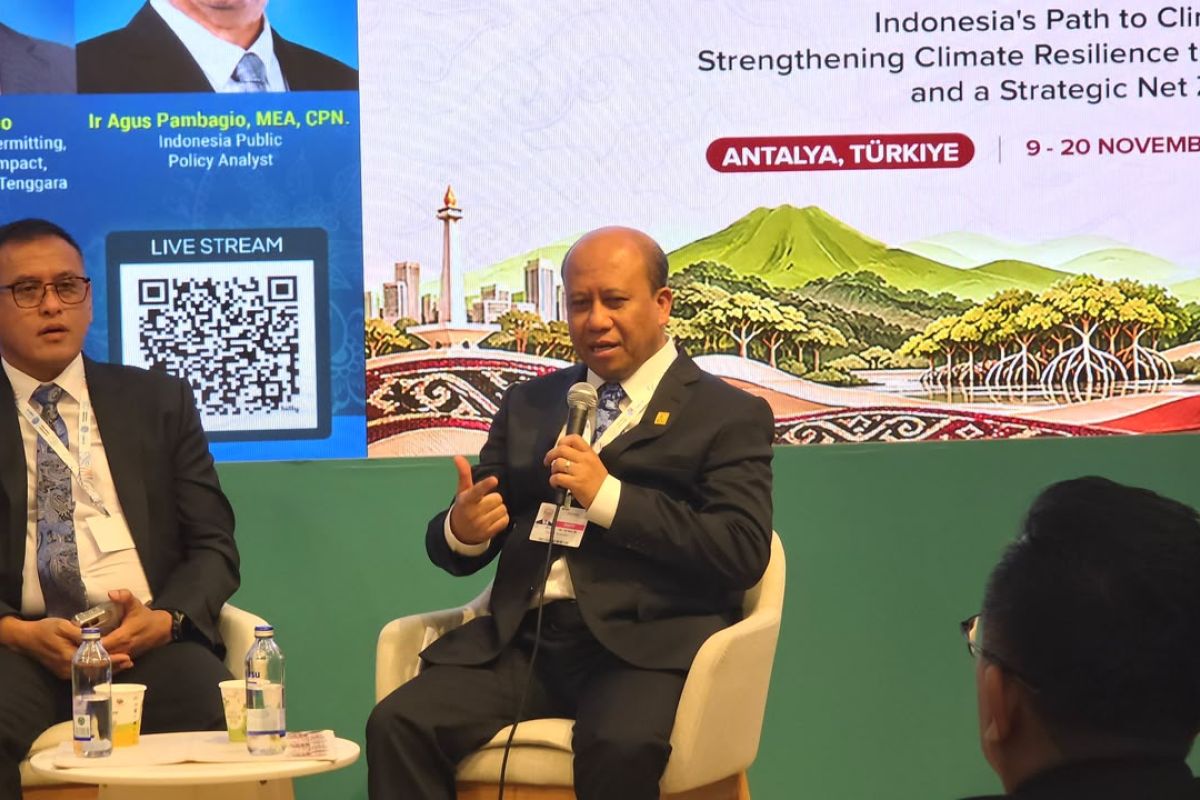
Jakarta (ANTARA) — State electricity company PT PLN (Persero) has secured US$2.9 billion in funding from various international financing institutions to support Indonesia’s energy transition agenda, on the sidelines of the 31st Conference of the Parties (COP31) in Antalya, Turkey.
PLN President Director Suroso Isnandar said in a statement received in Jakarta on Tuesday that Indonesia would need substantial financing to carry out the electricity sector’s energy transition over the next decade.
Suroso said funding from international institutions demonstrated that Indonesia’s ongoing energy transition was receiving concrete support from global partners.
He added that COP31 was an important opportunity for Indonesia, particularly PLN, to show that the national energy transition was not merely a commitment or long-term plan, but a transformation already under way and being implemented in practice.
Suroso said one expression of this transition was the 2025–2034 Electricity Supply Business Plan (RUPTL).
Over the next ten years, Indonesia plans to add 69.5 gigawatts (GW) of power generation capacity. Around 76 per cent of the total, or 53GW, is expected to come from new and renewable energy (EBT) and energy storage systems.
“This means Indonesia is not only drawing up plans, but has already begun and is carrying out an energy transformation on a large scale,” Suroso said.
He added that the RUPTL was a strategic step to accelerate clean energy development while ensuring that national electricity needs could be met.
Suroso also said the government was promoting a strategic initiative to develop 100 gigawatt-peak (GWp) of solar power capacity, in line with President Prabowo Subianto’s direction.
The programme is intended not only to increase the use of clean energy, but also to strengthen national energy resilience and sovereignty.
“The 100GWp solar power programme is an extraordinary initiative to strengthen Indonesia’s energy resilience. We hope domestic energy resources can be used more optimally, reducing the electricity sector’s dependence on certain imported primary energy components. In this way, we can further realise energy sovereignty,” Suroso said.
Meanwhile, Indonesia’s Presidential Special Envoy for Climate and Energy, Hashim Djojohadikusumo, said Indonesia’s presence at COP31 carried a clear message: the country was delivering climate solutions on a large scale.
“Our pavilion’s theme, ‘Indonesia: House of Climate Solutions’, reflects our determination to turn climate ambition into meaningful action. Our approach is guided by three interconnected priorities: strengthening climate resilience, advancing collaborative action, and pursuing a strategic path towards net zero emissions,” Hashim said.
He also stressed that Indonesia wanted to show the world that climate commitments did not stop at targets and rhetoric, but were being translated into practical implementation that benefited the public.
“We want the world to see that Indonesia is not merely talking about possibilities; we are working to make them happen, proving our words through action—walking the talk. Climate change recognises no borders, and neither does our determination to address it. No country can face this challenge alone,” Hashim said.
Source: jawawa.id (https://jawawa.id/newsitem/pln-secures-us-2-9-billion-in-funding-for-energy-transition-agenda-1794325860)
Originally published by Antara (Indonesian) (https://www.antaranews.com/berita/5845135/pln-amankan-pendanaan-29-miliar-dolar-as-untuk-agenda-transisi-energi), translated from Indonesian