
PLN projects 4.5 percent annual growth in gas demand for power plants
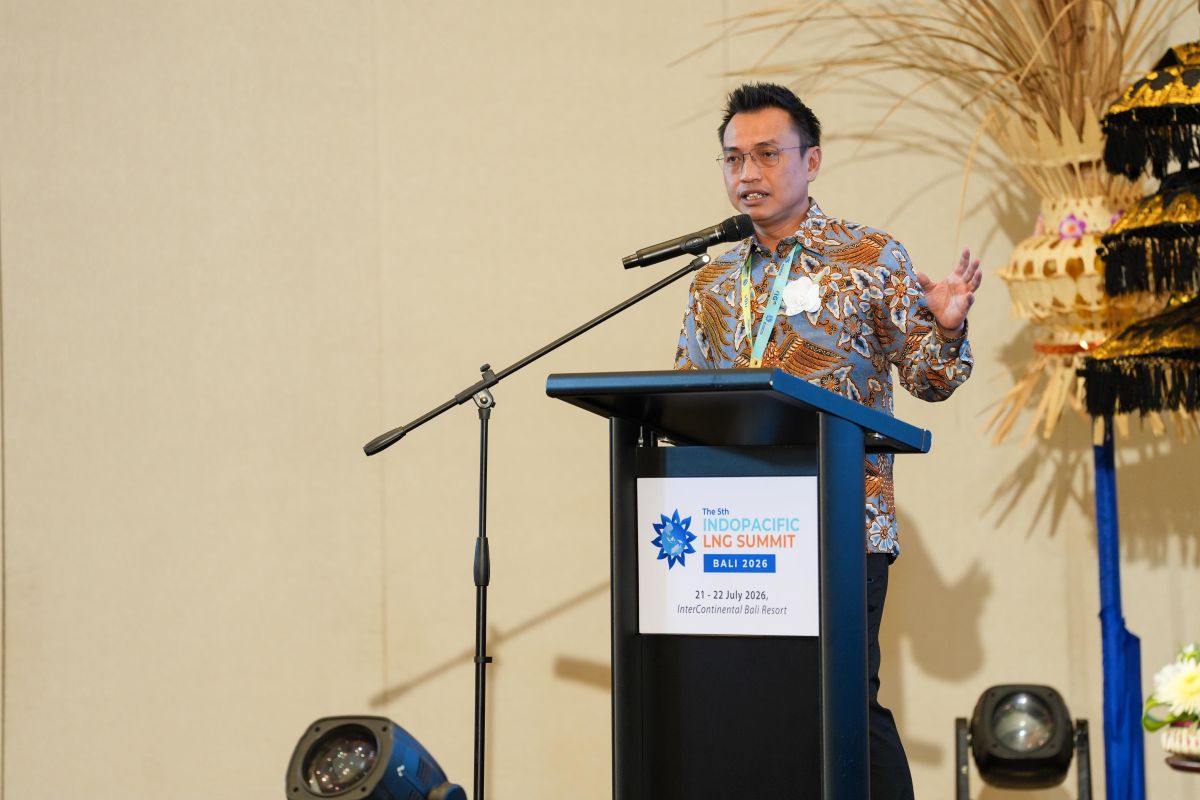
PT PLN (Persero) projects gas demand for national power generation to grow at an average of 4.5 percent per year, from 1,748 billion British thermal units per day (BBTUD) in 2026 to 2,490 BBTUD by 2034.
Rakhmad Dewanto, PLN’s Director of Corporate Planning and Business Development, who also serves as Acting President Director of PT PLN Energi Primer Indonesia (PLN EPI), said in a statement in Jakarta on Thursday that alongside this growth, LNG’s share of PLN’s gas supply is expected to rise from 57 percent to 67 percent, reinforcing LNG’s role as the backbone of power system reliability and a pillar of the national energy transition.
To anticipate the rising demand, PLN EPI is strengthening supply security through long-term gas and LNG contracts with West Natuna Exploration Limited (WNEL), Mubadala Energy, INPEX, and South Hub.
“The cooperation covers gas supply of up to 300 BBTUD and LNG contracts exceeding 49 million tonnes, providing long-term certainty of primary energy supply for the national power system,” Rakhmad said during his presentation at the 5th IndoPACIFIC LNG Summit 2026 in Jimbaran, Badung, Bali.
Beyond securing supply, PLN is also accelerating the development of national LNG infrastructure through FSRU projects in West Java, East Java, Bali, and Cilegon, the construction of gasification clusters in Eastern Indonesia, and an increase in national LNG storage capacity to around 1.2 million cubic metres with regasification capacity reaching 3,850 MMSCFD.
“We continue to promote the growth of new and renewable energy. However, the power system must also remain reliable. This is where gas plays a strategic role in maintaining the balance between energy security, price affordability, and sustainability,” Rakhmad said.
Through strengthened long-term supply contracts, accelerated LNG infrastructure development, and diversification of the primary energy supply chain, PLN is building an increasingly resilient, flexible, and sustainable energy system.
These measures form an important foundation for safeguarding national energy security, accelerating the integration of new and renewable energy, and supporting the implementation of ESG principles and the achievement of Indonesia’s net zero emissions target.
According to Rakhmad, gas demand growth is driven by rising electricity consumption resulting from industrial sector expansion, transport electrification, the development of new economic zones, and growing data centre requirements, which over the next five years are expected to need around 15 gigawatts of additional power.
“Indonesia’s electricity demand will continue to rise. We therefore need energy supply that is secure, reliable, and flexible. In this context, gas not only serves as a transition fuel but also plays an important part in maintaining the resilience of the national power system,” he explained.
Rakhmad said national primary energy demand is projected to increase by around 2 percent per year, while electricity demand is growing faster at 4.6–5.4 percent per year.
This situation demands increasingly reliable gas and LNG supply to maintain the flexibility of the power system while supporting greater utilisation of new and renewable energy.
Under the 2025–2034 Electricity Supply Business Plan (RUPTL), national electricity production is projected to rise from 304.4 TWh to 584.3 TWh.
At the same time, the share of coal-fired generation is set to decline to 47 percent, while the contribution of new and renewable energy increases to 33 percent.
“Under these conditions, LNG remains the balancing energy source, capable of maintaining system reliability when solar- and wind-based generation fluctuates,” Rakhmad said.