
PLN Leadership Change Should Be a Turning Point for a Complete Business Transformation
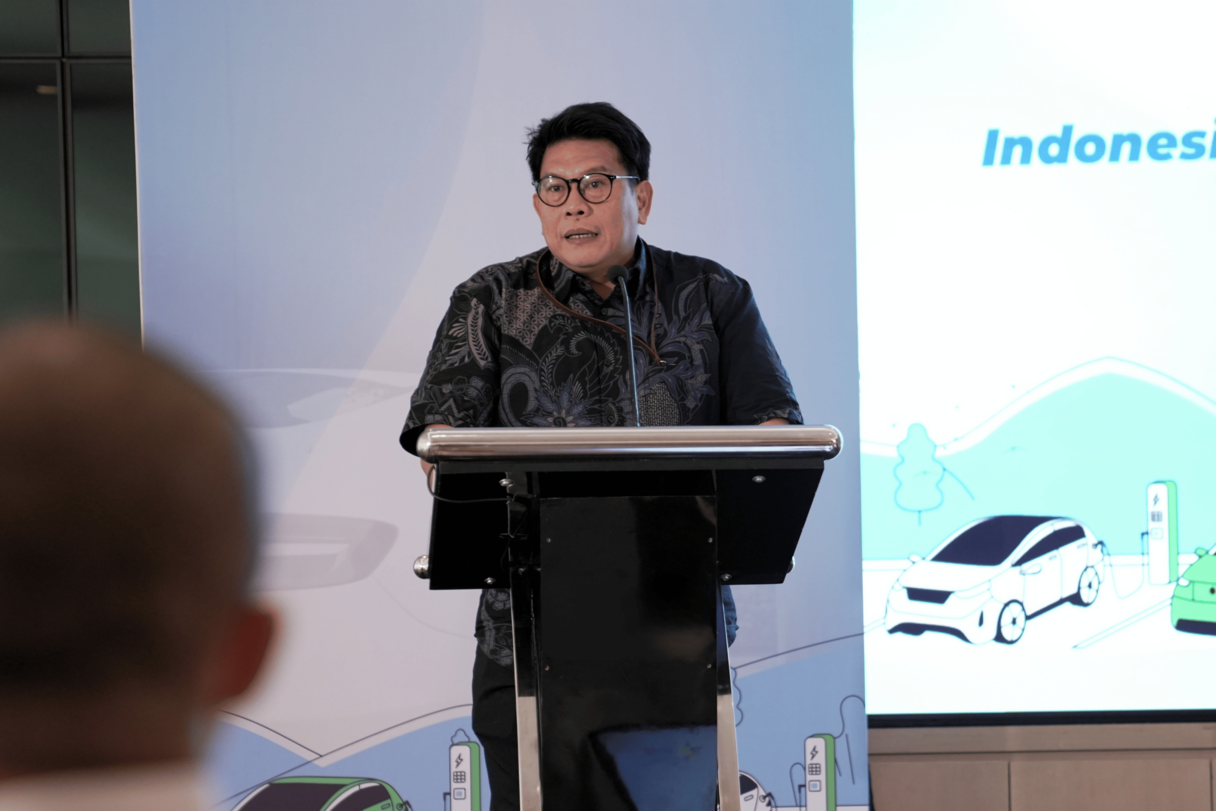
JAKARTA – The Institute for Essential Services Reform (IESR) says the replacement of Darmawan Prasodjo by Suroso Isnandar as president director of state-owned electricity company PT PLN (Persero) should be a turning point for addressing fundamental problems in the national electricity business and governance. PLN’s new leadership faces more than the task of improving the company’s performance: it must make PLN a financially healthy and efficient public utility, capable of guaranteeing a reliable and affordable electricity supply and driving Indonesia’s energy transition.
PLN is under pressure from several directions. Supply disruptions and power cuts in a number of areas throughout 2026 have exposed problems with generation reliability and grid resilience. Financially, PLN remains heavily dependent on government subsidies and compensation. In 2025, PLN recorded revenue of Rp582.7 trillion, but net profit was only about Rp7 trillion. Government subsidies and compensation totalled around Rp200 trillion, or more than a third of the company’s revenue.
This shows that revenue growth and a large asset base are not enough to ensure PLN’s business is financially sound. High generation costs, long-term power purchase obligations, limited tariff flexibility, and the need to invest in networks and power plants are issues that must be tackled together.
IESR chief executive Fabby Tumiwa said PLN needs to change its business model, moving from a company reliant on electricity sales to a provider of modern power-system services. PLN’s revenue and performance should not depend solely on the volume of electricity sold, but also on its ability to maintain grid reliability, improve efficiency, integrate renewable energy and provide consumers with quality services.
Under this model, transmission and distribution networks should become PLN’s core business, governed by measurable service and efficiency standards. Private companies, region-owned enterprises, cooperatives and communities could play a greater role in generation investment through competitive and transparent procurement. PLN does not need to own every power plant in order to guarantee a reliable electricity supply.
The transformation is increasingly urgent in light of the 100 GW solar power programme, energy storage development, the electrification of transport and industry, and the growing use of distributed generation. These changes will alter how electricity is produced, delivered and consumed. Without a new business model and grid modernisation, PLN risks facing rising costs and an ever-greater investment burden.
IESR has therefore recommended three priority areas for PLN’s new leadership and the government.
First, restore reliability and improve operational efficiency. PLN should conduct a comprehensive audit of power plants and networks, review power purchase agreements, and strengthen risk management and infrastructure resilience against extreme weather. Measures of success should shift from installed capacity and investment volumes to supply quality, service-cost efficiency and customer satisfaction.
Second, reform PLN’s business model and financial governance. The government should introduce performance-based revenue and tariff regulation, clarify the separation between commercial costs and public service obligations, and ensure subsidies and compensation are paid transparently and on time. These reforms are needed to give PLN incentives to improve efficiency while strengthening its ability to finance investment.
Third, make the energy transition a driver of PLN’s transformation. The 100 GW solar programme should be accompanied by power procurement reform, grid modernisation, investment in energy storage, a reduction in coal-fired generation assets, and greater scope for participation by private companies, local governments and communities. PLN needs to develop its capabilities as a system operator able to integrate renewable energy at scale and at efficient cost.
IESR stressed that transforming PLN does not mean privatising it or weakening state control of the electricity sector. Rather, reforms should strengthen the state’s capacity to guarantee high-quality, affordable and sustainable electricity services for the whole population.
“A strong PLN is not one that has to own every power plant and carry out every electricity-sector activity. A strong PLN is one that can keep the lights on, keep electricity affordable, maintain healthy finances and prepare the system to move to clean energy. That is the major task facing PLN’s new president director,” Fabby Tumiwa said in Jakarta on Friday (16 October).