
PLN Indonesia Power Plants 3,281 Trees to Mark World Environment Day
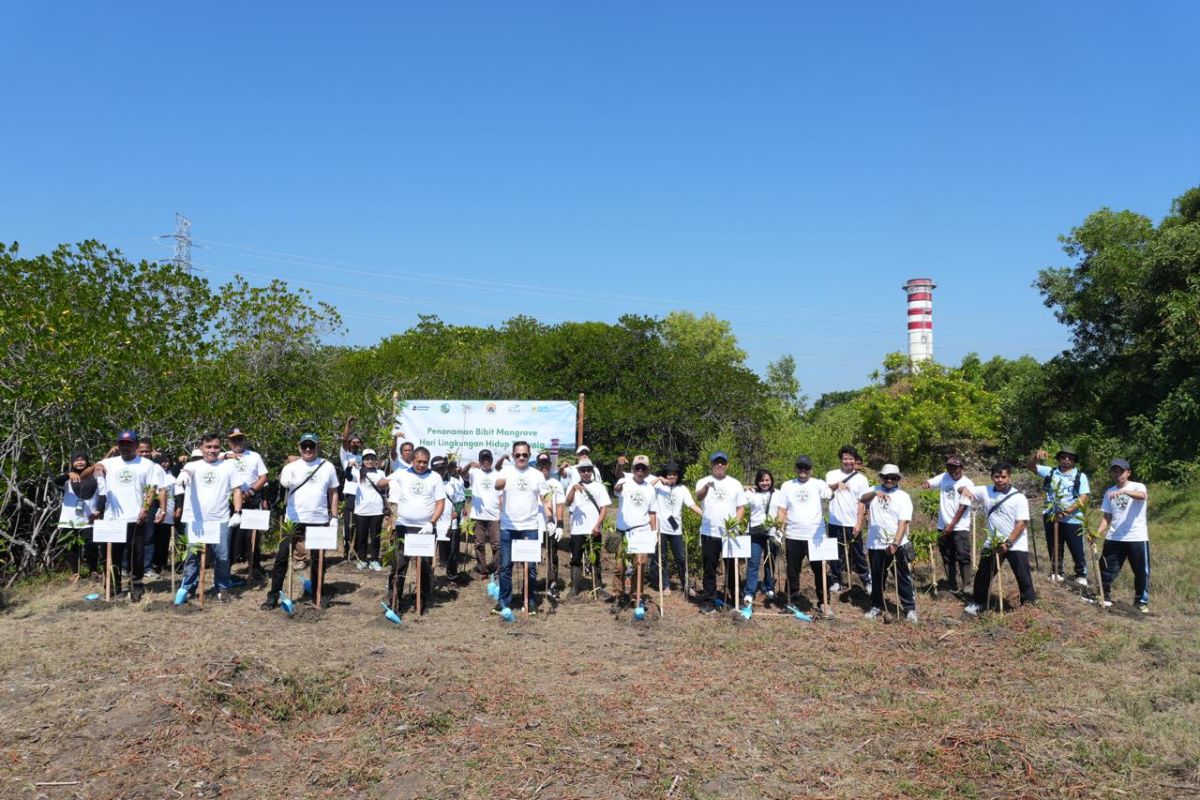
PT PLN Indonesia Power planted 3,281 trees across its various power plant operational areas in Indonesia to commemorate World Environment Day 2026. The initiative is part of the company’s commitment to strengthening environmental, social, and governance (ESG) aspects, particularly in supporting environmental conservation and sustainable development.
The planting was carried out at PLN Indonesia Power’s Business Unit locations, including Bali, Barito, Cilegon, Saguling, Tello, Grati, and Asam-Asam. Covering an area of 3.13 hectares, the activity involved around 750 participants comprising PLN Indonesia Power personnel, stakeholders, farmer groups, and local communities.
Tree species planted included mangrove, ketapang, korombusa, pucuk merah, mango, longan, various fruit trees, mahogany, breadfruit, and teak. The selection of species was tailored to the characteristics of each region and local conservation needs.
Bernadus Sudarmanta, President Director of PLN Indonesia Power, stated that the tree planting represents a tangible contribution by the company to maintaining ecosystem balance while strengthening collaboration with various stakeholders. He noted that the World Environment Day commemoration serves as a momentum for PLN Indonesia Power to deliver real contributions in preserving the environment.
The simultaneous planting across operational areas aims not only to increase green cover and support conservation efforts but also to enhance collaboration between the company, government, community groups, and other stakeholders in creating a more sustainable environment. Sudarmanta emphasised that sustainability is an inseparable part of the company’s business strategy, and various environmental management programmes are consistently implemented alongside efforts to provide reliable electricity to the public.
He added that the company believes the success of energy transition and electricity sector development must go hand in hand with environmental conservation. Beyond ecological benefits through improved environmental quality and area conservation, the tree planting activity also serves as a means of community empowerment through the active involvement of farmer groups and local communities in both planting and maintenance.