
PLN EPI to Trial Ammonia Co-firing at Labuan Power Plant in 2027
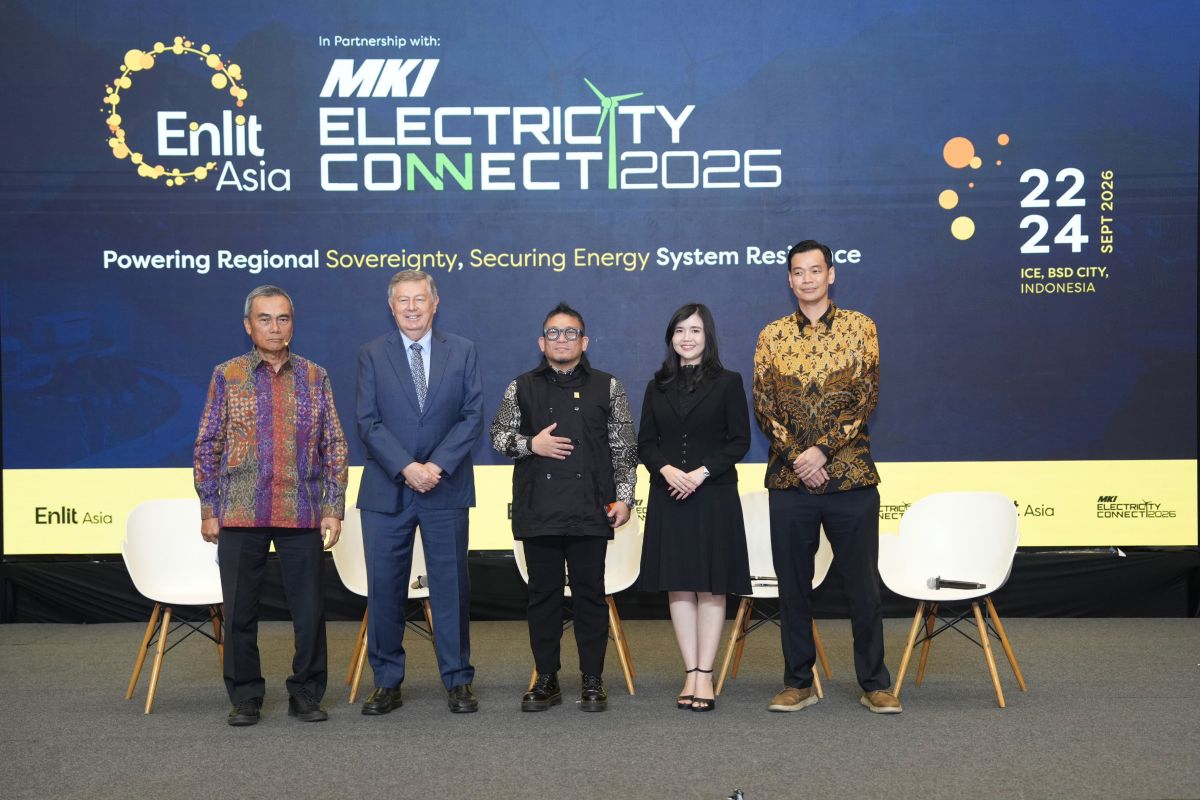
Jakarta (ANTARA) – PT PLN Energi Primer Indonesia (PLN EPI) is preparing to trial the co-firing of ammonia with coal at the Labuan power plant in Banten in 2027.
PLN EPI Biomass Director Hokkop Situngkir said in a statement issued in Jakarta on Monday that using ammonia was one option for lower-carbon fuel to help reduce emissions from coal-fired power plants.
“After beginning a supply study in 2026, PLN EPI is targeting a small-scale trial with a co-firing rate of up to 3% at the Labuan power plant in 2027. This initial stage will test technical aspects, economic viability and supply-chain readiness before the programme is developed further,” he said.
He said the trial was part of PLN EPI’s hydrogen and ammonia development roadmap, which will proceed in stages through 2030 to establish a technological and supply-chain foundation before commercialisation.
Hokkop said ammonia development was part of efforts to broaden lower-carbon fuel options for existing power plants. However, implementation requires comprehensive assessment, as it depends not only on the readiness of power-generation technology but also on supply availability and economic viability.
“We are studying ammonia, including its supply and technology. We need to start with a pilot project to assess both the technical and economic aspects,” Hokkop said during a discussion.
Under PLN EPI’s roadmap, development will begin with an ammonia supply study in 2026, with Pupuk Kujang Cikampek in West Java among the potential initial sources being assessed.
The next stage will be a small-scale trial, with a maximum co-firing rate of 3%, at the Labuan power plant in 2027. The results will form the basis for technical evaluation and an economic study in 2028.
PLN EPI then aims to develop an integrated ammonia supply chain in 2029 and conduct a feasibility study in 2030 on co-firing at around 3–5% or more.
A phased approach
Hokkop added that a phased approach was necessary because ammonia co-firing presents challenges that differ from those of conventional fuels.
Alongside ensuring that power plants can handle an ammonia blend, economic viability will be a key factor in determining whether the approach is feasible.
“At present, price remains a challenge. That is why we need to carry out a pilot first, learn from it, and then assess how the technology and its economics develop,” Hokkop said.
Supply availability is another concern. Ammonia already has a large market and substantial demand, particularly from the fertiliser industry.
Developing new demand in the electricity sector will require consideration of the balance of supply between sectors, as well as the readiness of infrastructure and logistics.
PLN EPI is also monitoring ammonia price trends and various production and procurement options. Certainty of volume, competitive prices, infrastructure and continuity of supply are all important considerations before ammonia use can be scaled up.
Net-zero target
Hokkop also said that developing hydrogen and ammonia was part of PLN Group’s long-term agenda to achieve its net-zero emissions (NZE) target by 2060.
As part of the transition, the group is developing various technology options in stages, from biomass co-firing and improved power plant efficiency to the use of hydrogen and ammonia in a later phase.
Hokkop explained that the development of low-carbon technologies must take account of the conditions of the electricity system and the power-generation assets currently in operation. The transition therefore requires measured steps while maintaining system reliability.
He said 2026–2030 would be a crucial period for laying the foundations for ammonia co-firing, from supply assessments and the pilot project to technical and economic evaluations and supply-chain integration.
“These stages are expected to provide a strong basis for determining a scale of ammonia use that is technically viable, economically competitive and supported by a reliable supply chain, as part of the energy transition towards NZE 2060,” Hokkop said.
Source: jawawa.id (https://jawawa.id/newsitem/pln-epi-to-trial-ammonia-co-firing-at-labuan-power-plant-in-2027-1791798798)
Originally published by Antara (Indonesian) (https://www.antaranews.com/berita/5781918/pln-epi-uji-coba-co-firing-amonia-di-pltu-labuan-pada-2027), translated from Indonesian