
PLN EPI supports decentralised waste management programme
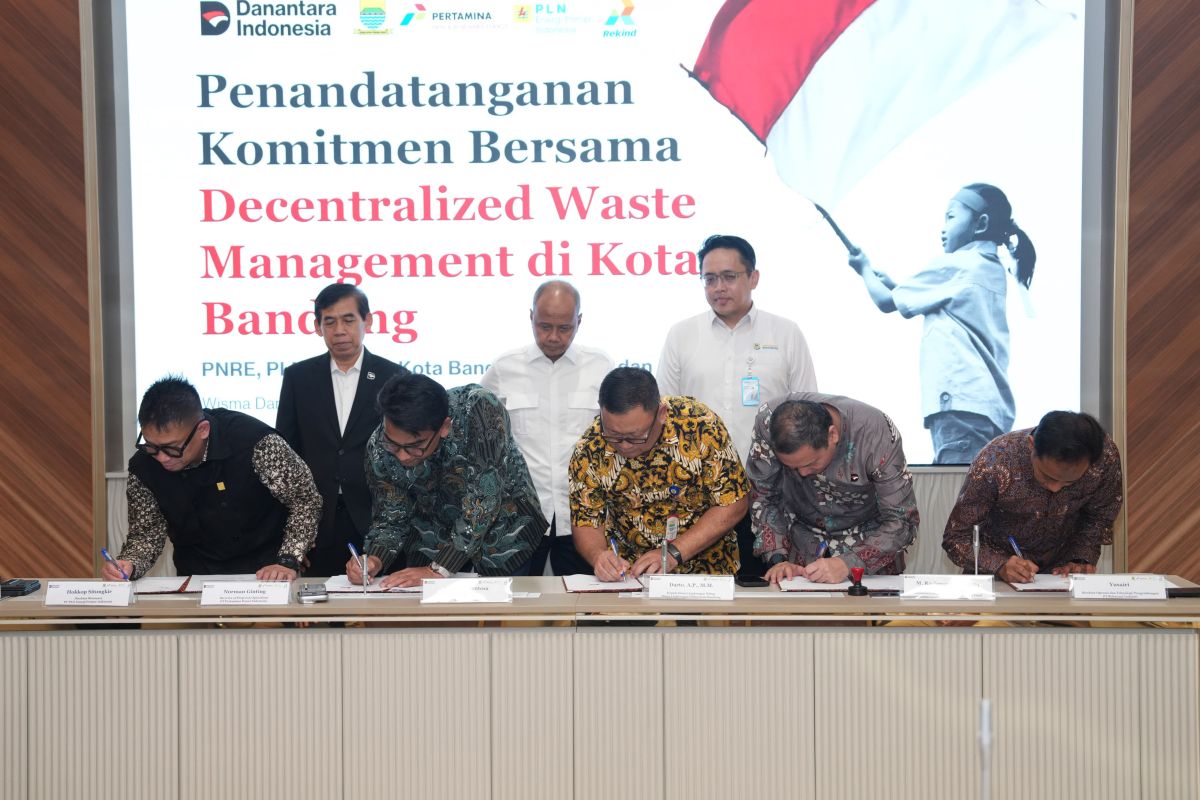
When waste no longer remains merely as residue but re-enters the value chain as a resource and energy, waste management can become part of the solution for energy security.
PT PLN Energi Primer Indonesia (PLN EPI) supports decentralised waste management programmes as an effort to process waste closer to its source, while simultaneously creating opportunities for it to become a source of energy and value-added products.
PLN EPI’s Director of Biomass, Hokkop Situngkir, stated in Jakarta on Friday that the programme offers opportunities to expand waste-based energy sources while supporting waste resolution through a circular economy approach. “When waste no longer stops as residue, but re-enters the value chain as a resource and energy, waste management can be part of the solution for energy security as well as sustainable environmental development,” he explained.
According to him, PLN EPI, alongside PT Danantara Development Management Fund (DDMF), PT Rekayasa Industri (Rekind), PT Pertamina Power Indonesia (PNRE), and the Bandung City Environmental Agency (DLH), has signed a Joint Commitment for the Development of Decentralised Waste Management (DWM).
The signing, witnessed by the Daya Anagata Nusantara Investment Management Agency (BPI Danantara), marks the initial step in developing a decentralised waste management system in Bandung through coordination, exploration, study, and potential assessment of DWM.
In this development, PLN EPI will act as a potential buyer or absorber of the products resulting from DWM processing. PLN EPI will provide indicative requirements and product specifications, and conduct preliminary reviews of technical aspects, quality, quantity, continuity, logistics, and potential utilisation as part of the primary energy supply chain.
Hokkop noted that DWM is linked to efforts to expand the use of waste-based energy sources. PLN EPI has been developing a biomass supply chain to support the partial substitution of fossil fuels in power plants through co-firing programmes.
“At PLN EPI, we are substituting fossil materials with bio-based materials for our energy sustainability through co-firing,” said Hokkop. He mentioned that PLN has utilised approximately 2.5 million tonnes of biomass over the past year, with about 99 per cent of that biomass originating from agro-waste.
The development of this biomass ecosystem also involves businesses in various regions. Currently, PLN EPI has around 180 active contracts within the biomass supply chain, with approximately 60 per cent involving young entrepreneurs. The involvement of these various actors is part of developing an energy ecosystem based on local resources.
Meanwhile, the Chief Technology Officer (CTO) of BPI Danantara, Sigit Puji Santosa, explained that DWM is being developed to complement, rather than replace, centralised waste management through waste-to-energy (WTE). The decentralised approach can be applied to areas that do not yet have the economies of scale or adequate conditions for large-scale WTE facilities.
“WTE is centralised to utilise energy. Meanwhile, this is decentralised waste management. So, this does not replace WTE, but is complementary,” said Sigit. He noted that the decentralised model can be applied to regions lacking the economic scale or conditions necessary to build large-scale WTE facilities. By processing waste closer to its source, the need for long-distance waste transportation can also be reduced.
Sigit targets that at least one to two DWM locations could begin development by December 2026 or January 2027, with Bandung being one of the priority locations. Subsequently, the development is targeted to expand to four to five locations.