
PLN EPI Strengthens Biomass Ecosystem, Supply Chain Key to Co-firing Success
PT PLN Energi Primer Indonesia (PLN EPI) continues to strengthen the foundation of biomass development as part of the national energy transition strategy. The company believes that the successful implementation of co-firing biomass at steam power plants (PLTU) depends not only on Indonesia’s large biomass potential but also on a robust supply chain system, maintained fuel quality standards, and adequate processing infrastructure.
This commitment was conveyed by PLN EPI’s Director of Biomass, Hokkop Situngkir, while speaking at the Material Handling Innovation for Wood-Based Industries: Engineering and Innovation for Sustainable Industrial Growth Symposium 2026 held by the Indonesia Research Institute in Jakarta on Monday.
The forum brought together industry players from forestry, energy, academia, and research institutions. In his presentation, Hokkop explained that PLN EPI is mandated to guarantee the primary energy supply for around 200 PLTUs spread across 52 locations, approximately 200 PLTG/PLTGU/PLTMG units, and nearly 800 PLTD units throughout Indonesia. Amid the dominance of fossil energy use in the national electricity system, biomass is a crucial instrument for gradually reducing coal consumption.
‘Approximately 90 per cent of power plants in Indonesia still use fossil energy. Therefore, we continue to expand the utilisation of biomass as a partial substitute for coal to support the decarbonisation agenda and the achievement of Net Zero Emissions,’ Hokkop stated. He emphasised that all biomass utilised by PLN EPI is sourced from residues of the forestry, plantation, and agricultural industries. This approach ensures that biomass development does not encourage logging or deforestation.
‘We utilise residues that previously had no economic value. Thus, biomass not only becomes an alternative energy source but also creates added value for the forestry and plantation sectors without sacrificing forest sustainability,’ he explained. According to Hokkop, biomass that has undergone processing and quality control can meet the technical fuel specifications for power plants, allowing it to replace a portion of coal without disrupting PLTU operational reliability.
The implementation of the co-firing programme continues to show a positive trend. Throughout 2025, PLN EPI supplied approximately 2.35 million tonnes of biomass, contributing to a reduction of around 2.72 million tonnes of CO₂ emissions. This volume is targeted to increase to 3.65 million tonnes in 2026 and further to 4.07 million tonnes in 2027 to meet the needs of 52 PLTUs across various regions.
Cumulatively, from 2023 to 2026, the realisation of biomass provision has reached 4.77 million tonnes. The supply is dominated by wood-based biomass, particularly sawdust at 54.6 per cent and woodchips at 22.4 per cent, which are considered suitable for power plant fuel specifications.
However, the increasing demand for biomass must be balanced with a comprehensive strengthening of the ecosystem. Key challenges relate not only to the availability of raw materials but also to processing capacity, quality standardisation, and efficient storage and distribution systems.
‘To address these challenges, PLN EPI is developing a Spoke-Hub model, which integrates raw material collection points (sub-hubs), production facilities (hubs), and main hubs as centres for processing, blending, storage, and quality control of biomass before distribution to power plants. This model is further strengthened through a Biomass Marketplace, a digital platform connecting suppliers with the biomass needs of each power plant,’ Hokkop explained.
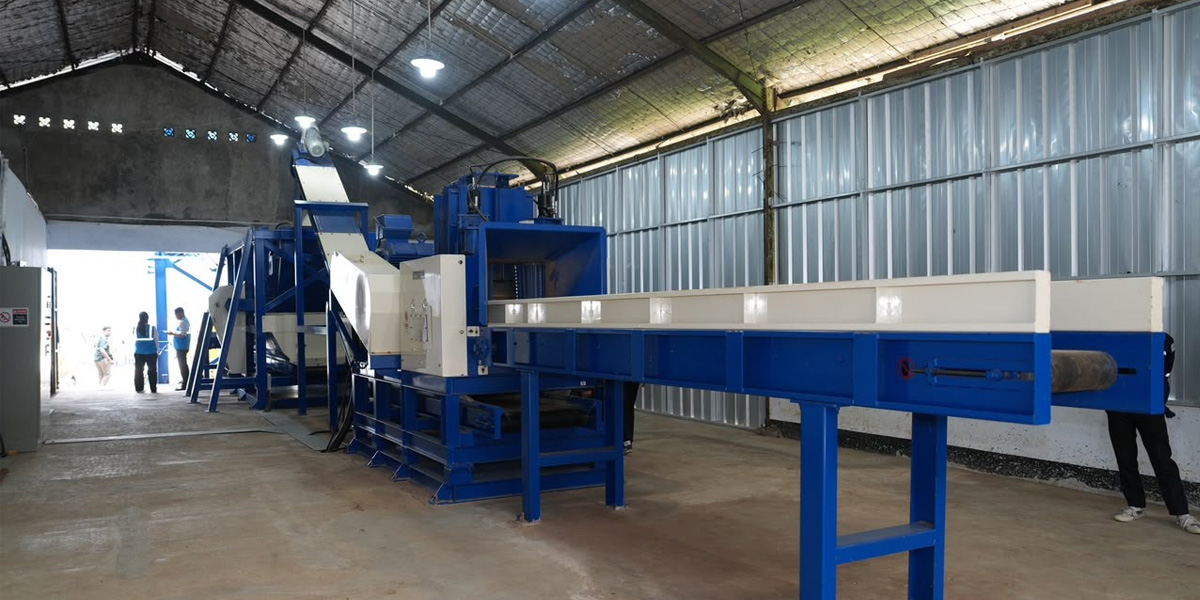
As part of strengthening the supply chain, PLN EPI has operated biomass processing facilities in Tasikmalaya and Ciamis, each with a capacity of 10 tonnes per hour. The company is also preparing the development of a hub network in Lebak, Lamongan, Blora, Cilegon, and Suralaya.
‘By 2028, PLN EPI targets the construction of 15 Main Hubs/Hubs across various regions in Indonesia through company investment and collaboration with strategic partners. This infrastructure is expected to guarantee the quality and continuity of supply, as well as improve the logistics efficiency of biomass for power plants throughout Indonesia,’ he added.
Through infrastructure development, standardisation, and supply chain digitalisation, PLN EPI aims to establish an integrated bioenergy ecosystem from upstream to downstream. This step is expected to strengthen the reliability of primary energy supply, improve the operational efficiency of power plants, and accelerate the decarbonisation of the electricity sector to support the Net Zero Emissions target by 2060 or sooner.
Source: jawawa.id (https://jawawa.id/newsitem/pln-epi-strengthens-biomass-ecosystem-supply-chain-key-to-co-firing-success-1785322215)
Originally published by indoposco.id (https://indoposco.id/2026/07/28/pln-epi-perkuat-ekosistem-biomassa-rantai-pasok-jadi-kunci-sukses-co-firing-pltu/), translated from Indonesian