
PLN EPI prepares coal-switching programme at 16 power plants to use lower-grade coal
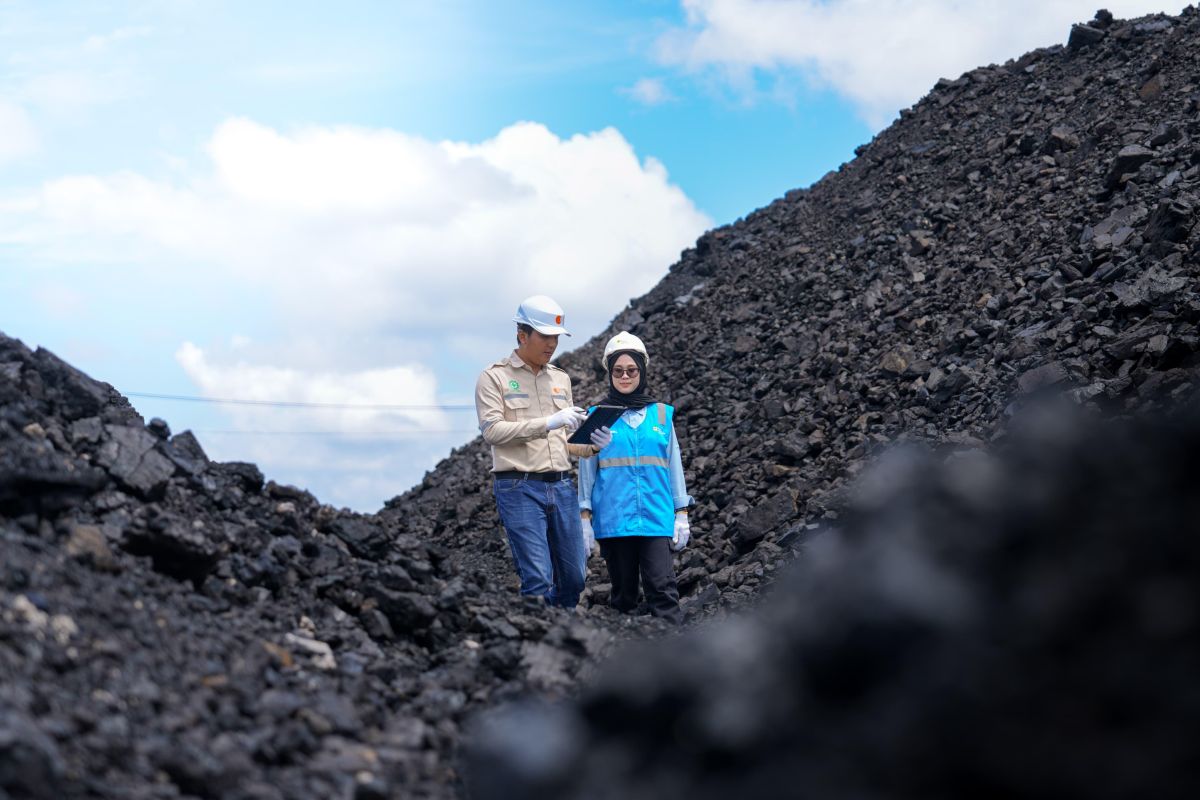
PT PLN Energi Primer Indonesia (PLN EPI) is strengthening its strategy to optimise national coal supplies in anticipation of power plants’ needs, through a gradual coal-switching programme at 16 coal-fired power plants (PLTUs) to enable them to use lower-calorie coal.
“Most of our power plants were designed to use medium-calorie coal,” PLN EPI acting president director Rakhmad Dewanto said in a statement in Jakarta on Monday.
He said coal demand from the PLN Group and independent power producers (IPPs) is projected to reach 174 million tonnes in 2027. One strategic measure being prepared is a programme to adjust the coal quality that power plants can use, or “coal switching”, at 16 PLTUs in stages, enabling them to use lower-calorie coal, which accounts for most of the country’s reserves.
Rakhmad said the strategy is needed to align power plants’ primary energy requirements with the characteristics of domestic coal resources, while maintaining the reliability of the national electricity supply.
He made the remarks during a panel discussion entitled “Mineral and Coal Supply Chains” at Minerba Convex 2026 at the JIExpo Convention Centre & Theatre in Jakarta.
The forum’s theme was “Synchronising Mineral Raw Materials, Primary Energy and Logistics to Strengthen National Energy and Food Security and Industrialisation”.
Rakhmad said projected coal demand in 2027 for PLN Group and IPP power plants comprises 98 million tonnes for PLN Group plants and 76 million tonnes for IPP plants.
By calorific value, demand is dominated by Medium Rank Coal (MRC), at 89 million tonnes, followed by Low Rank Coal (LRC), at 76 million tonnes, and High Rank Coal (HRC), at 8.51 million tonnes.
According to Rakhmad, a key challenge in meeting this demand is the mismatch between the coal specifications required by power plants and the characteristics of Indonesia’s coal reserves.
Some operating PLTUs were designed to use medium- to high-calorie coal, while Indonesia’s reserves are dominated by lower-calorie coal.
“Indonesia has greater availability of low-calorie coal. This is a challenge we need to address together,” Rakhmad said.
The Mineral, Coal and Geothermal Resources and Reserves Balance, published by the Geological Agency and used as the national reference under Energy and Mineral Resources Ministerial Decree No. 228 of 2025, shows that LRC accounts for 24.06 billion tonnes, or 75.3 per cent, of Indonesia’s coal reserves.
MRC reserves total 4.54 billion tonnes, or 14.2 per cent, while HRC reserves stand at 3.36 billion tonnes, or 10.5 per cent. This composition highlights the importance of adapting domestic coal-use strategies to support a sustainable long-term supply of primary energy for power plants.
To address the challenge, the PLN Group is preparing a gradual coal-switching programme for 16 strategic PLTUs. The programme aims to increase plants’ ability to use lower-calorie coal, including coal with a gross as-received (GAR) calorific value of 3,600 kcal/kg, while taking into account the technological readiness and characteristics of each plant.
Rakhmad stressed that implementing the programme will require technical studies, investment and thorough operational planning. Technology upgrades must not compromise combustion efficiency, equipment reliability or the continuity of electricity supplies to the public.
“This does not mean that all PLTUs can already use low-calorie coal. Technology upgrades take time and investment. We also have to consider the availability of replacement power plants when a PLTU needs to be temporarily taken offline for the upgrade,” he said.
Meanwhile, the volume of coal managed by PLN EPI is also rising alongside growth in national electricity consumption. The company’s managed coal requirements increased from about 67 million tonnes in 2023 to around 97 million tonnes in 2026.
This growth calls for stronger, more integrated planning, procurement and coal distribution, including coordination with producers and stakeholders to ensure quality specifications are met and deliveries arrive on time.
Rakhmad said optimising the use of domestic coal forms part of PLN EPI’s strategy to strengthen national primary energy security and improve supply-chain management efficiency.
Through coal switching, closer coordination with producers and the optimisation of domestic resources, PLN EPI aims to ensure that power plants’ primary energy needs are met reliably, efficiently and sustainably.
“PLN EPI continues to strengthen primary energy supply-chain planning and management so that power plants’ needs can be met optimally. This is important for maintaining the reliability of the electricity system and supporting economic growth and national development,” he said.
By optimising domestic coal use, adapting power-plant technology and strengthening an integrated primary energy supply chain, PLN EPI is seeking to reinforce its role in ensuring a reliable and efficient energy supply for the national electricity system.
The strategy is not only a response to rising coal demand, but also part of efforts to build national energy security that can adapt to the characteristics of domestic resources, while sustaining electricity supplies to support economic growth and national development.
Source: jawawa.id (https://jawawa.id/newsitem/pln-epi-prepares-coal-switching-programme-at-16-power-plants-to-use-lower-grade-coal-1794207107)
Originally published by Antara (Indonesian) (https://www.antaranews.com/berita/5841063/pln-epi-siapkan-coal-switching-16-pltu-manfaatkan-batu-bara-rendah), translated from Indonesian