
PLN EPI Plants 1,200 Mangrove Seedlings on Bali Coast
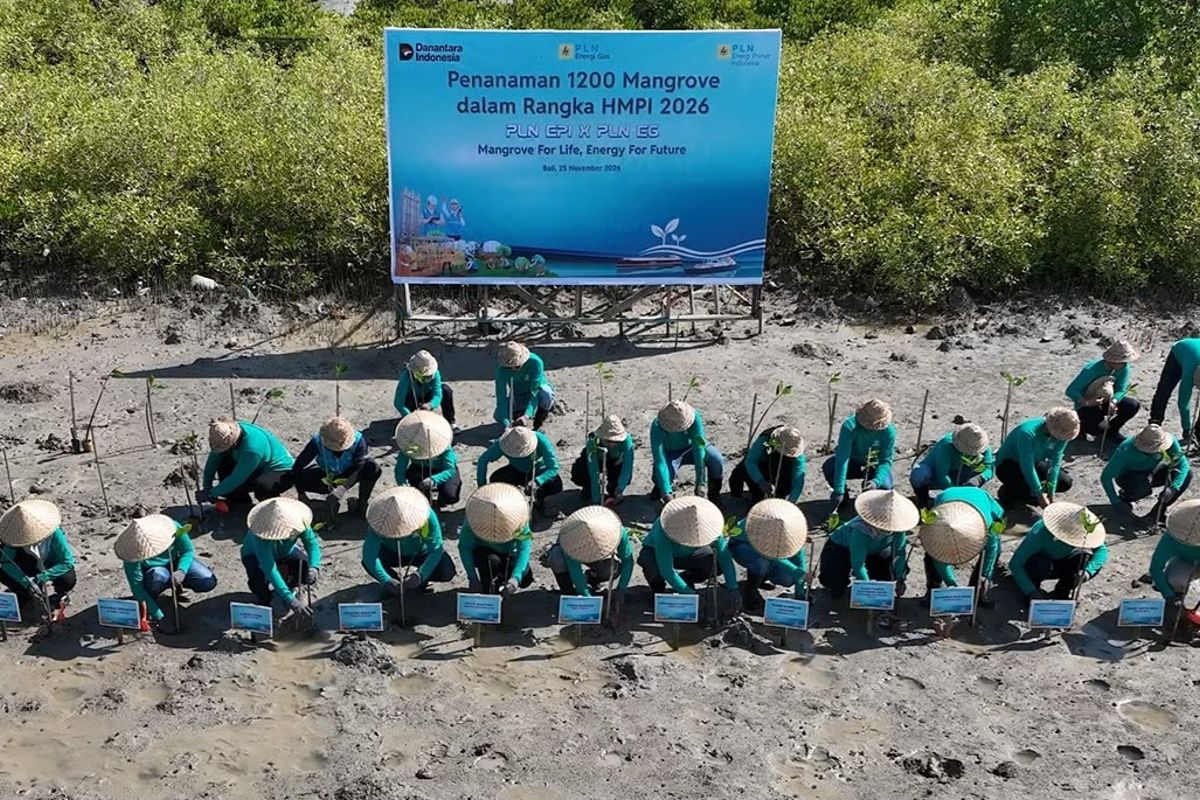
Jakarta (ANTARA) - PT PLN Energi Primer Indonesia (PLN EPI), together with its subsidiary PT PLN Energi Gas (PLN EG), has planted 1,200 mangrove seedlings using the cluster method at Arboretum Park in Pedungan, Denpasar, Bali.
PLN EPI Director of Human Capital Management and Administration Dedeng Hidayat said in a statement in Jakarta on Thursday that the activity, held to mark Indonesian Tree Planting Day on 28 November, also supports the recovery of coastal ecosystems around the Additional Pipeline Bali project.
Dedeng said coastal conservation was part of the company’s responsibility in areas surrounding its operations.
In Bali, PLN EPI and PLN EG manage a gas pipeline facility at Tanjung Benoa, which supplies gas to the Pesanggaran gas-fired power plant to support electricity supplies for the public and tourism sector.
“Energy provision and nature conservation must go hand in hand. We are putting the theme ‘Mangroves for Life, Energy for Future’ into practice through three commitments: planting, caring and bringing the mangroves to life,” Dedeng said during the planting on Wednesday (25 November 2026).
Of the 1,200 seedlings planted, PLN EPI provided 1,050 and PLN EG supplied 150.
The team, accompanied by technical partner Sahabat Mangrove Ranger Indonesia, planted the seedlings in eight clusters, each containing 150 seedlings.
The mangrove species were selected with the local tidal patterns, salinity and substrate characteristics in mind, to ensure they were suited to coastal conditions.
PLN EPI Vice President for Occupational Health and Safety, Security and Environment (K3KL) Muhammad Aminuddin added that the seedlings’ survival and growth rates would be used to assess the programme’s success.
“We measure the programme’s success by the seedlings’ ability to survive and grow. Regular monitoring will help us determine maintenance and replacement-planting needs so that the mangroves can serve as natural coastal defences and habitats for various organisms,” he said.
Nyoman Sweet Juniartini, chair of Sahabat Mangrove Ranger Indonesia, said the team would monitor the mangroves’ growth for three years.
The team will record the seedlings’ survival rates and identify any that have died or been damaged.
Monitoring results will inform maintenance and the planting of replacement seedlings, as advised by technical assessments.
“Each site has different tidal and substrate conditions. By monitoring the seedlings’ development in the field, we can determine the appropriate care and address growth problems at an early stage,” Sweet said.
Aminuddin said that through three years of monitoring and replacement planting based on assessments, PLN EPI and PLN EG aimed to support mangrove growth so the trees could protect the coastline from erosion, provide habitats for coastal organisms and store carbon.
“This restoration of coastal ecological functions is part of applying environmental, social and governance (ESG) principles to environmental management around the company’s energy infrastructure,” he said.
Source: jawawa.id (https://jawawa.id/newsitem/pln-epi-plants-1-200-mangrove-seedlings-on-bali-coast-1795661507)
Originally published by Antara (Indonesian) (https://www.antaranews.com/berita/5879175/pln-epi-tanam-1200-bibit-mangrovedi-pesisir-bali), translated from Indonesian