
PLN EPI enhances biomass utilisation in villages through Biodes innovation
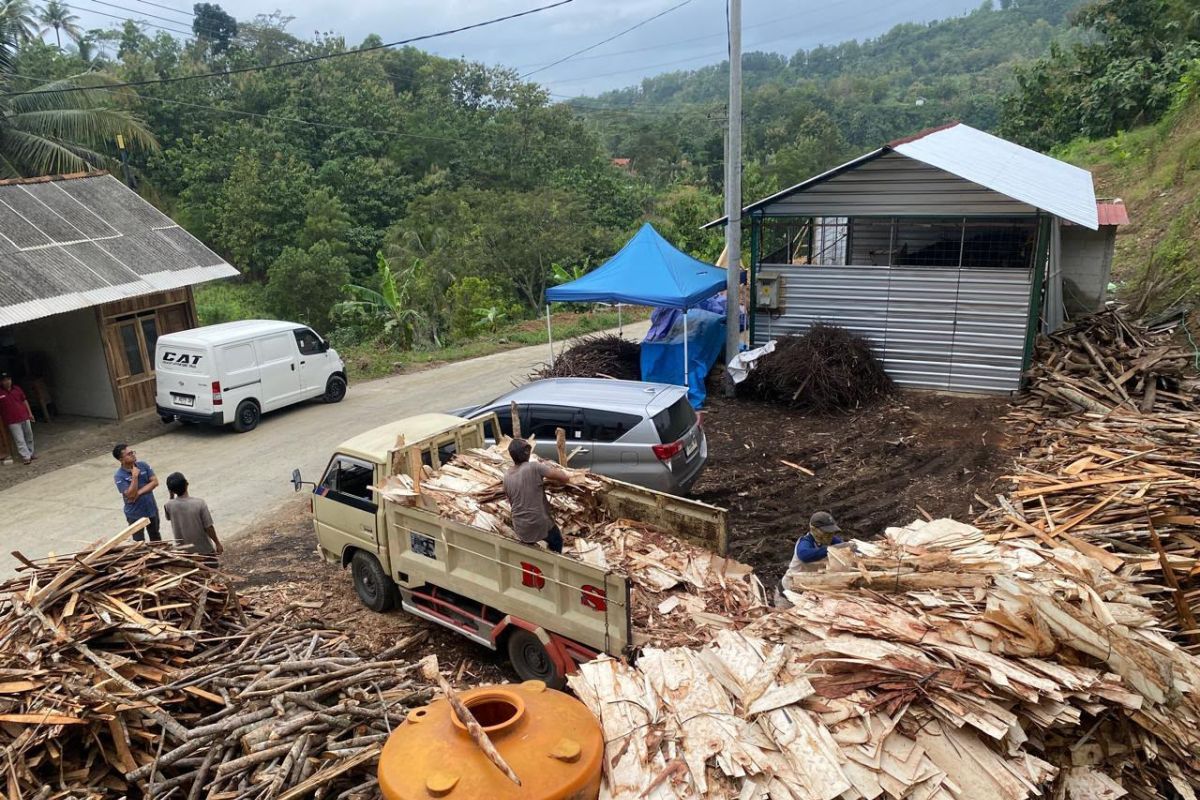
Jakarta (ANTARA) - PT PLN Energi Primer Indonesia (PLN EPI) is increasing the utilisation of community-based biomass in villages through its ‘Biomass from Villages’ or Biodes innovation.
PLN EPI Corporate Secretary Mamit Setiawan, in a statement in Jakarta on Saturday, said the innovation—which integrates village biomass potential, integrated agriculture, community empowerment, and the supply chain—is one of the company’s efforts to support the sustainability of biomass supply for power plant co-firing programmes.
“The Biodes innovation is a manifestation of PLN EPI’s commitment to building a biomass ecosystem that is not only oriented towards meeting energy needs but also creates added value for the community and the environment. By integrating village biomass potential, integrated agriculture, and a managed supply chain, we strive to provide high-quality and sustainable biomass supply while strengthening the community’s role in supporting Indonesia’s energy transition,” said Mamit.
Biodes was developed to optimise agricultural, plantation, and forestry waste, as well as energy crops cultivated on dry or marginal lands.
Through this approach, villages are not merely positioned as raw material sources but become part of a biomass production ecosystem and supply chain involving farmers, Village-Owned Enterprises (BUMDes), suppliers, and power plants.
The Biodes innovation was presented by the PLN EPI team, consisting of Khalda Az Zahra, Pandu Trijaka, and Nurlita Dewi Utami, during the Knowledge Hub Enlit Asia MKI Electricity Connect 2026 session.
Based on 2022 Ministry of Energy and Mineral Resources data used in the development of Biodes, the availability of ready-to-use waste-based biomass faces limitations in terms of volume and supply sustainability.
Mamit added that through Biodes, PLN EPI is developing six main approaches: optimising village biomass potential, planting energy crops using intercropping patterns, developing a spoke-hub based supply chain, improving biomass quality and quantity, digitalisation via marketplaces, and integrating villages with industry.
This approach is directed towards building a more efficient supply chain while increasing community involvement in the biomass ecosystem.
PLN EPI Officer for Biomass Strategy and Business Development, Khalda Az Zaherm, explained that the innovation does not rely solely on waste-based biomass but also encourages the productive development of energy crops integrated with food commodities.
“Not only relying on available waste, Biodes also encourages the intercropping of energy crops with food crops, so that the sustainability of the biomass supply can run alongside economic benefits and food security for village communities,” she said.
The initial implementation of Biodes has been developed in Cilacap Regency, Central Java, since 2023, utilising 106 hectares of land.
The programme is implemented in stages, starting from surveys and socialisation, the application of integrated farming systems, harvesting and collection at sub-hubs, biomass production through BUMDes, to the delivery of biomass to the Adipala Power Plant in Cilacap.
Through the sub-hub and hub model, biomass from various village-level sources can be collected, processed, and consolidated before being distributed to power plants.
This model is expected to increase logistical efficiency while maintaining the quality, quantity, and continuity of the biomass supply.
According to Mamit, the development of Biodes is projected to generate an additional biomass supply of up to 15,000 tonnes per year, involving 330 farmers, utilising 106 hectares of marginal land, and creating 25 new jobs.
The programme is also projected to provide additional income for smallholder farmers of up to Rp100,000 per day per worker.
From an environmental perspective, the use of biomass through this programme is projected to contribute to a reduction in greenhouse gas emissions of approximately 6,750 tonnes of CO2e.
Moving forward, the Biodes roadmap includes expansion to villages in Central Java, West Java, and East Java, as well as continued development with supply partners outside Java and scaling up at various co-firing power plant locations.
Gradually, Biodes is targeted to expand to 100 villages to strengthen the biomass supply ecosystem while opening opportunities for ‘beyond kWh’ business development.
Source: jawawa.id (https://jawawa.id/newsitem/pln-epi-enhances-biomass-utilisation-in-villages-through-biodes-innovation-1790996136)
Originally published by Antara (Indonesian) (https://www.antaranews.com/berita/5769541/pln-epi-tingkatkan-pemanfaatan-biomassa-di-desa-melalui-inovasi-biodes), translated from Indonesian