
PLN ensures charging stations at toll roads support smooth Lebaran exodus in 2026
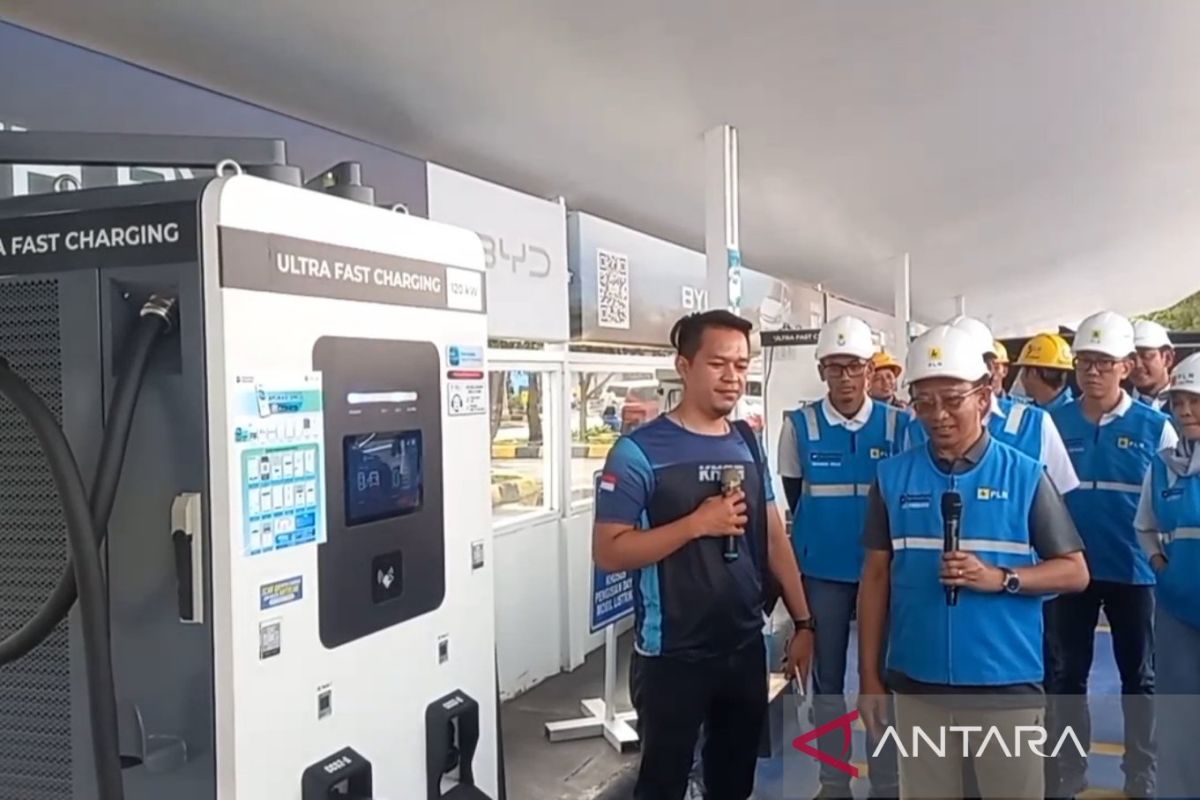
PT PLN (Persero) is ensuring the reliability of Public Electric Vehicle Charging Stations (SPKLU) at major toll routes to support smooth travel for the public during the 2026 Lebaran exodus and return period.
Adi Priyanto, Director of Retail and Commerce at PLN, stated in Cirebon, West Java on Tuesday that the company has conducted comprehensive inspections of SPKLU facilities along major migration routes, particularly along the Trans Java Toll.
“We have conducted readiness inspections of SPKLU along major migration routes, particularly the Trans Java Toll, so that people using electric vehicles can travel safely and comfortably,” he said.
He noted that the company also inspected the SPKLU at the KM 229 B Rest Area of the Kanci-Pejagan Toll in Cirebon.
PLN continues to ensure that all electric vehicle charging infrastructure is in operational condition, especially at toll rest areas that serve as stopping points for returning travellers.
The company has placed 1,680 SPKLU units across various regions in Indonesia to anticipate increased electric vehicle mobility during the Lebaran migration period this year.
This figure represents a significant increase in line with the growth of electric vehicles in Indonesia, which is estimated to reach approximately 200,000 units by 2026. This represents an increase of approximately 170 per cent compared to 2025, meaning the demand for charging infrastructure is also increasing.
“Moreover, as reliability and comfort of electric vehicles improve over time and the prices of electric vehicles become more competitive,” he said.
The readiness of SPKLU at strategic routes is an important part of supporting long-distance travel for electric vehicle users.
The company also ensures that all SPKLU facilities at major toll rest areas can be used optimally during the Lebaran migration period.
“With this readiness, the public is expected to become increasingly confident in using electric vehicles for long-distance travel,” he said.
According to him, the availability of adequate charging facilities along migration routes is an important factor in providing a sense of safety and comfort for electric vehicle users.
PLN continues to monitor and regularly inspect SPKLU infrastructure to maintain service reliability during the migration period.
He added that the expansion of electric vehicle charging infrastructure is part of PLN’s commitment to supporting energy transition whilst expanding the electric vehicle ecosystem in Indonesia.
“Yes, we are working to enhance the service we provide to our customers,” he said.