
PLN Chief: Nuclear Power Plant Decisions Must Be Made in the Coming Years
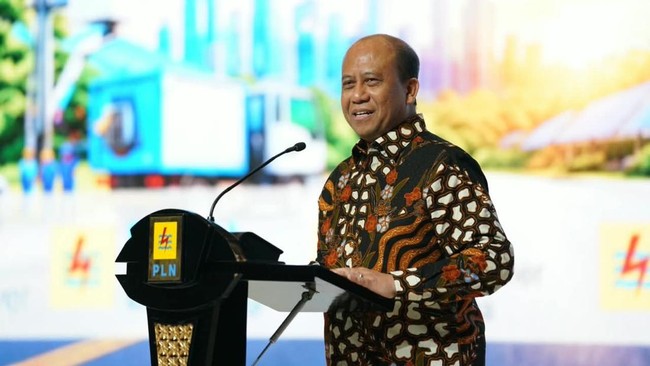
Jakarta — State electricity company PT PLN (Persero) says decisions on building a nuclear power plant must be made in the coming years, particularly regarding policy certainty and investment.
PLN President Director Suroso Isnandar said the issue was critical if a nuclear plant was to begin commercial operations within the next decade, in 2034. He said nuclear energy had been included in the 2025–2034 Electricity Supply Business Plan (RUPTL).
He said a nuclear plant was needed to support the national electricity system’s baseload, which operates around the clock, as projected baseload generation capacity would remain insufficient through the end of the plan period.
“From 2034 to 2040, we calculate that the need for nuclear power plants will reach 7,000 MW. So, based on our simulations, nuclear power will come online in 10 years; that means decisions on nuclear power must be made in the coming years,” Suroso said at the National Energy Forum, according to a report on Thursday (26 November 2026).
Suroso said PLN’s calculations projected national nuclear capacity would reach 7,000 megawatts (MW), or 7 gigawatts (GW), between 2034 and 2040.
He said that under the 2025–2034 RUPTL, PLN planned to add 69.5 GW of new generation capacity—rounded to 70 GW—to supplement the country’s current installed capacity of 80 GW.
Of the total planned expansion, 76% is intended to come from renewable energy and new technologies, including nuclear power and energy storage systems.
“By the end of the year, we still have a shortfall in baseload generation—the power plants that run 24 hours a day. So, inevitably, we must also consider the available primary energy sources, and begin moving into nuclear power by 2034,” he said.
Earlier, the United States government agreed to expand civil nuclear energy co-operation with Indonesia in an announcement at the East Asia Summit in Manila, the Philippines, on 17 November 2026. The US will provide a control-room simulator for small modular reactors (SMRs), as well as technical assistance to Indonesia.
The support will be provided through the US State Department’s Foundational Infrastructure for Responsible Use of Small Modular Reactor Technology (FIRST) programme.
The initiative is intended to prepare Indonesia to become a regional hub for SMR technology development, as energy demand in the region is projected to triple by 2050.
“The United States announced it would provide a control-room simulator for small modular reactors. The simulator and other technical assistance will be provided to Indonesia through the State Department’s FIRST programme to help make Indonesia a regional hub for SMR development,” the US Embassy and Consulates in Indonesia said in a press release on Friday (20 November 2026).
The announcement follows the signing of a memorandum of co-operation (MOC) on SMR deployment by US Secretary of State Marco Rubio and counterparts from Japan and South Korea. The trilateral co-operation is aimed at accelerating the adoption of civil nuclear technology in the Indo-Pacific.
Technically, SMRs are expected to meet demand for a continuous baseload electricity supply that does not depend on weather, supporting industry, households and high-power computing infrastructure such as artificial intelligence.
Compared with conventional nuclear power plants, SMRs require less land and use modular construction, allowing capacity to be adjusted to the needs of the electricity grid. The US reactor design also includes specifications for resilience to extreme weather and seismic activity, and is subject to nuclear safety and non-proliferation standards.
Source: jawawa.id (https://jawawa.id/newsitem/pln-chief-nuclear-power-plant-decisions-must-be-made-in-the-coming-years-1795690247)
Originally published by CNBC Indonesia (https://www.cnbcindonesia.com/news/20261126150630-4-788784/bos-pln-pembangkit-listrik-nuklir-harus-diputuskan-tahun-tahun-ini), translated from Indonesian