
PLN Boss Reveals Reasons Behind Rotating Blackouts in Java
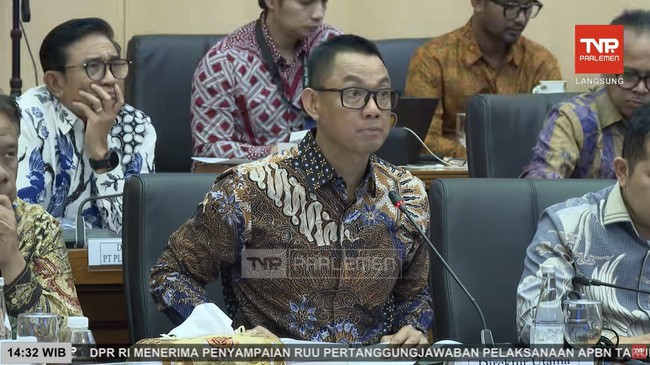
Jakarta, CNBC Indonesia - PT PLN (Persero) has revealed that the rotating blackouts which recently occurred in several areas of Java were due to limited supplies of coal with the appropriate specifications for the company’s power plants.
PLN President Director Darmawan Prasodjo explained that although there is no issue with the volume of domestic coal production, the problem lies in the need for coal with a specific calorie content for the company’s power generation. He noted that the composition of national coal production has changed recently, with production of low-calorie coal increasing while output of medium to high-calorie coal has declined. PLN’s power plants require coal with a medium to high calorie content, specifically 4,500 kcal/kg and above, meaning the supply volume of coal meeting these specifications has decreased.
“We acknowledge that previously, the volume of low-calorie coal production was a smaller percentage compared to high-calorie coal. However, over time, the production of low-calorie coal has increased, while production of medium and high-calorie coal has continued to decline,” Darmawan explained during a Hearing Meeting with Commission XII of the Indonesian House of Representatives on Thursday (2/7/2026).
Consequently, the Ministry of Energy and Mineral Resources, together with PLN, is rectifying the situation by increasing the supply of medium to high-calorie coal above 4,500 kcal/kg. Darmawan stressed that this additional supply is the solution to the electricity supply constraints that occurred in Java, allowing the rotating blackouts to be halted.
According to Darmawan, the company has secured an additional 1.8 million tonnes of coal from existing contracts for July 2026, with a further 3 million tonnes per month to be supplied from August to December 2026. This is expected to maintain the reliability of the national electricity system. “For 2026, there is an additional supply of medium to high-calorie coal, specifically 4,500 kcal/kg and above, allocated specifically for PLN by the Ministry of Energy and Mineral Resources, particularly the Directorate General of Minerals and Coal. This amounts to 1.8 million tonnes on top of the existing supply for July and 3 million tonnes per month from August to December,” he stated.