
Pleret Bantul Spends Rp 67 Million on AI-Powered Advanced Farming
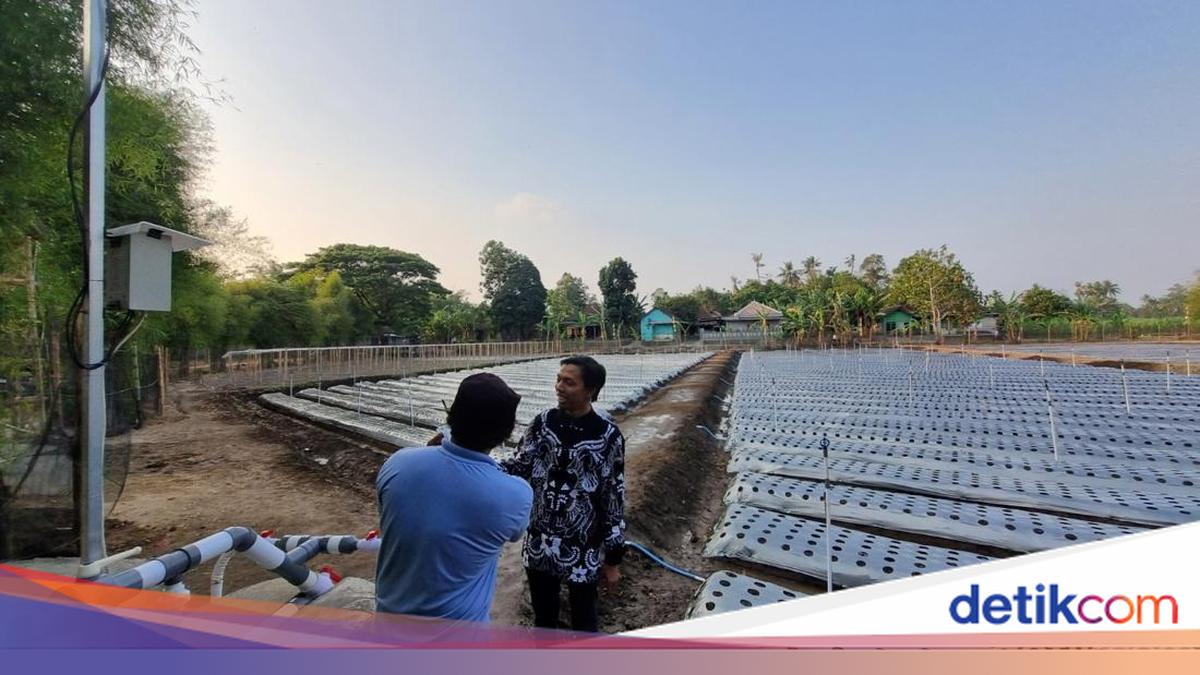
Kalurahan Pleret in Bantul is developing modern agriculture based on artificial intelligence (AI) and the internet. To develop this farming system, the Pleret village government spent Rp 67 million on equipment.
“Around Rp 67 million for the equipment, and that is complete with solar cells and other things. That means it is a fairly long-term investment,” said Pleret village head Taufiq Kamal when met in Pleret, Bantul, on Thursday afternoon (20/8/2026).
The budget came from special financial assistance (BKK) for the Desa Mandiri Budaya programme as initial financing. The BKK itself comes from the Special Autonomy Fund (Dana Keistimewaan).
Taufiq explained that his office is developing integrated farming based on the Internet of Things (IoT). The equipment used includes sensors, solar cells, and WiFi.
“With IoT, plant care can be completed by utilising technology. The reason it can water automatically is because we have installed sensors in the field, so if the soil is moist, dry, or the pH is not suitable, it immediately waters automatically,” he said.
Technically, sensors installed in the farmland send data via the internet, because WiFi is installed in the field. The data is then processed continuously, triggering actions such as watering or applying liquid fertiliser.
“We also integrate it with artificial intelligence, so the AI just needs to be given knowledge. There is no need to say ‘please turn on the water, water the plants’ because that knowledge is already there,” he said.
The IoT-based farming method was first implemented on Wednesday (19/8). The initial planting involved bitter melon and shallots. There are three blocks on the land.
“Yesterday’s activity was the first planting through our regular Gapoktan group meeting. Because if it is only theory it is difficult, we have to give an example first before they become interested,” he said.
IoT technician Saifudin explained that they use solar panels to supplement electricity. This is because the electricity required for modern farming operations is quite large.
“This needs 1.5 kilowatts of electricity, so we chose to use solar cells that do not require payment,” said Saifudin.
In addition, a well was constructed to maintain water quality for plant irrigation. According to Saifudin, groundwater has good quality for watering plants.
“Besides that, it also reduces expenditure,” he said.
He explained that sensors are planted in the soil. Their purpose is to check moisture and weather temperature.
“Sensors are planted in the soil, and they monitor air humidity, soil moisture, and weather, particularly temperature. So if it rains, there is no watering,” he said.
Although technology is used for plant care, Saifudin admitted that humans are still involved. People are needed to control technical matters related to the farming equipment.