
Plenary Session on PBNU Chairman Election Deadlocks
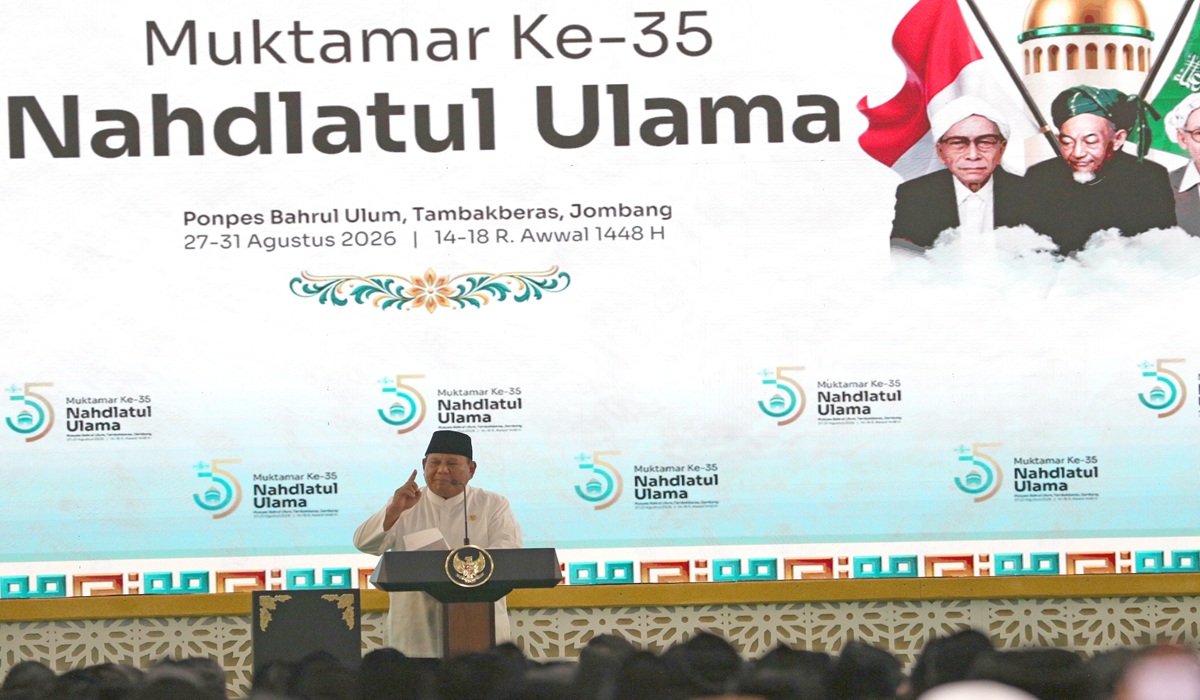
The third plenary session on the report, discussion and ratification of commission results at the 35th Nahdlatul Ulama (NU) Congress in Jombang ended in deadlock, particularly regarding the system for electing the Chairman of the PBNU.
“An open vote on the chairman election system was agreed to be held. Whether the vote will be between keeping the current system or changing it will be carried out after Maghrib prayers at 19.00 WIB,” said Deputy Chairman of the Congress Organisation Commission Prof. Asrorun Niam on the sidelines of the Congress in Jombang, Saturday (29/8).
According to him, the substance of the discussion was actually brief, but the debate over the chairman election mechanism consumed considerable time, necessitating a vote.
Two options were presented to Congress participants. The first option maintains the status quo: election by consensus (mufakat) first, and if consensus is not reached, a one-man-one-vote ballot is held. The new proposal is a mechanism through Ahlul Halli wal Aqdi (AHWA).
During the commission session, five options were presented. The first was that the Chairman is elected directly by Congress participants through deliberation and consensus. All deliberations at the Congress are to be pursued through consensus.
In the event that consensus is not achieved, the Chairman is elected by Ahlul Halli wal Aqdi. Chairman candidates under this second option are screened through a vote by Congress participants. However, under this second option, participants may select up to five eligible candidates, whereas previously they selected only one.
The results of the selection are then narrowed to the top five candidates for Chairman and submitted to Ahlul Halli wal Aqdi. Finally, the Chairman candidate is chosen by Ahlul Halli wal Aqdi after expressing willingness verbally or in writing and obtaining written approval from the elected Rais Aam.
“The discussion was presented very briefly and in a very familial spirit. After it was presented, it was immediately offered to the participants and it was agreed that points outside this matter were accepted by consensus,” he said.
Regarding the possibility of two rounds of voting, he clarified that there would not be two votes. The first vote concerns the system, and the second concerns the names of candidates.
“The difference is that the system vote is not closed. It can be open directly with boxes A and B, showing who chooses A and who chooses B. It is different when it concerns individuals — according to our rules of procedure, voting on individuals is closed,” he said.