
Plenary Session Approves Asset Forfeiture Bill as DPR Initiative
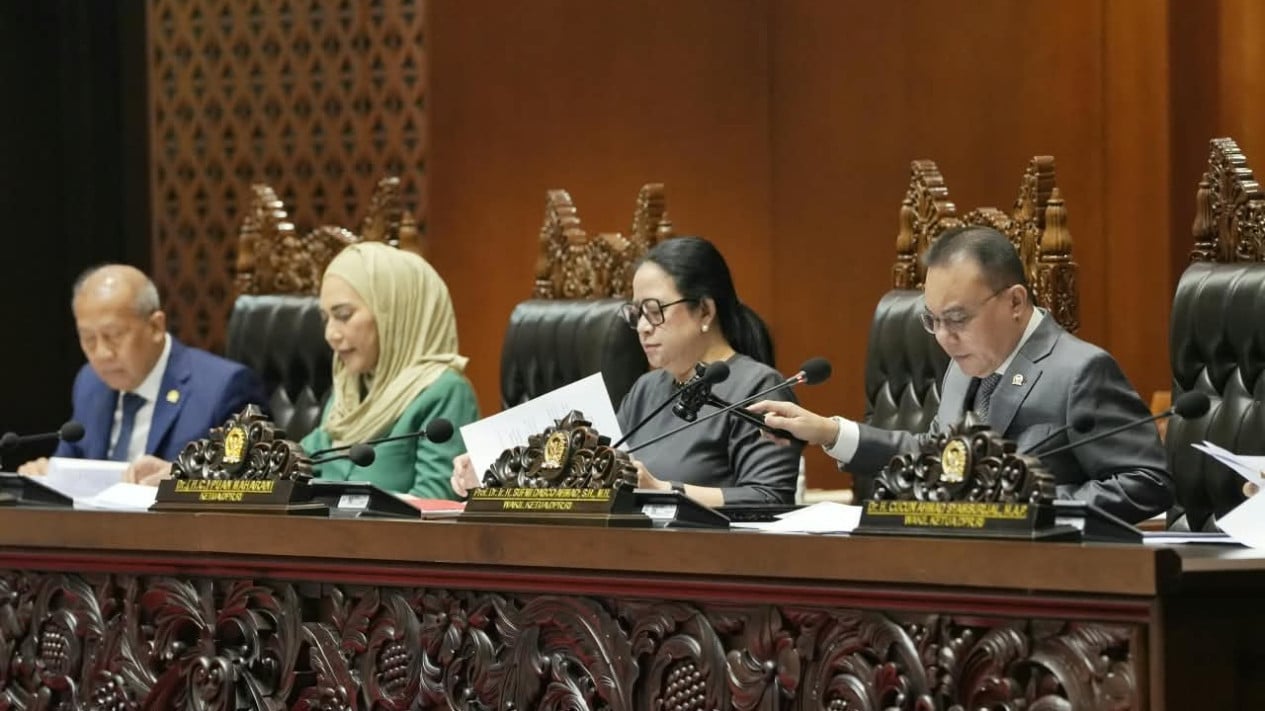
The Indonesian House of Representatives (DPR RI) has approved the Draft Law on Asset Forfeiture related to Criminal Acts as a DPR initiative. This decision was reached during the 9th plenary session of the DPR RI after representatives from various political party factions submitted their opinions in writing.
“I ask this honourable assembly, can the Draft Law proposed by Commission III of the DPR regarding Asset Forfeiture related to Criminal Acts be approved as a DPR initiative bill?” stated the Speaker of the House, Puan Maharani, on Tuesday (6/10/2026).
Consequently, the proposed regulation will proceed to further discussions by Commission III of the DPR, which oversees law enforcement, alongside representatives from the government.
Meanwhile, the Chairman of Commission III, Habiburokhman, stated that his commission will immediately discuss the List of Inventories of Problems (DIM) for the Asset Forfeiture Bill during the next legislative session, which begins on 10 November 2026.
“We can reaffirm and ensure that we will have the Asset Forfeiture Law no later than 15 December 2026,” he said in a written statement.
He explained that since September 2025, Commission III of the DPR has been drafting the bill and its academic paper, involving active public participation.
Commission III, he added, has conducted at least 62 public hearing meetings, eight working visits, dozens of visits to electoral districts, and has received hundreds of written aspirations from the public.
“From this series of activities, we have gained an understanding that the majority of the public supports the passage of the Asset Forferess Bill and requests that this law does not become a tool of power against political opponents or a tool for law enforcement agencies to commit extortion,” he said.
Habiburokhman emphasised that his institution will maximise the mechanisms, procedures, and substance of asset forfeiture related to criminal acts, while also maximising oversight regarding the future implementation of the law.