
Playing a Role in Strengthening National Downstreaming
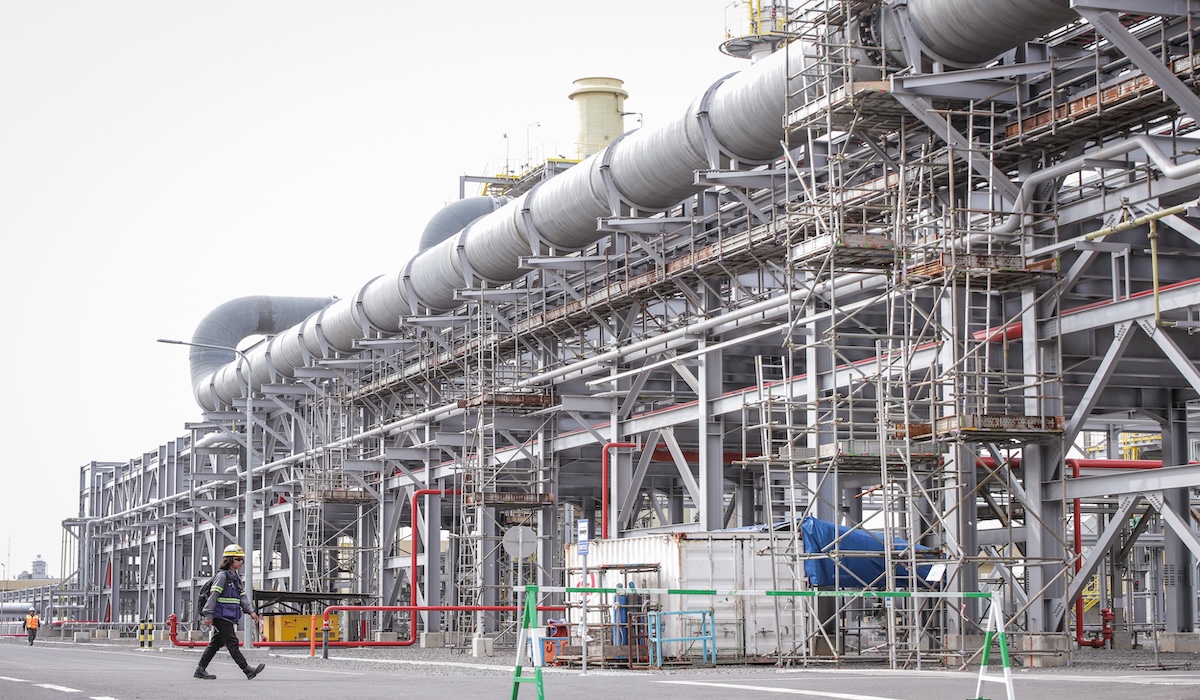
The government continues to position downstreaming as a vital component of the strategy to increase the economic value of Indonesia’s natural resources. Through the Daya Anagata Nusantara Investment Management Agency (Danantara Indonesia), President Prabowo Subianto intends to drive the optimisation of national wealth while increasing the contribution of State-Owned Enterprises (SOEs) to national industrial development.
In his speech during the Annual Session of the MPR RI and the Joint Session of the DPR RI-DPD RI at the Parliament Complex, Jakarta, on Friday (14/8), Prabowo explained that Danantara carries two major agendas. In addition to restructuring SOEs, the institution is directed to transform state company profits into a funding source for productive investments.
According to the Head of State, restructuring is necessary because some state-owned enterprises possess overly large organisations, low efficiency levels, and sub-optimal productivity. Simultaneously, SOE profits are expected to be reinvested to build industries with higher added value domestically.
This agenda has begun to be realised through several downstream projects. Throughout 2026, Danantara has initiated 26 projects divided into two waves. Thirteen projects held their groundbreaking ceremonies on 6 February 2026, followed by another thirteen projects on 29 April 2026.
The government’s policy direction is also expanding. Beyond strengthening the processing of raw materials, Prabowo is encouraging the mastery of the upstream sector through investment and the potential acquisition of leading global companies.
These investments are aimed at accelerating the transfer of various capabilities that Indonesia has not yet fully mastered. Through investments in global companies, the government hopes to acquire technology, intellectual property, managerial expertise, industrial experience, distribution networks, and access to international markets.
“We will also purchase the best companies in the world so that we can obtain their technology, their IP, the best management, their markets, and their experience, so that our economy will become strong,” said Prabability.
With this strategy, the strengthening of national industry does not rely solely on processing natural resources domestically. The government is also striving to acquire technology and industrial capacity from global firms. Under this scheme, the financial strength of SOEs and Danantara is expected to serve as a primary pillar of financing.
The mineral sector remains the largest contributor to national downstream investment. In the first quarter of 2026, mineral downstreaming investment reached Rp98.3 trillion, or approximately 67% of the total downstream investment of Rp147.5 trillion.
The Minister of Investment and Downstreaming/Head of BKPM and CEO of Danantara, Rosan Roeslani, noted that downstream investment during this period contributed 29.6% to the overall national investment realisation. Total national investment was recorded at Rp498.8 trillion.
“What we need to highlight is the natural resource downstreaming sector, whose contribution increased to 30 percent of the total investment realisation in the first quarter of 2026, amounting to Rp147.5 trillion,” Rosan stated during a working meeting with Commission XII of the DPR RI.
Realised mineral investment primarily originated from strategic commodities such as nickel, copper, iron and steel, bauxite, and tin. Nickel was the largest contributor with a value of Rp41.5 trillion, or about 42% of total mineral investment.
This was followed by copper investment at Rp20.7 trillion, iron and steel at Rp17 trillion, bauxite at Rp13.7 trillion, and tin at Rp2.5 trillion. Other values came from commodities such as gold, silver, cobalt, manganese, coal, silica sand, and rare earth metals.
This investment flow also strengthens the position of state mining companies within the national industrial chain. In the MIND ID Group, for example, ANTAM plays a role in nickel and bauxite, PT Freeport Indonesia in copper, while PT Timah operates in the tin sector.
The impact of downstreaming is also evident in the increasing spread of investment activities to various regions outside Java. Approximately 75% of downstream investments are located outside Java, mostly directed towards mineral-producing areas.
Central Sulawesi and North Maluku are two regions developing rapidly as hubs for nickel processing and the development of the electric vehicle battery ecosystem. In the first quarter of 2026, investment in Central Sulawesi reached Rp32.1 trillion, or 6.4% of total national investment, while North Maluku recorded Rp25.2 trillion, or approximately 5%.
The government is also beginning to expand downstreaming to sectors outside of minerals. Several commodities targeted for development include semiconductors, bioethanol, coconut derivatives, and seaweed.
“We also continue to encourage the downstreaming of other strategic commodities that produce high value-added products, such as semiconductors, bioethanol, coconut derivatives, and seaweed,” he said.
For 2027, the government targets an investment realisation of Rp2,322 trillion. This target represents a 13.8% increase from the 2026 investment target of Rp2,041.3 trillion. In achieving this target, the mineral downstreaming sector is still viewed as a vital pillar.
This downstreaming policy runs alongside the strengthening of the role of the Mining Industry SOE Holding, PT Mineral Industri Indonesia (MIND ID), in managing national mineral resources.
MIND ID’s task is not limited to mining activities. The holding company is also encouraged to increase production, accelerate downstreaming, improve governance, and build an interconnected industrial ecosystem.