
Plastic Waste Converted into Fuel, Balinese Residents Only Need Rp 7,000 per Litre
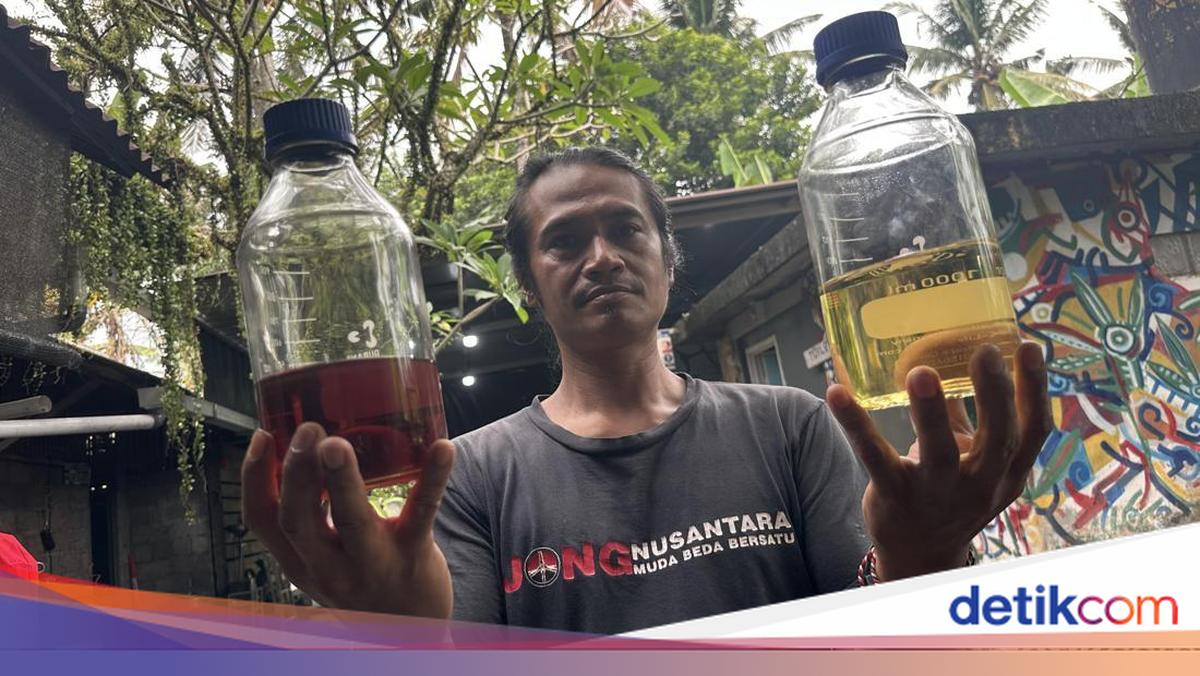
The pyrolysis machine owned by the Get Plastic community in Sibang Kaja Village, Abiansemal District, Badung Regency, Bali, has emerged as a tangible solution amid the heated issues of soaring fuel prices and Bali’s mounting waste problem. This appropriate technology converts worthless plastic waste from households and local micro-enterprises into alternative energy sources, namely diesel and petrol. “We actually have something right in front of our eyes that is a problem but is actually a solution for our current fuel issues, for example plastic waste. Fuel prices are rising and our waste is piling up, yet we remain consistent in processing plastic waste into fuel,” said Dimas Bagus Wijanarko, founder and activist of Get Plastic, at the Get Plastic Learning Centre in Badung on Friday (12/6/2026). The Surabaya native has been concerned about the fossil energy crisis and waste accumulation for over a decade through independent research. His awareness stemmed from seeing forest and mountain ecosystems across the country increasingly polluted by plastic waste. “I have been conducting research since 2013 and was convinced that this fuel price surge would eventually happen. But we don’t realise that we actually have potential energy resources from plastic waste, which incidentally is made from fuel,” Dimas said. To gather raw materials, Get Plastic has built a partnership system by collecting waste from residents around Sibang Kaja Village and areas in Denpasar, Ubud, and Tabanan. Uniquely, some participating households are provided with a special barcode so they can monitor their daily waste production volume. Dimas sees this as a major opportunity because the abundant waste in final disposal sites can be explored like a new energy mine. However, he stressed that the entire conversion process must apply proper standards so the resulting fuel is safe for public use. “The language is that if we want to mine, we mine at the landfill to produce fuel. But it must be with a good and proper process; if it’s done carelessly, the fuel cannot be used by the community and becomes useless,” Dimas explained. The method used is pyrolysis, a chemical decomposition or dry distillation technique using a heating system at temperatures reaching 250 degrees Celsius inside an airtight tube. This process is claimed to be environmentally friendly because it relies purely on thermal energy to break carbon chains, not conventional burning that triggers air pollution. “So the pyrolysis process does not require oxygen because it is not combustion, but rather heating. There is actually no smoke from this process because it doesn’t involve burning like we commonly know to dispose of plastic,” Dimas elaborated. Despite being smoke-free, he cautioned that the liquid resulting from distillation carries toxic substances from the original plastic material. For this reason, the toxic crude oil liquid is strictly allocated as engine fuel. “So what is actually dangerous from this process? The oil, because the toxic content in the plastic material all turns into that oil,” he added. From a technical operational standpoint, the 10-kilogram capacity pyrolysis machine assembled by Dimas and his colleagues takes about three hours to produce 10 litres of fuel. The energy consumption for heating the reactor furnace is also quite efficient, requiring only about 3 kilograms of gas, or it can be substituted with a bio-digester, methane gas, used oil stove, or wood pellet heater. “With our current 10-kilogram capacity, converting 10 kilograms of plastic into 10 litres of fuel takes roughly three hours. The energy we need is about 3 kilograms of gas if we use gas, because we can actually use any energy source,” he said. The residue from the heating process ranges from only 5 to 8 percent, and can even be zero depending on the type of plastic processed. Based on energy balance calculations, the production cost is claimed to be far more economical compared to the current market price of fuel. “For polypropylene plastic waste, there is almost no residue. The economic calculation is around Rp 7,000 to process 1 kilogram of plastic waste into 1 litre of fuel, which I think is cheaper,” he stated. However, not all types of plastic can be fed into the reactor tube. Type 1 plastic, or Polyethylene Terephthalate, is deliberately separated because it still has high recycling value, while type 3 or PVC is strictly rejected for environmental safety reasons. “Meanwhile, class 3 or PVC is not processed by us because of its high chloride content. It is dangerous and has a huge potential to damage the environment; it wouldn’t solve the problem but create a new one,” he asserted. To date, Get Plastic has successfully developed more than 10 pyrolysis machine prototypes and distributed them to various regions across Indonesia. Specifically in Bali, there are three operational points, while 40 other units are spread outside Bali with a programme success rate reaching 80 percent. The final products, consisting of 90 percent diesel and petrol, are not sold but donated free of charge to support the operations of local communities and assisted groups. Their use is tailored to local needs, ranging from fuel for fishing boats to machinery.