
Plastic Waste Can Be Converted into Fuel in Indonesia, Potentially Outperforming Biosolar
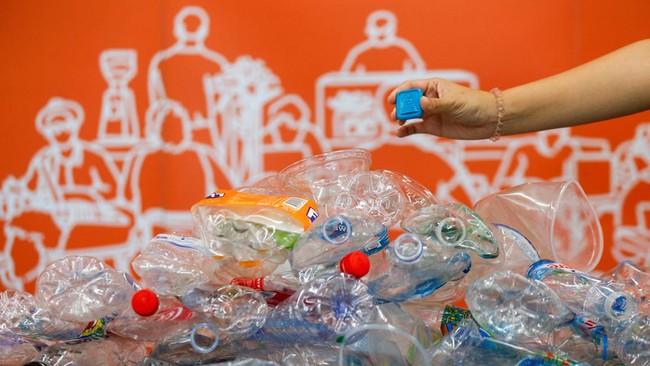
The Indonesian government continues to innovate within the energy sector. Most recently, the Ministry of Energy and Mineral Resources (ESDM) has identified the potential for creating Fuel Oil (BBM) from plastic waste through a pyrolysis system.
Eniya Listiani Dewi, Director General of New, Renewable Energy, and Energy Conservation (EBTKE) at the Ministry of ESDM, stated that plastic waste can produce not only renewable fuel but also electricity. “From waste, we can produce electricity. Plastic waste, in particular, can produce renewable fuel—which we term renewable fuel oil—that can be processed using a pyrolysis system to become diesel or petrol,” Enకి said during a Hearing with Commission XII of the Indonesian House of Representatives (DPR RI) in Jakarta.
The government is currently identifying the specifications of this renewable fuel, as the quality of the processed results varies across different locations. Currently, records show that the fuel specifications from waste reach a Cetane Number (CN) above 51.
Eniya added that the business permit for such processing is regulated under KBLI 38211. Following a verification process and regulatory establishment, business actors will be able to sell renewable fuel commercially through a business-to-business (B2B) scheme. “Some locations produce very good results above CN 51, while others are lower. We are currently organising the permits under KBLI 38211. Once we verify and issue the permits, it can proceed via B2B for commercial sales,” she explained.
Notably, plastic waste can be converted into an equivalent diesel fuel known as ‘Petasol’. This is achieved using multi-condenser pyrolysis technology developed by the National Research and Innovation Agency (BRIN).
Previously, Heru Susanto, a Junior Expert Researcher at BRIN’s Centre for Sustainable Industrial and Manufacturing Systems, explained that low-value plastic waste—such as sachets, multi-layered plastics, thin bags, and dirty residue—has not been optimally managed due to its low economic value. To address this, multi-condenser pyrolysis technology was developed to process low-value, dirty, and wet plastic waste into Petasol.
The processing involves heating without oxygen to break polymers into hydrocarbon compounds. “Every kilogram of plastic waste produces an average of 0.8 litres of Petasol, potentially reaching up to 1 litre. The process takes approximately eight hours at temperatures between 250-350 degrees Celsius without re-distillation, but rather through a purification stage,” Heru stated.
Petasol produced through this process has undergone characterisation and meets the diesel fuel standards set by the Directorate General of Oil and Gas Number 146/2020. He also explained that the fuel has been used in diesel vehicles, fishing boats, and agricultural machinery for over four years, and its use has been deemed safe. Users of Petasol may also experience better performance, as its calorific value is higher than that of biosolar.
This technology has been replicated in over 60 locations across Indonesia, including Cimahi, Yogyakarta, and Semarang, supported by local Environmental Agencies (DLH) and local waste banks. The production cost of Petasol is also very low, ranging from approximately Rp 5,000 to Rp 6,160 per litre, with plastic raw material costing around Rp 1,800 per kilogram.
However, costs can be further reduced by sourcing raw materials from waste banks at around Rp 200 per kilogram, bringing production costs down to Rp 4,000-Rp 5,000. “Since there are no domestic market trading regulations yet, the price of Petasol is set at Rp 10,000 per litre. This price difference generates a profit of Rp 4,000-Rp 5,000 per litre. With a capacity of 100 kilograms per day, the net profit is approximately Rp 8.6 million per month, with the break-even point reached in about 2.5 years,” he explained.