
Plastic Prices in Indonesia Skyrocket and Become Scarce, Business Owners Seek Help from This Country
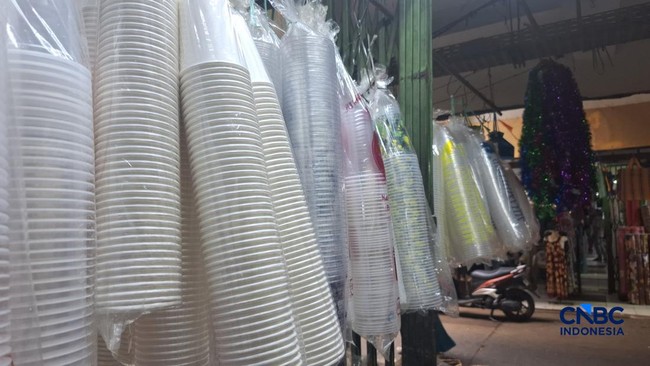
Plastic prices in the market have soared. The increase is quite significant and supplies are scarce. This rise in prices and shortage of stock has caused traders to raise alarms.
Overall, the national petrochemical industry is beginning to feel the direct impact from escalating geopolitical tensions in the Middle East. Uncertainty in raw material supplies is pushing business actors to seek alternative strategies to maintain production continuity.
Secretary General of the Indonesian Olefin, Aromatic, and Plastic Industry Association (Inaplas) Fajar Budiono said industry players are now continuously monitoring global market dynamics, particularly regarding the availability of naphtha, which has long been the backbone of production.
“For naphtha needs of 3 million tonnes per year and 100% imported. For plastic raw materials such as PE (Polyethylene), PP (Polypropylene), PET (Polyethylene Terephthalate), PS (Polystyrene), and PVC (Polyvinyl Chloride) and others, around 8 million tonnes, with 50% still imported,” he told CNBC Indonesia on Monday (6/4/2026).
Industry players are also exploring new supply sources outside traditional regions. However, this step brings additional consequences, especially in terms of delivery times and logistics costs.
“We have started communicating with Central Asia, Africa, and America. Clearly, the lead time is longer, the fastest around 50 days. All countries are trying to secure feedstock,” Fajar explained.
Amid these conditions, global concerns are starting to emerge. Several countries are even experiencing unusual surges in demand, reflecting growing anxiety over raw material supplies.
One country experiencing an increase in plastic demand is South Korea. However, Fajar assesses that there are differences in the petrochemical industry situations between Indonesia and Korea, so Indonesia is considered relatively safe.
“Korea’s petrochemicals have been slowing down for a long time before the (Middle East) war, so now it’s even harder,” he said.
Meanwhile, analysts believe the direction of the impact from this situation heavily depends on the duration of the conflict. If tensions drag on, the pressure on the industry is expected to no longer be temporary. The current global uncertainty has the potential to develop into long-term pressures on the economy.
“If we look at this Middle East conflict in a scenario framework, the key is actually in the duration. As long as the conflict is still related to strategic objectives like political pressure or regime change, the likelihood of it ending quickly is low. That means what we are facing is no longer just short-term volatility, but pressure that can turn into something more structural,” said Strategic Research Manager at the Center of Reform on Economics (CORE) Yusuf Rendy Manilet to CNBC Indonesia on Monday (6/4/2026).
Policy support is deemed crucial to maintain business and industry continuity, especially for the petrochemical sector which is highly dependent on energy and imported raw materials.
“In the short term, the most urgent is targeted fiscal incentives, such as energy subsidies for small and medium industries that are most vulnerable, tax incentives for companies investing in energy efficiency, and more lenient financing access to keep cash flow stable,” Yusuf explained.
Regarding the possibility of relaxing energy import policies, he sees potential for emergency measures, but they must still be carried out carefully to avoid further impacts on the domestic sector.
“Regarding import duties on gas or imported LPG, this could be an option in emergency situations, especially to suppress input costs and accelerate supply diversification. However, this policy should be temporary and selective,” he said.
Source: jawawa.id (https://jawawa.id/newsitem/plastic-prices-in-indonesia-skyrocket-and-become-scarce-business-owners-seek-help-from-this-country-1775623935)
Originally published by CNBC Indonesia (https://www.cnbcindonesia.com/news/20260406160834-4-724263/harga-plastik-di-ri-mahal-langka-pengusaha-minta-tolong-ke-negara-ini), translated from Indonesian