
Plastic Manufacturers Cry Foul Over Losses, Economist Reveals Shocking Data
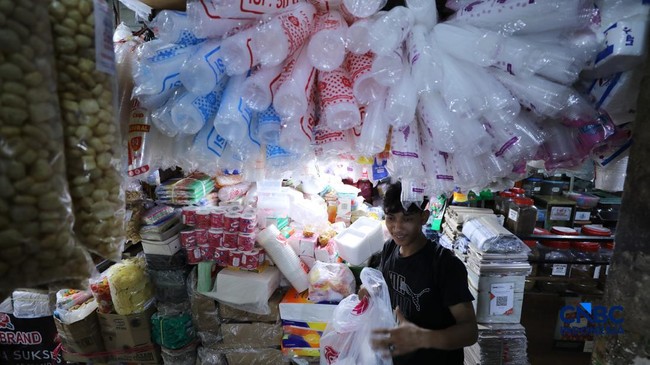
The influx of cheap plastic products, suspected of being dumped, is beginning to erode the competitiveness of domestic producers, particularly amid high energy costs and the lack of certainty regarding the Certain Natural Gas Price (HGBT) scheme. Policy delays in handling this issue could worsen conditions for the upstream industry as it loses the domestic market and faces increasing price competition.
“If a policy is not taken soon, the upstream utilisation will become problematic. It could drop if we do not secure export markets. For PET (Polyethylene Terephthalate) and PVC (Polyvinyl Chloride) products, we are eventually forced to export with very tight margins. This erodes our margins and if it continues, we could suffer heavy losses,” said Inaplas Secretary General Fajar Budiono on Friday (17/7/2026).
Industry pressure comes not only from the flood of cheap imports but also from persistently high production costs. This situation has led business players to believe that trade protection needs to be accelerated so the local industry can remain competitive.
“Because the HGBT is also not yet clear on what percentage we will get. Then, with non-HGBT gas prices at around US$13 per MMBTU, it significantly disrupts our competitiveness. Whether we need to implement some sort of anti-dumping measure to anticipate this, we are still calculating,” he said.
On the other hand, the cost structure of the plastic industry means that rising gas prices have a considerable impact on product selling prices. Raw material costs remain the largest component, followed by energy and utilities. “In the selling price component, around 70% comes from raw materials. Next is electricity, then utilities. Among utilities, gas is the most dominant component. Its contribution to the selling price is around 5% to 10%. So if the gas price is high, the portion can exceed 10%, making our product prices more expensive and uncompetitive. Conversely, if the gas price falls, the portion can approach 5%, improving the industry’s resilience,” Fajar explained.
The onslaught of cheap imported goods from China is cited as one of the causes of the sector’s weakening performance in recent years. This is exacerbated by indications of dumping practices and increasing suspicions of illegal imports. Mohammad Faisal, Executive Director of the Center of Reform on Economics (CORE) Indonesia, stated that the plastic industry is one of the sectors most vulnerable to this pressure.
“Especially with the flood of cheap imports from China. If we look at the post-pandemic period, there are many cases indicating a tendency for dumping from China that affects many industries, including the textile and textile product industry,” Faisal said on Friday (17/7/2026).
Trade data also shows that pressure on the plastic industry is greater than in previous years. Based on international trade mirroring data, this commodity is among the product groups facing the highest number of suspected illegal imports from China. “If we look at the mirroring data from Trade Map, plastic and plastic products are among the categories with the highest suspected illegal imports from China. The largest are machinery and mechanical equipment, followed by iron and steel, then furniture and lamps, and after that, plastics and plastic goods. Compared to 2023 and 2024, the suspected illegal imports have also tended to increase,” Faisal said.
The rising flow of illegal products is not only squeezing local producers but also putting pressure on state revenues. The difference in cost structures makes it increasingly difficult for domestic businesses to maintain competitiveness when facing products that enter without fulfilling proper obligations. “On one hand, the domestic industry struggles to compete because illegal imports are much cheaper and erode their market share,” he noted. “On the other hand, these illegal imports do not pay many obligations such as import tariffs, so they potentially, or perhaps already, cause state losses in terms of fiscal revenue and the state budget. Looking at the overall picture across various industries in 2024, the potential illegal imports entering Indonesia could reach US$4.1 billion, with potential state losses of around Rp65 trillion,” Faisal stated.