
Plastic Feedstock Import Duty Set at 0% for Six Product Categories
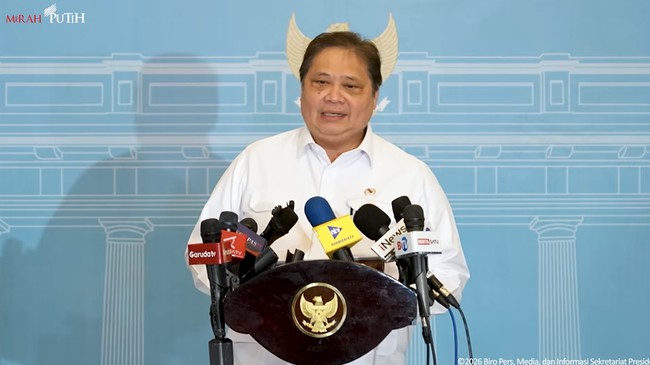
Jakarta, CNBC Indonesia — The government is offering a fiscal incentive by reducing import duties to zero for certain plastic feedstocks for six months. The policy comes amid a surge in international plastic feedstock prices that could increase production costs for domestic industries.
Co-ordinating Minister for Economic Affairs Airlangga Hartarto said the incentive is stipulated in Finance Minister Regulation (PMK) No. 68 of 2026, promulgated on 2 October 2026.
The policy follows President Prabowo Subianto’s instruction to safeguard the continuity of national industry amid global market fluctuations and rising feedstock prices.
“The main priority is to meet industrial feedstock needs, taking into account domestic supply conditions and price developments in international markets,” Airlangga said in Jakarta on Wednesday (14 October 2026).
International price data as at 13 October 2026 show that polypropylene (PP) prices rose by around 42.79% compared with the same period a year earlier. Polyethylene (PE) prices, meanwhile, surged by around 27.87%.
The price increases are considered likely to disrupt supply-chain continuity and raise production costs for industries that use plastic.
Through the import-duty incentive, the government hopes the domestic plastics industry will have more room to manage costs while maintaining business continuity.
“The government is committed to safeguarding the continuity and improving the competitiveness of national industry through policies that respond to global market dynamics,” Airlangga said.
Six Plastic Feedstock Tariff Lines
In detail, PMK No. 68 of 2026 sets the Most Favoured Nation (MFN) import duty at 0% for six plastic feedstock tariff lines.
Four lines cover polyethylene products: 3901.10.12, 3901.10.19, 3901.10.99 and 3902.10.30. The other two cover polypropylene products: 3902.10.90 and 3902.30.30.
The government said implementation of the policy would be closely monitored and evaluated to measure its effectiveness. The review is intended to ensure the incentive is properly targeted and generates wider benefits for industries that use the materials.
Airlangga said initial information from businesses indicates that most feedstocks covered by the facility are currently in liquid form. However, downstream industries — including packaging manufacturers, household-goods producers, agriculture and micro, small and medium-sized enterprises (MSMEs) — need plastic feedstock in pellet form.
This is one of the issues the government will consider when assessing the benefits of the import-duty exemption, particularly for downstream industries that use plastic feedstock in production.
The government will also examine the time elapsed between the decision taken at a ministerial-level co-ordination meeting on 28 April 2026 and the regulation’s issuance in October 2026.
Airlangga said feedback from businesses and stakeholders would inform future improvements to the policy.
“We will listen to feedback from various parties to ensure the policy is implemented effectively and that the benefits of the facility reach the industries that use it,” he said.
He added that the government would further assess the policy’s effectiveness and relevance to current industrial needs, including the delay between the initial decision and the introduction of the incentive.