
Plants Revealed to Have Internal Communication System to Survive Global Warming
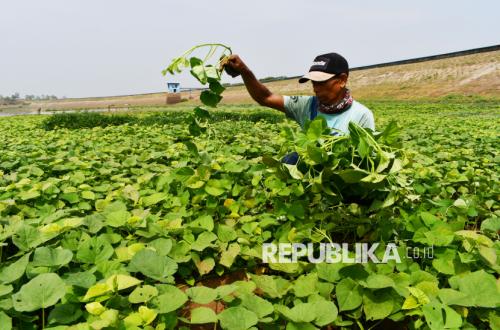
Plants have long been considered passive organisms that only react to environmental changes in a simple way. However, new research from Australia shows that plants have internal mechanisms far more complex than scientists previously understood.
A research team from the Australian National University (ANU) discovered an internal coordination system that allows plants to maintain the photosynthesis process even when facing extreme temperatures and very dry air. The findings open a new perspective on how plants ‘communicate’ between tissues to survive under increasingly severe climate pressures.
The study, led by ANU scientists, is the first research to successfully separate the impacts of heat and air dryness on photosynthesis at various carbon dioxide (CO2) levels. The results were published in the prestigious scientific journal Proceedings of the National Academy of Sciences (PNAS) of the United States.
For decades, scientists assumed that when the air becomes drier, plants respond by closing their stomata, or leaf pores, to reduce water loss. Consequently, the supply of carbon dioxide needed for photosynthesis also decreases, reducing the plant’s ability to produce energy.
However, this latest research reveals a much more complicated picture. The researchers found that plants have another internal mechanism that has received less attention: mesophyll conductance, a process that regulates the movement of carbon dioxide within the leaf tissue towards the chloroplasts, where photosynthesis takes place.
The lead author of the study, Hu Xingyu from the ANU Research School of Biology, said plants are apparently able to coordinate various internal processes to keep the carbon dioxide supply stable even under hostile environmental conditions.
‘Mesophyll conductance responds to heat and air dryness in a different direction from stomatal conductance, and this coordination helps maintain a relatively conservative CO2 environment inside the chloroplasts,’ Hu said.
The findings indicate that different parts within the leaf do not work in isolation. Instead, there is a coordination mechanism that allows plants to balance water and carbon dioxide needs simultaneously so that photosynthesis can continue.
The researchers tested this mechanism on several plants, including cotton, sunflowers, and dwarf beans. The results showed that plants are able to compensate for pressure from heat and dryness by adjusting the movement of carbon dioxide within the leaf tissues and increasing the efficiency of biochemical resource use.
This discovery is important because photosynthesis is the foundation of life on Earth. Through this process, plants convert solar energy into food while absorbing carbon dioxide from the atmosphere. Disruption to photosynthesis can have a direct impact on global food production and climate balance.