
Planting Hope: Vegetable Towers Rise Amidst Jakarta's Urban Sprawl
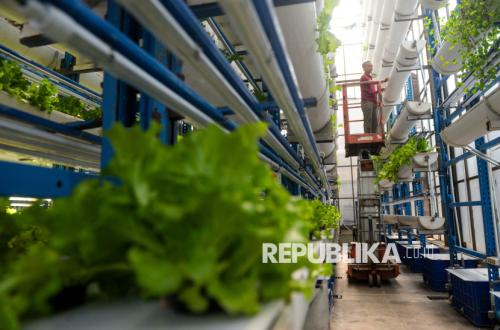
In the Lebak Bulus area of South Jakarta, 18-metre-high vertical hydroponic installations have become the new face of urban agriculture. Amidst the density of buildings, narrow spaces are being transformed into productive land that yields fresh vegetables every day.
Unlike conventional farming, the hydroponic system relies on the precise regulation of nutrients, water, light, and temperature to ensure optimal plant growth without the use of soil. One of the primary advantages of hydroponics is significantly more efficient water usage, as nutrient-rich water continuously circulates within a closed system. This method is increasingly being developed in major cities as a solution to land scarcity and rising food demands.
The harvested vegetables are marketed directly to several restaurants in Jakarta. The short distribution distance ensures the produce remains fresher while reducing delivery times compared to products brought in from other regions.
Sensors, water pumps, and tiered installations are essential components of this modern agriculture. Behind every harvested leaf lies a management process that combines agricultural science with technology to maintain production quality.
Vertical farming does more than just produce food; it also introduces green spaces into urban areas. Various studies suggest that the concept of urban farming can strengthen urban food security while bringing the community closer to the food production process.
As urban populations continue to grow, increasing food requirements, and agricultural land becomes increasingly limited, the concept of vertical farming is being implemented in various countries as an efficient alternative for food production in urban regions. Vertical farming demonstrates that despite space constraints, cities still possess the opportunity to produce food independently through innovation and the utilisation of technology.