
Plantation Commodities as Economic Anchor, Farmers Must Be Protected and Empowered
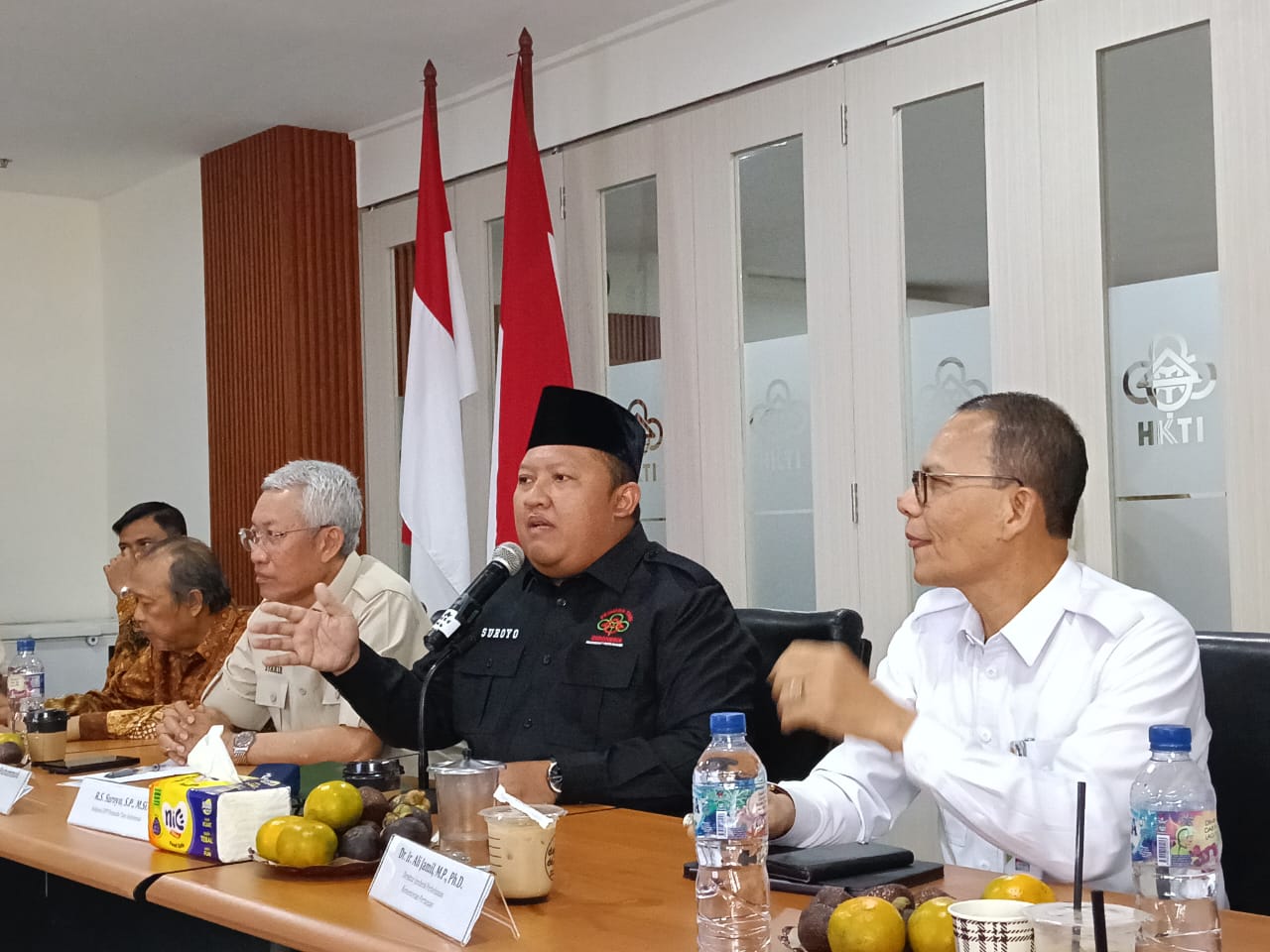
Indonesia’s plantation commodities hold significant potential for further development. Data from the Central Statistics Agency (BPS) in June 2026 shows the Farmer Exchange Rate for the smallholder plantation sub-sector reached 164.24, the highest among all agricultural sub-sectors. Director General of Plantations at the Ministry of Agriculture, Ali Jamil, stressed that the plantation sector should no longer be underestimated. He noted that historically, communities reliant on plantation crops were able to survive when Indonesia was hit by economic crisis. “Do not consider the plantation sector as a lowly sector. During the 1998 crisis, people who had plantation crops were still able to survive. This means the sector has very strong economic resilience,” Ali said during a Focus Group Discussion on Plantations held by the National Leadership Board of the Indonesian Farmers’ Association (HKTI) in Jakarta on Tuesday (30/6/2026).
Ali explained that BPS data shows the plantation sub-sector is run by 10.87 million agricultural business households. “Therefore, it is important to empower, protect and guide farmers. Hard work is needed because more than 90% of plantation businesses are smallholder farmers, so strengthening is essential. Our plantation commodities have great potential, good land area, and good productivity. The crucial problem is that the output is still dominated by raw materials, and the supply chain is not yet well integrated,” he asserted.
In the same forum, the Secretary General of the Indonesian Tobacco Farmers Association (APTI), Mudi, revealed that several strategic commodities still face pressing regulatory challenges, particularly tobacco. He requested protection from the Directorate General of Plantations against regulatory threats impacting the livelihoods of 2.5 million tobacco farmers across 14 provinces. “Tobacco is the only reliable crop for farmers during the dry season. Its contribution to state revenue is very large, it absorbs labour and drives the economy in the regions. But we face a barrage of national regulations that threaten to kill off farmers’ livelihoods, from standardised packaging, restrictions on nicotine and tar levels, to bans on additives. How can tobacco downstreaming be realised if there is no protection?” Mudi questioned.
With 98% of tobacco production coming from smallholder plantations, Mudi stressed the urgency of protecting the commodity from regulations that hinder downstream processing. “If the downstream sector is continuously pressured, we farmers at the upstream end of the tobacco ecosystem will also be affected. How can farmers be optimistic about planting when draft regulations are so oppressive,” he stated.
Earlier, Daily Chair of DPN HKTI Andi Muhammad Syakir emphasised that the plantation sector is a national economic locomotive, requiring focused development from upstream to downstream for each commodity variant. “Plantations are an anchor and even a lever for the economy. Plantations also contribute to the energy sector. The majority of our plantations are for export, their contribution clearly drives the economy. There are many types of plantation commodities, from coconut, coffee, cocoa, tobacco, to vanilla. The development approach must be gradual, focusing on strengthening one by one from upstream to downstream so that in the future it aligns with development programmes,” Syakir said. He also reminded that the plantation sector has a broad spectrum, and efforts to accelerate downstream processing should be carried out in stages.
Similarly, Secretary General of Pemuda Tani DPN HKTI Suroyo stated that after the government focused on food self-sufficiency throughout 2025, it is now time for the plantation sector to receive attention. “It is time for us to focus on plantation self-sufficiency. In line with President Prabowo Subianto’s directives, these plantation commodities must be pushed and strengthened. This does not mean we should always import, but rather ensure Indonesia can meet domestic raw material needs, increase productivity, strengthen downstream processing, and simultaneously boost exports of strategic, superior commodities,” Suroyo said.