
Plans to Add 14,000 km of Railway Tracks in Indonesia Through Reactivation: AHY Requires Rp1,200 Trillion
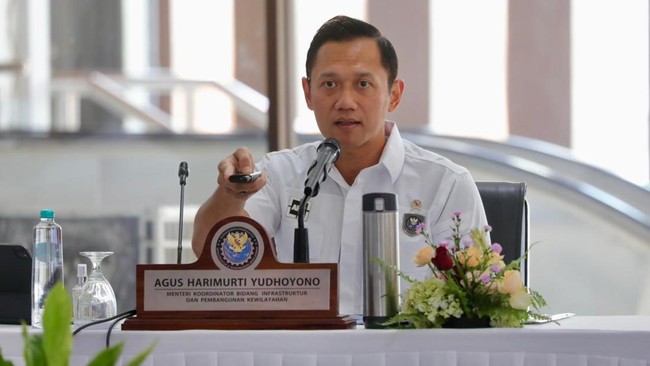
Coordinating Minister for Infrastructure and Regional Development, Agus Harimurti Yudhoyono (AHY), stated that the government is pushing for the acceleration of railway network development outside Java as a strategic step to reduce logistics costs, narrow regional disparities, and strengthen national connectivity. This was conveyed during a coordination meeting on the follow-up development of the Sumatra, Kalimantan, and Sulawesi (SKS) railway network at Tanah Abang Station, Jakarta, on Wednesday (22/4/2026).
In his directions, AHY emphasised that the development of inter-island railway networks is a direct mandate from President Prabowo Subianto as part of the National Priority Work Programme (PKPN), particularly in the infrastructure and connectivity sector.
“This is a grand vision of the President. We want to ensure that Sumatra, Kalimantan, and Sulawesi do not fall too far behind. By building an integrated railway network, we can significantly reduce logistics costs and enhance economic competitiveness between regions,” AHY said in a written statement.
He added that there is still a considerable disparity in rail-based transportation development in Indonesia. Therefore, strategic, planned, and collaborative steps across ministries, agencies, and regional governments are needed.
“We must honestly assess the current situation. Our railway network is still very limited compared to other countries. This is not to make us pessimistic, but rather to motivate us to work harder and more directedly,” he continued.
AHY also highlighted the low contribution of railways to national mobility. He noted that rail passenger transport currently accounts for only about 4%, while rail freight logistics is around 1%.
“However, railways have significant advantages, including in terms of efficiency and emissions. Their contribution to greenhouse gas emissions is very low, less than 1%. This must be promoted as part of our commitment to achieving net zero emissions,” he stressed.
Furthermore, AHY pointed out the significant investment gap between road and railway development that has persisted.
“We are not saying that road development is unimportant; it must still be carried out. But we also see a significant gap in railway investment. This is what we must correct together,” he said.
In the context of regional development, AHY explained that each island has different challenges and potentials. Sumatra requires strengthening of existing networks and expansion of new routes, Kalimantan needs construction from scratch, while Sulawesi requires integration of networks with industrial areas and flagship commodities.
“Kalimantan does not even have a railway network yet. This presents a great opportunity for us to build from the beginning with better planning, including to support logistics and commodities,” he said.
To realise the development of an additional network of around 14,000 kilometres and reactivation of routes, AHY stated that an investment of Rp1,100 to Rp1,200 trillion is needed by 2045.
“The figure is indeed large, but this is a long-term investment for Indonesia’s future. We cannot rely solely on the state budget. Creative financing, collaboration with the private sector, and involvement of various parties are necessary,” he explained.
He also highlighted the important role of regional governments in supporting public transportation development, particularly through more proportional budget allocations.
“Regional revenue from the transportation sector is actually quite substantial, but spending on public transportation is still low. This needs to be encouraged to be more balanced and targeted,” he said.
In closing his directions, AHY emphasised that national railway development must be carried out in an integrated manner with spatial planning and regional growth.
“We cannot build railways partially. It must be integrated with spatial planning, economic centres, and community needs. This is a major undertaking that requires synergy from all parties,” he concluded.
This coordination meeting was attended by the Minister of National Development Planning/Head of Bappenas Rachmat Pambudy, Head of BRIN Prof. Dr. Arif Satria, S.P., M.Si., Deputy Minister of Home Affairs Akhmad Wiyagus, Deputy Minister of Agrarian Affairs and Spatial Planning/National Land Agency Ossy Dermawan, B.S., M.Sc., Deputy Head of the State-Owned Enterprises Agency Amminudin Ma’ruf, and President Director of KAI Bobby Rasyidin. AHY was accompanied by Special Staff to the Minister Agust Jovan Latuconsina, Sigit Raditya, Herzaky Mahendra Putra, Merry Riana, as well as Ministerial Expert Ahmad Khoirul Umam and Rio Neswan.