
Plans Drawn Up to Help Mosques Contribute 1 GW to Energy Transition
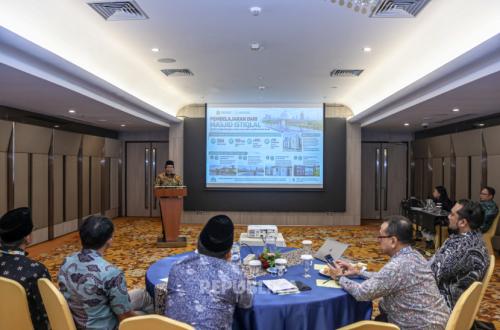
JAKARTA — Indonesia’s Ministry of Religious Affairs and a civil-society coalition under the NUUR+ initiative have agreed on strategic steps to accelerate the use of solar energy at mosques. The agreement was reached at a workshop in Jakarta on Thursday (29 October) to develop national guidelines for the mosque solarisation movement.
The collaboration is expected to support the national target of 100 GW of solar power capacity and demonstrate how the clean energy transition can take root in communities through the installation of solar systems at places of worship.
Dr H. Muchlis Muhammad Hanafi, acting director of Islamic Religious Affairs at the ministry, welcomed the collaboration, saying it brought religious ethics together with technology and practical action. “This initiative is extraordinary because it combines several elements. First, it draws on religious values through ecotheology; it also recognises the technological potential of solar energy, and involves philanthropic institutions that can bring people together and encourage broad public participation,” Muchlis said.
Muchlis said the ministry was ready to spread the message of clean energy and ecotheology to grassroots communities through its network of religious counsellors.
“The Directorate of Islamic Religious Guidance oversees 24,000 Islamic religious counsellors. They are based throughout Indonesia and actively deliver outreach programmes to support government initiatives and raise public awareness,” he added.
M. Ali Yusuf, an adviser to MOSAIC (Muslims for Shared Action on Climate Impact), said mosque solarisation should be viewed comprehensively, rather than simply as the installation of physical infrastructure. “It is not just a matter of putting up solar panels and considering the job done. The most important thing is to raise awareness among the Muslim community about clean energy, sustainable living and justice,” Ali said.
Ali said the guidance under development was intended to be practical and applicable. It should address four areas: technical standards and electrical safety risk mitigation; inclusive and innovative financing models, including blended finance such as ZISWAF and corporate social responsibility funding; accountable governance; and stronger community capacity and participation.
Prof. Waryono Abdul Ghafur, director of zakat and waqf empowerment at the Ministry of Religious Affairs, said mosque solarisation was a strategic approach to advancing Indonesia’s energy transition. “Mosques bring together people from all walks of life, making them well suited to serve as centres for clean energy education,” he said.
Waryono said the extensive network of mosques and their essential electricity needs for serving worshippers were two further reasons solarisation made strategic sense.
He identified financing as the biggest challenge and said regulators should encourage relevant institutions to allocate funding to mosque solarisation. The ministry had written to the National Alms Agency (Baznas) and zakat collection agencies (LAZ), asking them to include energy transition in their work plans, particularly through the development of solar energy waqf for mosques and Islamic boarding schools, Waryono said.
Chairiman, head of the Energy Waqf Foundation and a representative of NUUR+, highlighted the importance of community benefits, good governance and a digital ecosystem for mosque solarisation.
“Solarising places of worship can provide a spark that sets economic activity in motion and delivers significant benefits to the areas around mosques,” Chairiman said.
He said solar technology was complex and required careful planning, accurate installation and regular monitoring. NUUR+ prioritises integrated digitalisation through its nuurproject.org platform, where the public can monitor online waqf and donation fundraising, choose a mosque to support, and access transparent implementation and digital reporting, he added.
Technical mapping research by NUUR+ indicates that mosques and prayer rooms could contribute 1 GW towards the national 100 GW solar target — equivalent to one per cent of the total. The estimate is based on the technical potential for installing solar and battery systems at more than 400,000 mosques and prayer rooms across Indonesia, with the largest contribution expected from major mosques and those in public areas with high daily activity.
The systems could generate 1,414 GWh of clean electricity a year, enough to meet the equivalent of nearly one million households’ needs, and cut carbon emissions by up to 1.1 million tonnes annually. Through blended financing and collective procurement, the initiative is also projected to save Rp47.7 trillion in electricity costs over 25 years of operation.
The collaborative roadmap is expected to begin with a programme to establish 300 model or eco-mosques by 2027, before expanding gradually at regional and national levels. The workshop marked a step towards cross-sector cooperation involving the Ministry of Religious Affairs, the Ministry of Energy and Mineral Resources, the Indonesian Waqf Board, the Indonesian Solar Energy Association, zakat and waqf institutions, and civil-society organisations.
NUUR+ previously launched a pilot mosque solarisation programme with MOSAIC, Wakaf Al-Azhar, Wakaf Salman, Bank Indonesia and the Ministry of Religious Affairs at Nurul Iman Mosque in Babo village, Aceh Tamiang. The mosque has successfully operated a 7,320 Wp rooftop solar power system funded through energy waqf.
Source: jawawa.id (https://jawawa.id/newsitem/plans-drawn-up-to-help-mosques-contribute-1-gw-to-energy-transition-1793292655)
Originally published by Republika (https://news.republika.co.id/berita/tnodx5483/perkuat-transisi-energi-langkah-menuju-kontribusi-1-gw-solarisasi-masjid-disiapkan), translated from Indonesian