
Plan to Increase Transjakarta Fares: An Analysis of Financial Conditions
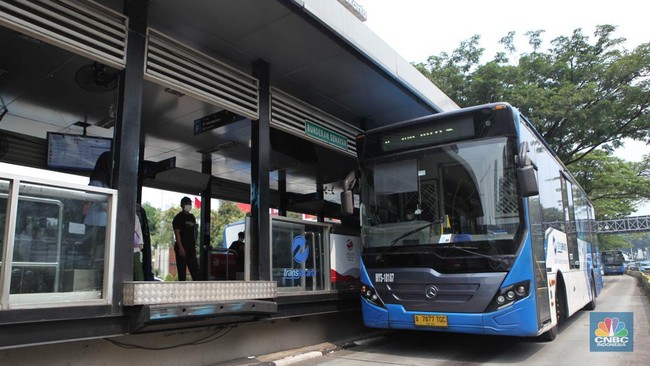
The Jakarta Provincial Government is currently considering an increase in Transjakarta bus fares for the Bogor, Depok, Tangerang, and Bekasi (Bodetabek) regions. One specific consideration is the Transjabodetabek route from Blok M to Soekarno-Hatta Airport, which is set to rise following the end of the promotional period on 12 June 202lag. Jakarta Governor Pramono Anung has assessed that the current fare of Rp3,500 is unrealistic for sustaining long-term operations, noting that similar transport modes on comparable routes often charge upwards of Rp100,000.
While the exact new fare has not yet been disclosed, Pramono ensured that the Provincial Government is calculating a more rational tariff scheme that balances affordability for the public with service sustainability. Previously, Deputy Governor Rano Karno suggested that fares could potentially range between Rp10,000 and Rp15,000. Notably, Transjakarta has maintained the Rp3,500 fare since 2005, a rate that no longer reflects actual operational costs, network expansion, or the ongoing improvement of intermodal integration.
The proposed adjustment is primarily focused on strengthening the regional financial position without compromising the quality of public transport services. The Jakarta Provincial Government consistently bears a significant subsidy burden to keep public transport affordable. According to current budget allocations, transport subsidies in the Regional Budget (APBD) have reached Rp4.77 trillion, with the largest portion—Rp3.75 trillion—allocated specifically to Transjakarta’s operations. This highlights the high level of dependence on regional government funding. Last year, ticket subsidies alone reached Rp401 billion, providing empirical evidence for the necessity of a fare adjustment. Currently, every passenger receives an average subsidy of Rp12,258 per trip, given the service fare remains at Rp3,500.
Rationalising these fares is projected to reduce the burden on the Regional Budget (APBD), allowing fiscal space to be reallocated to other crucial sectors. Transjakarta’s financial performance shows a nominal growth trend in revenue; in 2025, total revenue reached Rp4.98 trillion, representing an 11.38% year-on-year (YoY) increase compared to 2024. Net profit also grew by 3.58% YoY to Rp207.75 billion in 2025. However, financial ratio analysis indicates that profitability remains heavily dependent on the Public Service Obligation (PSO) subsidies, which rose to Rp4.03 trillion in 2025, an 11.35% YoY increase. Between 2021 and 2025, the cost of goods sold grew at a CAGR of 12.46%, outpacing the revenue growth of 10.22%. This gap indicates that the company’s cost structure is becoming heavier as passenger volume surged from 98.88 million in 2021 to 413 million in 2025.
Responding to these dynamics, Djoko Setijowarno, an academic from Unika Soegijapranata and an advisor to the Indonesian Transportation Community (MTI), stated that fare adjustment is not a black-and-white policy. He noted that fare reform is a vital component of the urban macro-ecosystem requiring precise calculation to find the equilibrium between regional fiscal health and social justice. As the operational coverage continues to expand, the Rp3,500 fare is seen as deviating too far from economic pricing. A measured increase is viewed as a crucial strategy to provide more responsive fiscal liquidity for the regional government while ensuring Transjakarta’s capacity to maintain operational reliability as the backbone of public mobility.