
Plan Indonesia highlights children's learning access in response to remote schooling following Mount Anak Krakatau eruption
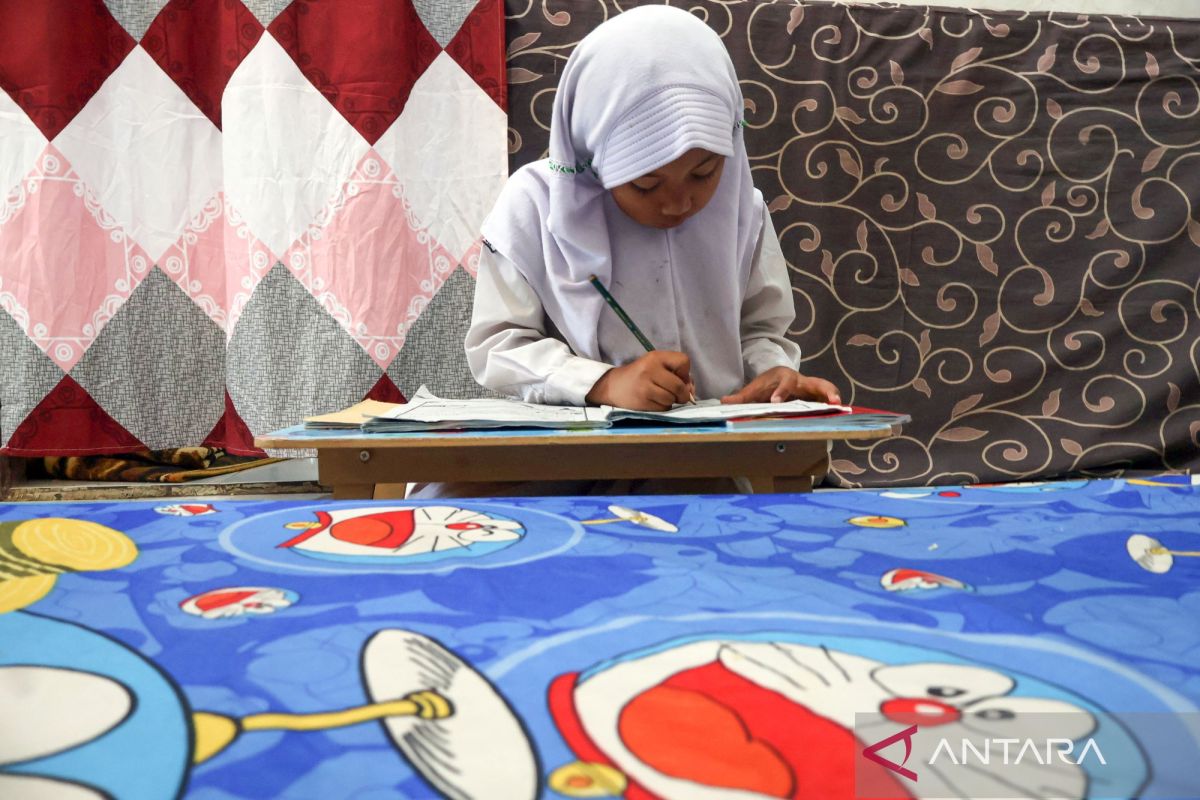
Jakarta (ANTARA) - Plan Indonesia has said that a number of regions have implemented distance learning (PJJ) in response to the health impacts of volcanic ash from the eruption of Mount Anak Krakatau, but without adequate support, remote learning risks widening the gap in access to education.
“When schools have to implement remote learning, we need to ensure that PJJ is not merely a decision to move learning from school to home. We also need to look at whether children have devices, internet connectivity, a safe learning space, and support from parents or primary caregivers,” said Plan Indonesia Executive Director Dini Widiastuti.
Dini said in Jakarta on Monday that remote learning can serve as a temporary solution. However, she said, unequal access remains a concern because not all children have digital devices, internet connectivity, or a home environment conducive to remote learning.
Therefore, her organisation is encouraging schools and regional governments to ensure alternative learning mechanisms that are safe, inclusive, and appropriate to children’s circumstances. When online learning is not feasible, schools need to consider other methods that do not rely entirely on devices and internet connectivity.
“If the volcano’s eruption alert level rises and this situation persists over a long period, it is essential for the government and schools to promptly prepare various alternative remote learning options, such as making use of public broadcast media or independent learning methods,” she said.
In her view, this is crucial to ensure that all children without exception continue to receive equal access to and quality of education, so that learning loss does not occur during the emergency.
Dini also explained that the purpose of remote learning in a disaster situation is not simply to keep classes running. More importantly, it is to ensure that children retain access to education without having to sacrifice their safety.
Amid the eruption situation, child protection also encompasses psychosocial aspects. Children may experience fear, confusion, and anxiety when they see changes in their surroundings, hear information about the eruption, or have to alter their daily routines.
Parents, teachers, and the adults around children play an important role in helping them understand the situation with accurate, simple, and age-appropriate information.
“Children need to know what is happening and what they can do to stay safe. Information must be conveyed in language appropriate to their age. Do not frighten them, but do not underestimate the situation either. Give children room to ask questions, express their feelings, and understand what is happening,” said Dini.
According to Dini, the eruption situation needs to be viewed more broadly as a matter of fulfilling children’s rights in an emergency.
“When a disaster occurs, children face layered risks. They need to be protected from ash exposure and health risks, but at the same time we also need to ensure they continue to receive support, feel safe, and have the opportunity to keep learning. Disaster response must address children’s needs holistically,” she said.
Plan Indonesia called on the public to remain calm yet vigilant, reduce exposure to volcanic ash, pay attention to children’s conditions, and follow information and instructions from the Centre for Volcanology and Geological Hazard Mitigation (PVMBG); the Meteorology, Climatology, and Geophysics Agency (BMKG); the National Disaster Management Agency (BNPB); and regional governments.