
Plan Indonesia distributes emergency aid packages for earthquake survivors
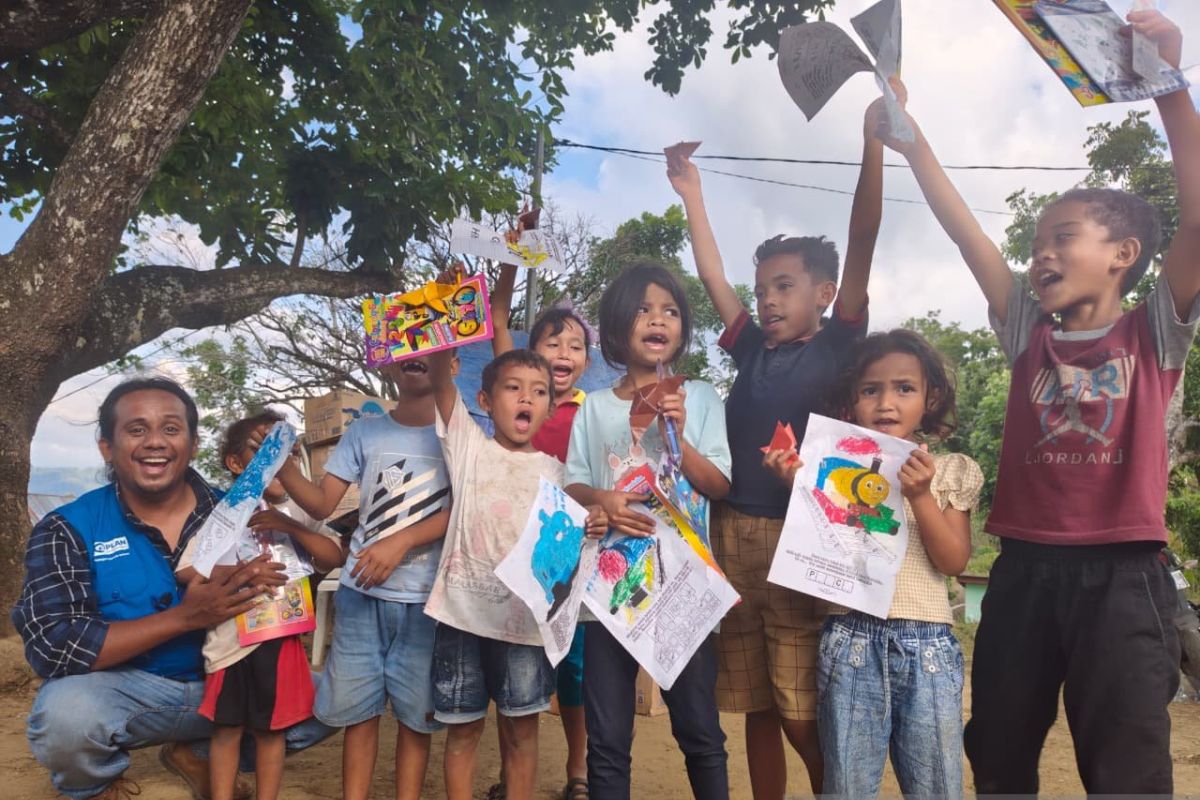
Plan Indonesia distributed 250 emergency aid packages to survivors of the M7.7 earthquake at five evacuation points in Manggarai, East Manggarai, Nagekeo, Ngada, and Sikka, East Nusa Tenggara (NTT), on Saturday. The aid packages included family hygiene kits, menstrual hygiene supplies for adolescent girls and women, temporary shelter equipment, educational toys, bottled drinking water, and snacks.
“In an emergency situation, basic needs such as drinking water, hygiene, a place to rest, and food are indeed priorities. However, we also need to ensure that children still have space to play and feel safe, while adolescent girls and women can still meet their menstrual hygiene needs properly and with dignity,” said Plan Indonesia Executive Director Dini Widiastuti, as quoted from a written statement on Sunday.
As an initial response, Plan Indonesia deployed 16 staff members as an emergency response team to conduct rapid needs assessments in the five affected districts. The rapid assessment was carried out to identify the most urgent needs, with particular attention to children, especially girls and adolescent girls, women, persons with disabilities, and other vulnerable groups.
“Each affected area has different conditions and needs. Therefore, our team went directly to the field to understand the needs of the community, particularly children and vulnerable groups. The results of this rapid assessment will serve as the basis for us to determine the most relevant and targeted follow-up support,” Dini continued.
According to Dini, the impact on children, especially girls, must be an important part of every decision-making process during the emergency response period. Disasters do not only destroy homes and infrastructure. Children can also lose their sense of safety, be cut off from school, lose their routines, and experience psychological distress. Girls may face additional risks, including difficulty accessing sanitation and menstrual hygiene supplies, loss of safe spaces, and even the risk of violence. Therefore, the needs, voices, and rights of children must be considered from the beginning of the response through to the recovery process.
Based on data from the National Disaster Management Agency (BNPB) as of 16 August 2026 at 13.00 WIB, the earthquake centred in the Flores Sea has been followed by 341 aftershocks. BNPB recorded 51 people dead and 101 people injured. More than 5,900 people remain in evacuation sites, particularly in Sikka, Manggarai, and Nagekeo districts. Damage has also been reported to at least 914 severely damaged houses, 93 educational facilities, and 36 health facilities.