
Plain Packaging Plan for Cigarettes Draws Widespread Opposition Ahead of 2026 Deadline
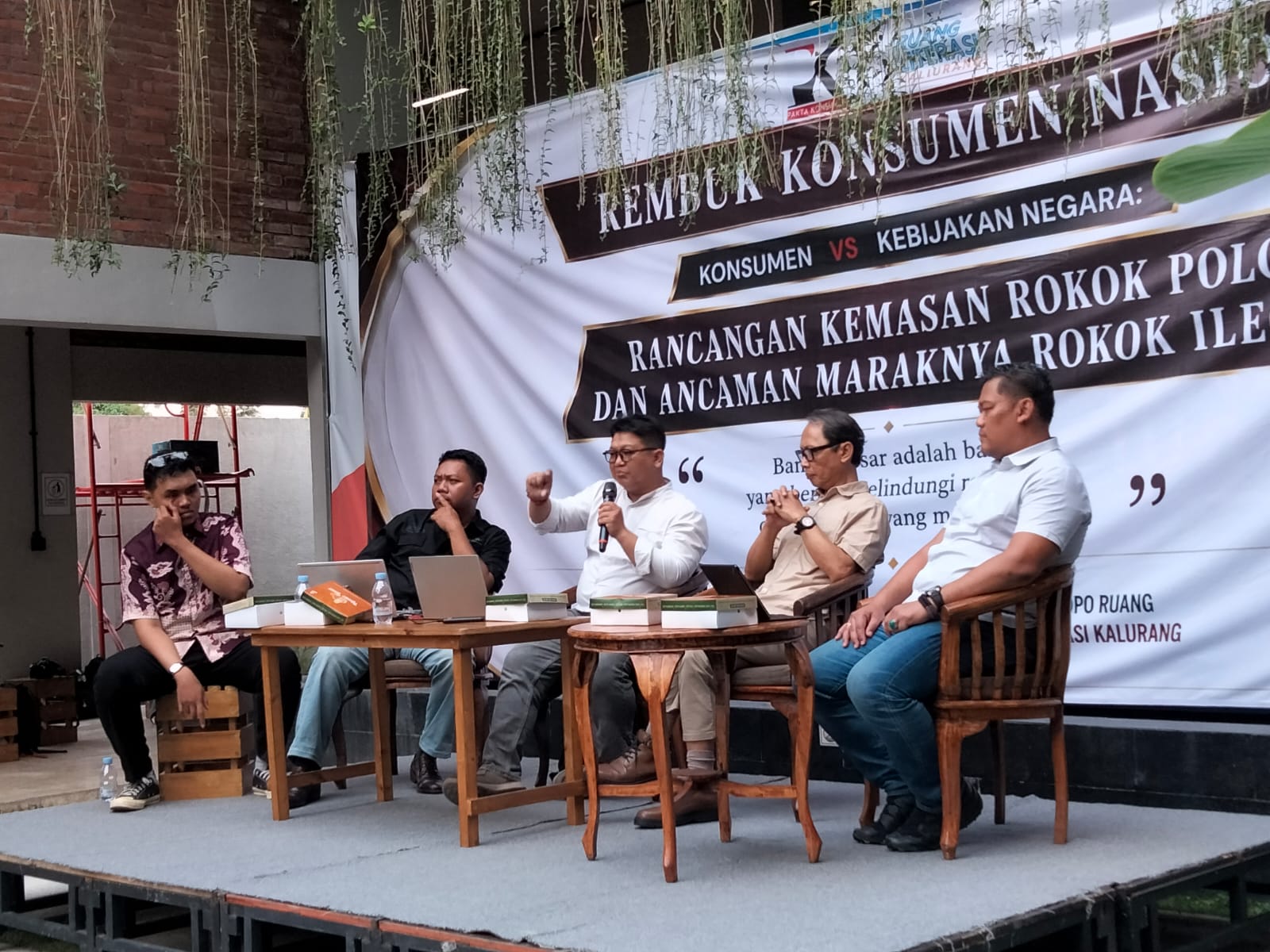
Massive rejection is coming from the downstream tobacco ecosystem regarding the government’s plan to implement plain cigarette packaging rules. A recent survey released by the National Consumers Pact (PakNas) shows that 91.4% of consumers firmly reject the Draft Minister of Health Regulation (RPMK) concerning the inclusion of health warnings. The RPMK is a derivative regulation of Government Regulation (PP) Number 28 of 2024. The regulation is considered flawed in terms of public participation because it did not involve consumers, as the directly affected parties, in its drafting process.
PakNas Chairman Ary Fatanen revealed that this packaging standardisation policy has triggered widespread unrest. Based on a survey of 1,700 consumers aged 21 and above, 90.4% felt their rights had been violated by the Ministry of Health as the initiator. ‘By forcing packaging standardisation, from fonts and shapes to images, the government violates consumers’ rights to obtain correct information. Consumers will struggle to distinguish between legal and illegal products due to the loss of visual differentiation,’ Ary stressed during the National Consumer Discussion held at the Literacy Space in Sleman on Sunday (21/6). This concern is reflected in the survey results, with 88.8% of consumers worried that the plain packaging rule will pave the way for the rampant circulation of illegal cigarettes in society.
Based on these social and economic realities, PakNas urged the state to immediately halt sectoral ego in health matters and to involve the public transparently. PakNas demands that tobacco regulation be drafted comprehensively and fairly, balancing health protection with the constitutional rights of citizens. Legal expert from Sebelas Maret University (UNS), Ayub Torry Satriyo Kusumon, assessed that the plain packaging policy clearly contradicts Law Number 8 of 1999 on Consumer Protection, which guarantees the public’s right to clear product information. Ayub also criticised the regulator’s habit of often conducting pseudo-formalities in absorbing public aspirations. ‘Lawmakers must change their mindset. Often, the invited community elements do not understand the core issues, merely fulfilling procedural administration. Those directly affected are not invited. Essentially, this is wrong,’ Ayub criticised.
From the perspective of supervision and state revenue, the Head of the Enforcement and Investigation Section of the Yogyakarta Customs and Excise Office, Soma Baskoro, acknowledged that distinctive packaging features are crucial for both officers and the public to filter out illegal products. ‘It is important for us to educate consumers on distinguishing the characteristics of legal and illegal cigarettes. So far, legal cigarettes have contributed up to 90% of state revenue. To date, we ourselves have eradicated 1.4 billion sticks of illegal cigarettes,’ Soma stated. Ahead of the implementation deadline in July 2026, the Lentera Anak Foundation appreciated the Ministry of Health’s commitment to finalising the Draft Minister of Health Regulation on cigarettes. Meanwhile, Situbondo Regent Yusuf Rio Wahyu Prayogo asked the government to cancel discussions on implementing plain packaging for tobacco products. The discourse on standardising tobacco product packaging is considered a violation of constitutional rights as it limits information on products legally circulating in society. Commission IX of the Indonesian House of Representatives (DPR RI) pledged to continue maximising its oversight function to ensure tobacco control policies remain proportional. The Ministry of Health’s plan to implement a policy standardising cigarette packaging with uniform colours (plain packaging) has once again drawn criticism.