
PKT Races to Prepare Fakfak Ammonia-Urea Plant with Global Companies
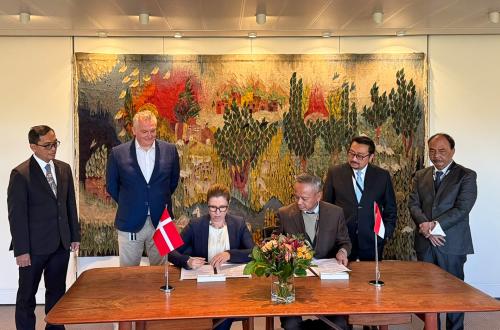
JAKARTA – PT Pupuk Kalimantan Timur (PKT) has signed a contract with two global technology companies, Topsoe and Toyo Engineering Corporation (Toyo), to prepare the Basic Engineering Design (BED) for an ammonia-urea plant in the Fakfak Fertiliser Industrial Estate (KIPF), West Papua. PKT President Director Rafli Yandra said the collaboration was a strategic step towards establishing the plant’s technical foundations and ensuring the use of efficient, reliable and sustainable technologies.
“The involvement of both companies is based on their experience, track records and proven technological strengths in the global fertiliser industry,” Rafli said on Monday (23 November 2026).
Rafli said he hoped the collaboration would produce a basic plant design that meets technical standards and optimises operational efficiency, supporting the production facility’s long-term competitiveness. PKT wants to ensure that all aspects of technology and operational reliability are comprehensively considered from the planning stage.
“With the support of experienced technology partners, we are optimistic that this project can be prepared on a strong foundation,” Rafli added.
Rafli explained that preparing the BED is a fundamental stage before the Engineering, Procurement and Construction (EPC) tender process. The document is one of the requirements for seeking approval in principle for the investment in the development, and will also serve as the technical reference for subsequent engineering, procurement and construction stages.
“Moreover, the Fakfak ammonia-urea plant is a National Strategic Project (PSN), which is receiving close attention and intensive oversight from the government,” Rafli said.
PKT is therefore emphasising the importance of design quality and completing the work on time. This includes aligning the scope of work and implementation schedule, meeting milestones, and ensuring effective coordination among all parties involved in preparing the BED. Rafli said design quality must remain a priority alongside schedule discipline, safety and facility reliability.
“Success at this stage will provide an important foundation for smooth construction through to the plant becoming operational,” he said.
Rafli said the Fakfak ammonia-urea plant would have ammonia production capacity of 2,500 tonnes a day, or 825,000 tonnes a year. Urea capacity would be 3,500 tonnes a day, or 1.15 million tonnes a year. The ammonia plant will use Topsoe’s SynCOR Ammonia technology, with an oxygen-fired autothermal reforming process and a steam-to-carbon ratio close to 0.6.
“That ratio can reduce natural gas feedstock requirements by 10 per cent, potentially lowering ammonia production costs,” Rafli said.
He said the plant was also being designed as “ready-to-blue”, meaning it would be prepared for integration with Carbon Capture and Storage (CCS) or Carbon Capture, Utilisation and Storage (CCUS) technology. This approach would allow the facility to support the development of low-carbon ammonia, while taking account of energy efficiency, operational reliability and reduced carbon-emissions intensity.
The urea facility will use Toyo Engineering Corporation’s ACES21 technology. Rafli said he expected it to optimise energy and ammonia consumption while producing high-quality granular urea through a more efficient and environmentally friendly process.
“We see the construction of the Fakfak ammonia-urea plant as a long-term strategic investment. The selected technologies are aimed not only at increasing capacity, but also at providing a competitive advantage and readiness to meet the challenges of global industry,” Rafli said.
Pupuk Indonesia President Director Rahmad Pribadi backed PKT’s efforts to accelerate construction of the Fakfak plant. He said the project would support the company’s efforts to strengthen food sovereignty and self-sufficiency, reinforce the petrochemical sector and create added value from Indonesia’s natural resources.
“Through this project, we want to optimise the potential of natural gas to create greater added value, while encouraging industrial growth and more evenly distributed development in eastern Indonesia,” Rahmad said.
Rahmad said using technology from Topsoe and Toyo was a strategic step towards strengthening industrial sovereignty through technology, innovation and sustainable value creation. The initiative would also support the industry’s transformation towards more efficient, lower-carbon production processes.
“That is why we are seeking to introduce more efficient and sustainable industrial technology, in line with Pupuk Indonesia’s decarbonisation strategy through to 2050,” Rahmad said.
Source: jawawa.id (https://jawawa.id/newsitem/pkt-races-to-prepare-fakfak-ammonia-urea-plant-with-global-companies-1795481509)
Originally published by Republika (https://ekonomi.republika.co.id/berita/tozbre416/gandeng-perusahaan-global-pkt-kebut-persiapan-pabrik-ammoniaurea-fakfak), translated from Indonesian