
PKS Faction: Jakarta’s 2027 Budget Must Be Fiscally Sound and Deliver Measurable Benefits for Residents
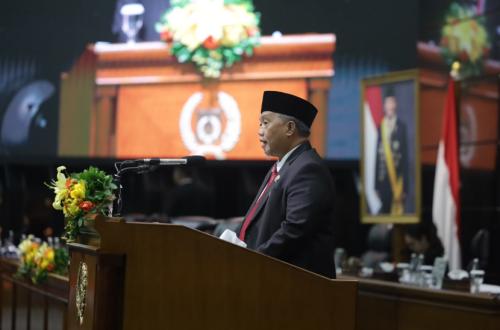
The Prosperous Justice Party (PKS) faction in the Jakarta Provincial Legislative Council has stressed that the draft regional budget (RAPBD) for the 2027 fiscal year must strengthen public services, resolve residents’ problems and safeguard the sustainability of regional finances. Any additional revenue, spending allocation or financing must be backed by accountable calculations and measurable benefit targets.
The position was presented by Abdurrahman Suhaimi, the PKS faction’s spokesperson in the Jakarta council, while delivering the faction’s general statement on the draft regional regulation on the 2027 budget at a plenary session on Monday (19 October 2026).
The faction outlined seven areas of concern, ranging from revenue optimisation, spending quality and caution over debt financing to the performance of regional-owned enterprises (BUMDs), protection of essential services, improvements to urban services and follow-up on public concerns.
First, the PKS faction called for Regional Original Revenue (PAD) targets to be set realistically, based on revenue potential, economic developments and residents’ ability to pay. Reviews of tax and levy targets should be accompanied by improvements to the underlying data, stronger compliance, collection of recoverable arrears and measures to prevent revenue leakage.
“Revenue growth should prioritise better governance and tapping underused potential, rather than placing an additional burden on lower-income residents,” Suhaimi said.
Regional assets should also be put to productive, transparent use in accordance with regulations. The faction called for clarity on the legal status, current use and revenue potential of assets that are not being used to their full benefit.
Second, the PKS faction highlighted the need to balance regional revenue, spending and financing. With planned expenditure of Rp75.04 trillion and a deficit of Rp2.423 trillion, the provincial government was asked to explain its revenue assumptions, spending priorities and the reliability of financing sources to cover the shortfall.
The faction also noted that capital expenditure is set at Rp8.55 trillion, or about 11.4 per cent of total spending. The composition should be explained in relation to infrastructure construction and maintenance needs, including flood control, sanitation, and education and health facilities. The assessment should also take into account development carried out through BUMDs to provide a complete picture of regional investment.
“The PKS faction is urging a review of operational spending, including honoraria, official travel, consultancy services and ceremonial events, so that the budget is increasingly focused on results residents can feel,” Suhaimi said.
The review should distinguish spending that directly supports services from activities whose benefits are unclear. Efficiency should lead to better services and more appropriate use of public funds.
Third, the PKS faction called for caution over plans to raise Rp5.99 trillion in regional debt financing. According to the provincial government, this comprises Rp1.75 trillion in on-lending for the Jakarta MRT and Rp4.239 trillion from the issuance of regional bonds.
The provincial government should explain the relationship between debt proceeds, the use of funds, financing outlays and the need to cover the deficit. The amount raised through debt cannot simply be equated with the budget deficit.
Each financing plan should be supported by project readiness, a feasibility study, projections for principal and interest payments, and an assessment of its impact on fiscal headroom in subsequent years. Alternative scenarios should also be prepared in case the bond issuance is delayed or the amount raised falls short of expectations.
The PKS faction also called for a study of regional sukuk as an alternative financing instrument. Comparisons should cover total costs, project readiness and underlying assets, investor interest, and payment obligations. The choice of instrument should be based on its benefits and the region’s fiscal capacity, while meeting the applicable issuance requirements.
Fourth, the faction emphasised accountability for APBD support to BUMDs, including planned Regional Capital Participation (PMD) of Rp5.97 trillion and subsidies of Rp7.53 trillion.
The two instruments should be assessed according to their respective purposes. PMD is a financing outlay for regional government investment, while subsidies are expenditure intended to keep services affordable in line with assigned obligations.
PMD should be backed by clearly measured capital requirements, a business plan, project readiness and an evaluation of how previous capital injections were used. Subsidies, meanwhile, should be supported by reasonable service-cost calculations, clear identification of beneficiaries and service standards that can be monitored.
“BUMDs receiving budget support must be able to demonstrate results in line with their mandates, both in improving public services and in contributing to the regional economy,” Suhaimi said.
The provincial government was also asked to strengthen financial-reporting transparency, operational efficiency and dividend contributions, while taking account of each BUMD’s business characteristics and public-service obligations.
Fifth, the PKS faction called for protection of funding for essential services and assistance for residents in need. In education, priorities include equal access and quality, the gradual expansion of free private schooling, consideration of support for private madrasahs within the government’s authority and applicable rules, meeting teacher requirements, and maintaining the KJP Plus and KJMU programmes.
In health, the faction sought clarity on the completion of facilities of concern, including Cipedak Community Health Centre and Cakung Regional General Hospital, along with the availability of health workers, equipment and operating budgets.
The use of the National Single Socioeconomic Data (DTSEN) should be accompanied by field verification, data updates and an accessible complaints mechanism. Inaccurate records must be correctable so that eligible residents receive services and assistance to which they are entitled.
“Social assistance, health insurance and subsidised food must be distributed accurately, transparently and in a way that is easy to access,” he said.
Sixth, the PKS faction called for urban-problem spending to be tied to clear outcome targets. Flood management should link work on rivers, embankments, pumps and neighbourhood drainage with reductions in the area, depth and duration of inundation.
Waste management should strengthen sorting at source, reduce waste generation, expand integrated waste processing sites (TPS3R) and improve the effectiveness of treatment facilities. Performance should be reflected in a reduction in the amount of waste sent to final disposal sites.
For public transport, subsidies should deliver services that are more reliable, affordable and integrated, and extend coverage to underserved areas. For drinking water and sanitation, budget allocations should translate into additional connections, improved service quality and more equal access.
Seventh, the faction said public concerns raised through constituency visits and legislative oversight must receive traceable follow-up. “Every proposal should have a responsible government agency, a handling status and an implementation schedule, as well as an explanation if it cannot yet be fulfilled,” Suhaimi said.
The PKS faction also called for more even development across areas, stronger support for small and medium-sized enterprises, expanded employment opportunities, improved public safety and preparations for sports development ahead of the 2028 National Sports Week (PON), based on clear needs and performance targets.
The faction said the success of the 2027 budget should be evident in improved service quality, fewer problems for residents, greater economic opportunities and the preservation of the region’s capacity to fund development sustainably.
“For that reason, the PKS faction is asking the Jakarta provincial government to provide transparent explanations of these concerns and ensure that every rupiah of the regional budget is used responsibly, reaches its intended beneficiaries and delivers tangible benefits to Jakarta residents,” Suhaimi said.
Source: jawawa.id (https://jawawa.id/newsitem/pks-faction-jakartas-2027-budget-must-be-fiscally-sound-and-deliver-measurable-benefits-for-residents-1792464691)
Originally published by Republika (https://news.republika.co.id/berita/tn6mxd423/fraksi-pks-apbd-jakarta-2027-harus-sehat-secara-fiskal-dan-terukur-manfaatnya-bagi-warga), translated from Indonesian